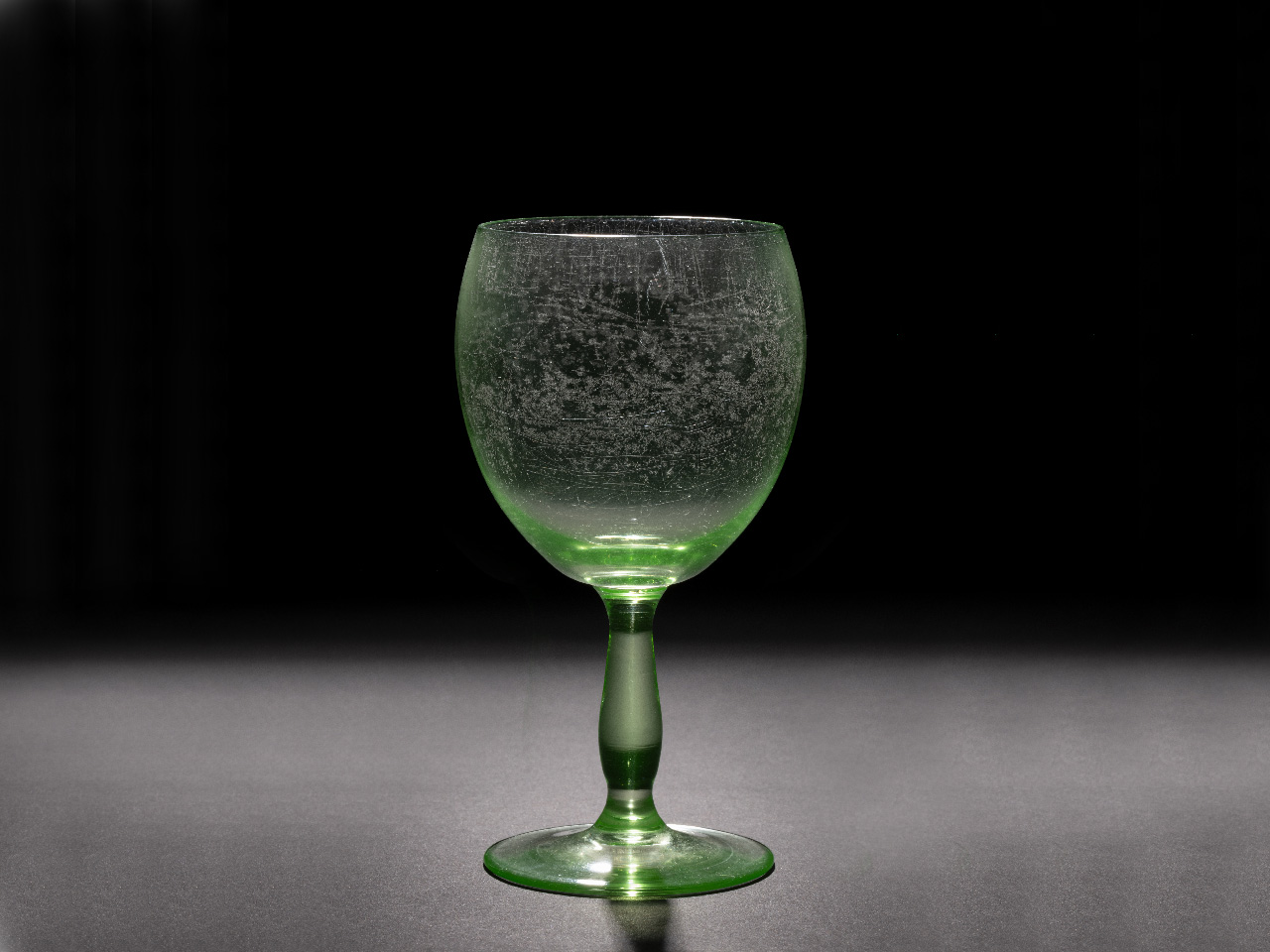
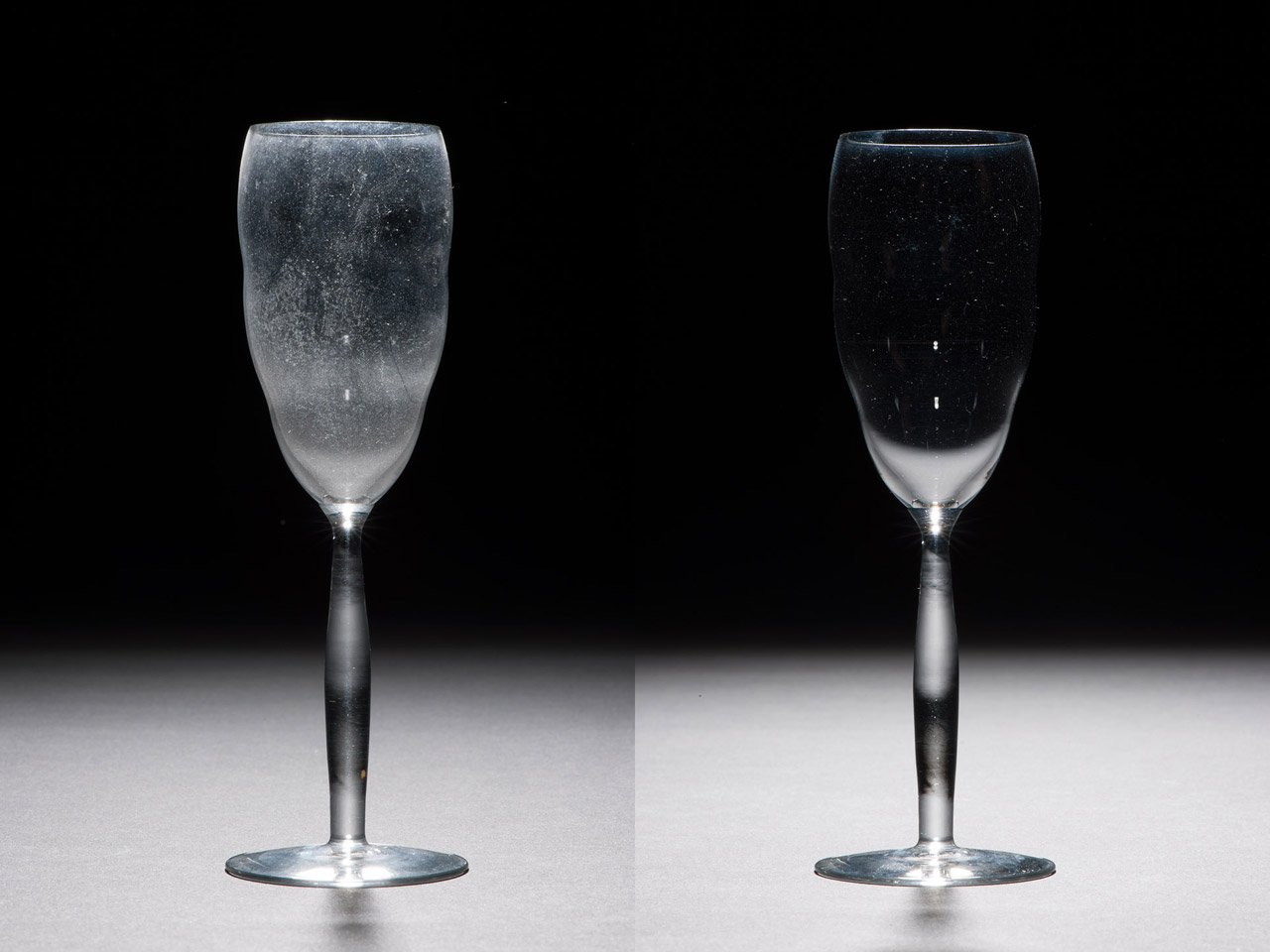
The making of a wine glass
The introduction of wine-glass production was met with resistance at the Leerdam Glass Factory (Glasfabriek Leerdam), which mainly produced pressed glass in the early 20th century. Making blown stemware required very different skills and techniques. It was also a new development for designers to determine what would be made.
The labour-intensive process began with the bowl being blown into a mould. Glass was then cut and shaped into a stem using stem shears. More glass was then cut onto the end of the stem and shaped with a foot block into a foot on which the glass stands. The vessel was then transferred to a pontil and detached from the blowpipe with a sharp tap. Reheating the pear-shaped bowl in a furnace allowed it to be opened out into its final form.
For glassware services, such as
Servies F and
Servies H designed by
De Bazel, the vessel was placed in the annealing oven after being detached from the blowpipe. Once cooled, a diamond point was used to score the bowl at the required height. A small, concentrated flame was then applied to the score line, allowing the excess glass to be removed. This left a sharp rim, which was subsequently ground and polished.