K. P. C. de Bazel, servies F (tableware F) - Wine glass, 1921 - 1923
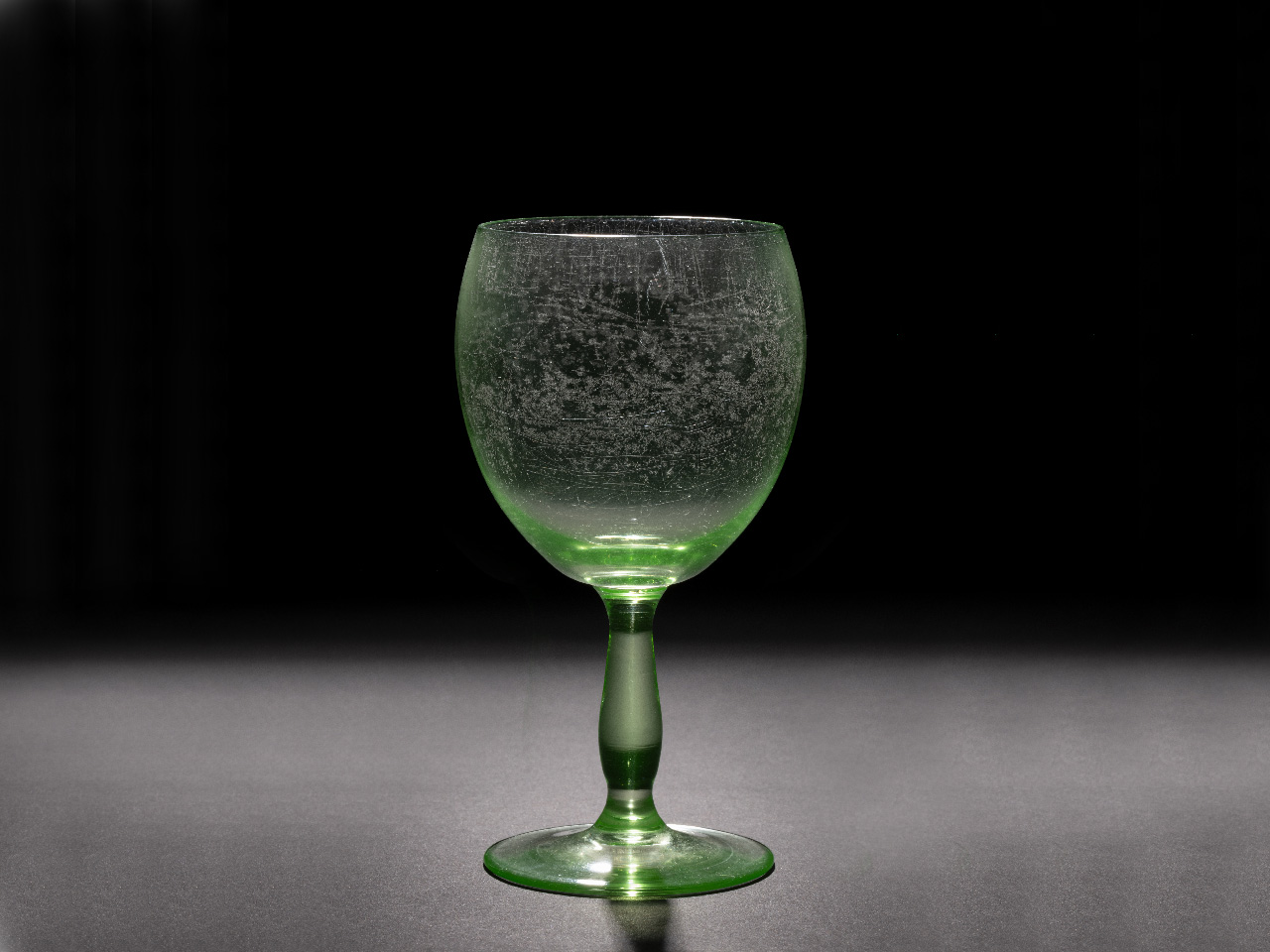
12,5 × 7 cm, V 63 d (KN&V)
COLLECTION Museum Boijmans Van Beuningen
PHOTO The Visual Art Box, 2025
creation
making process
Material coloured glass, transparent
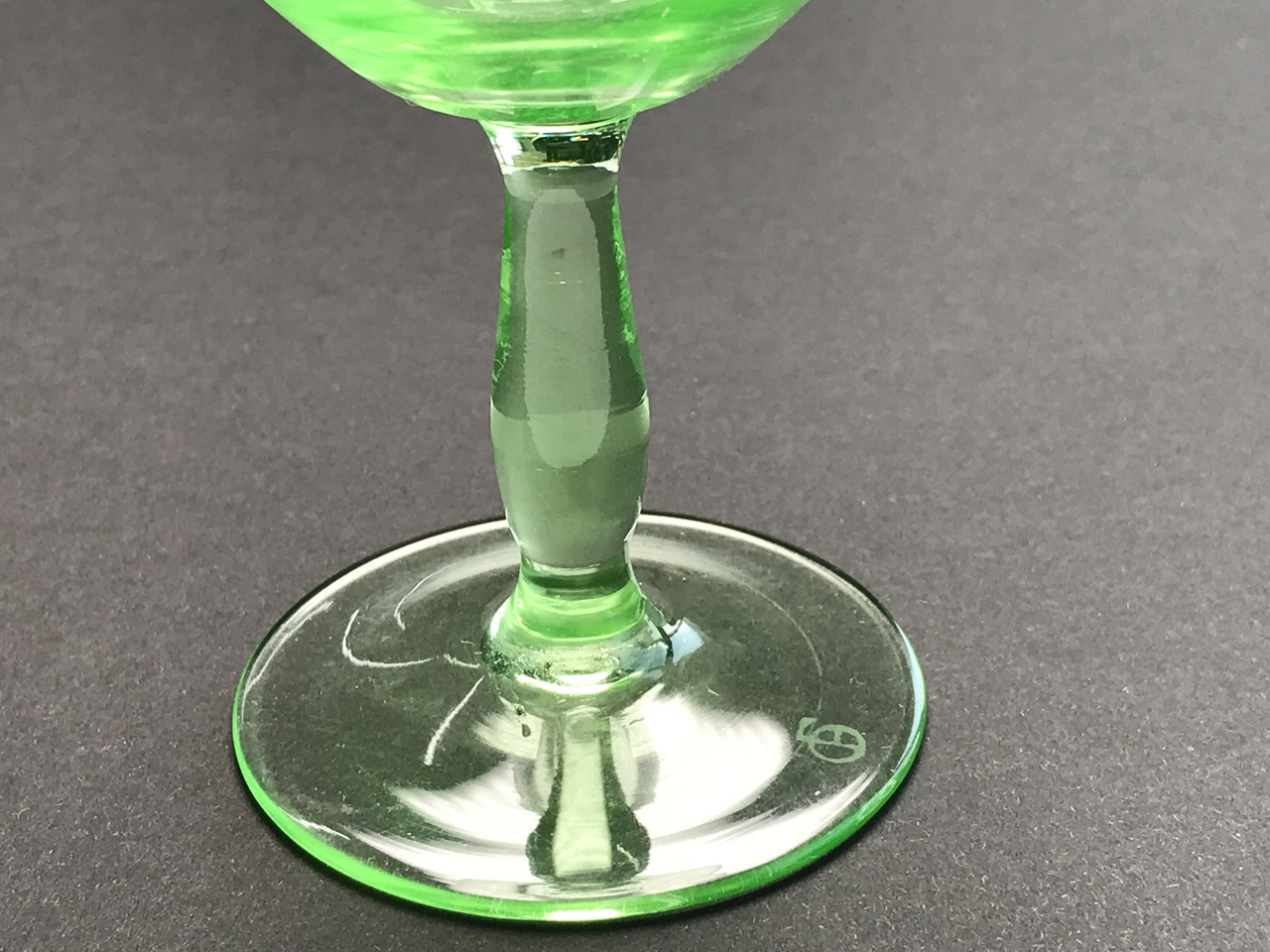
AnnagrünTechnique mould blownHot working coloured glass, snipped drawn stem with an undulating form, and snipped-on foot shaped with a clapper
Cold working cracked off,
drinking rim ground and polished
P.M. Cochius (1874–1938) was director of the
Leerdam Glass Factory (Glasfabriek Leerdam) around the time this glass was produced. In 1915, he commissioned De Bazel to design glasses and vases that were suitable for mass production without sacrificing elegance. De Bazel designed a number of drinking services, including
Servies F. It was particularly difficult to achieve a smooth finish on the avolio at the junction between the bowl and the stem. De Bazel was strict about ensuring his designs were executed precisely. The
rim of a wine glass can be finished in different ways.
(art) history
De Bazel embraced the idea of making art more accessible by taking advantage of rapidly expanding industrial production. He was the first to design multiple services and vases for the Leerdam Glass Factory, both blown and in pressed glass. Rather than giving his services specific names, he simply identified each with a letter. At least one Annagrün Rhine wine glass appears in almost every service De Bazel designed. Annagrün, or uranium glass, was produced mainly between 1870 and 1940 and used for all kinds of functional and decorative glass. Production peaked between 1910 and 1930, which is when De Bazel designed services for the Leerdam Glass Factory.
The object forms part of a service and was most likely used to drink white Rhine wine. In that case it was probably also cleaned and dried after use. It was likely kept in a private household, although no information about its history is available. Servies F comprises a wine decanter, bitter liqueur decanter, elixir decanter, water decanter, champagne glass, large and small wine glass, port glass, bitter liqueur glass, liqueur glass, Annagrün Rhine wine glass, beer/lemonade/champagne tumbler, finger bowl and a bowl for floating flowers
conservation
research & diagnosis
technical analysis
visual examination
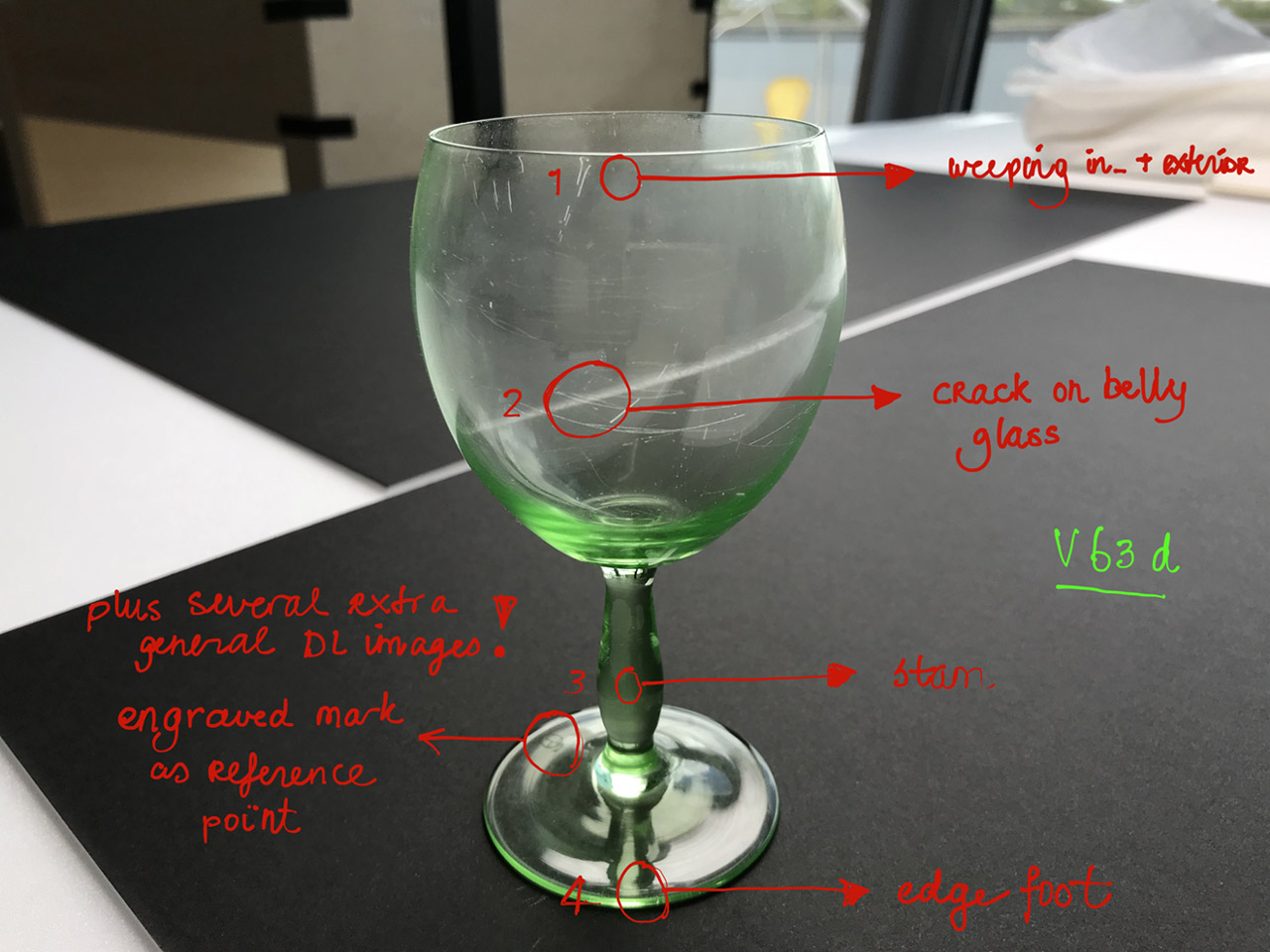
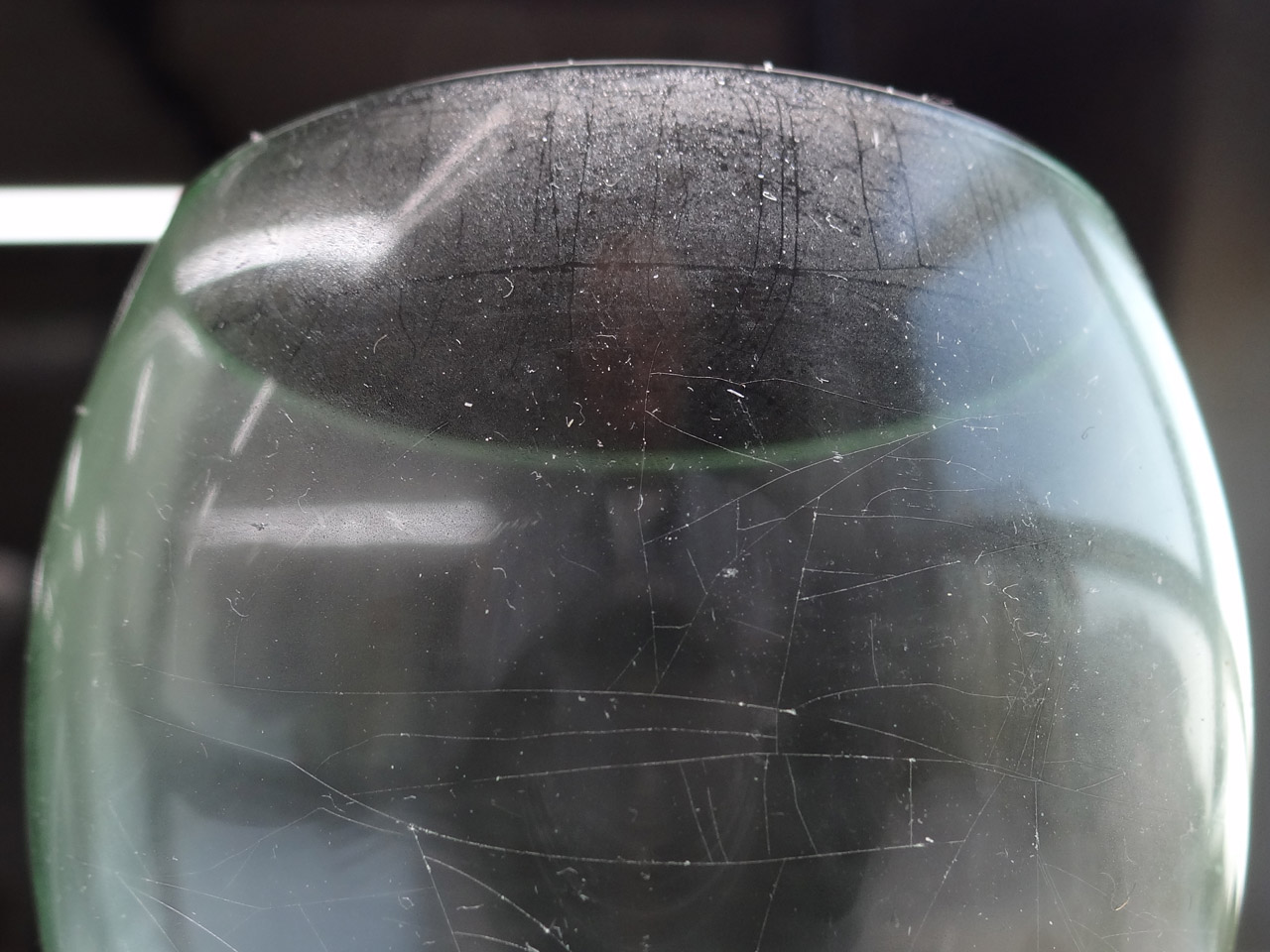
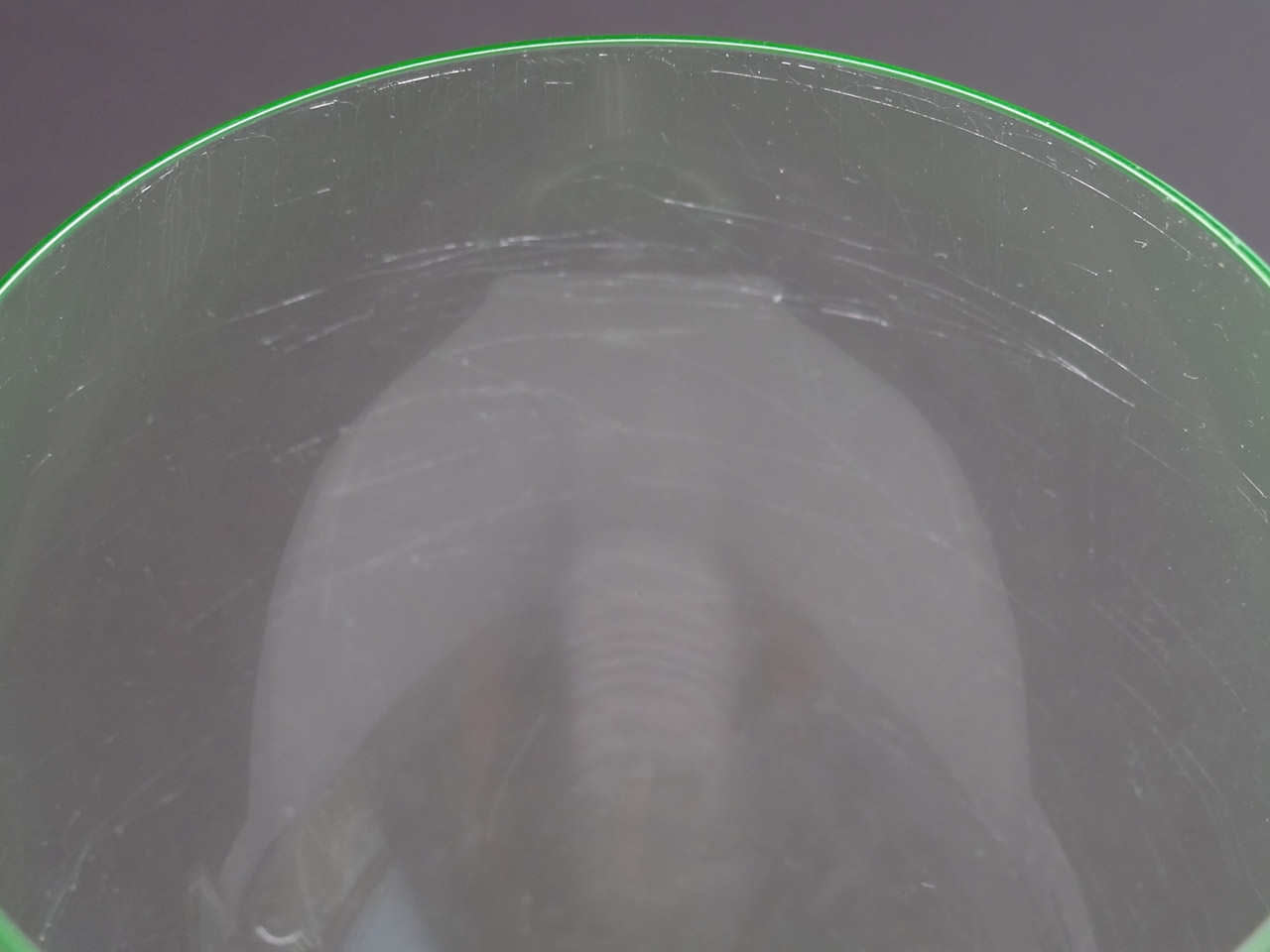
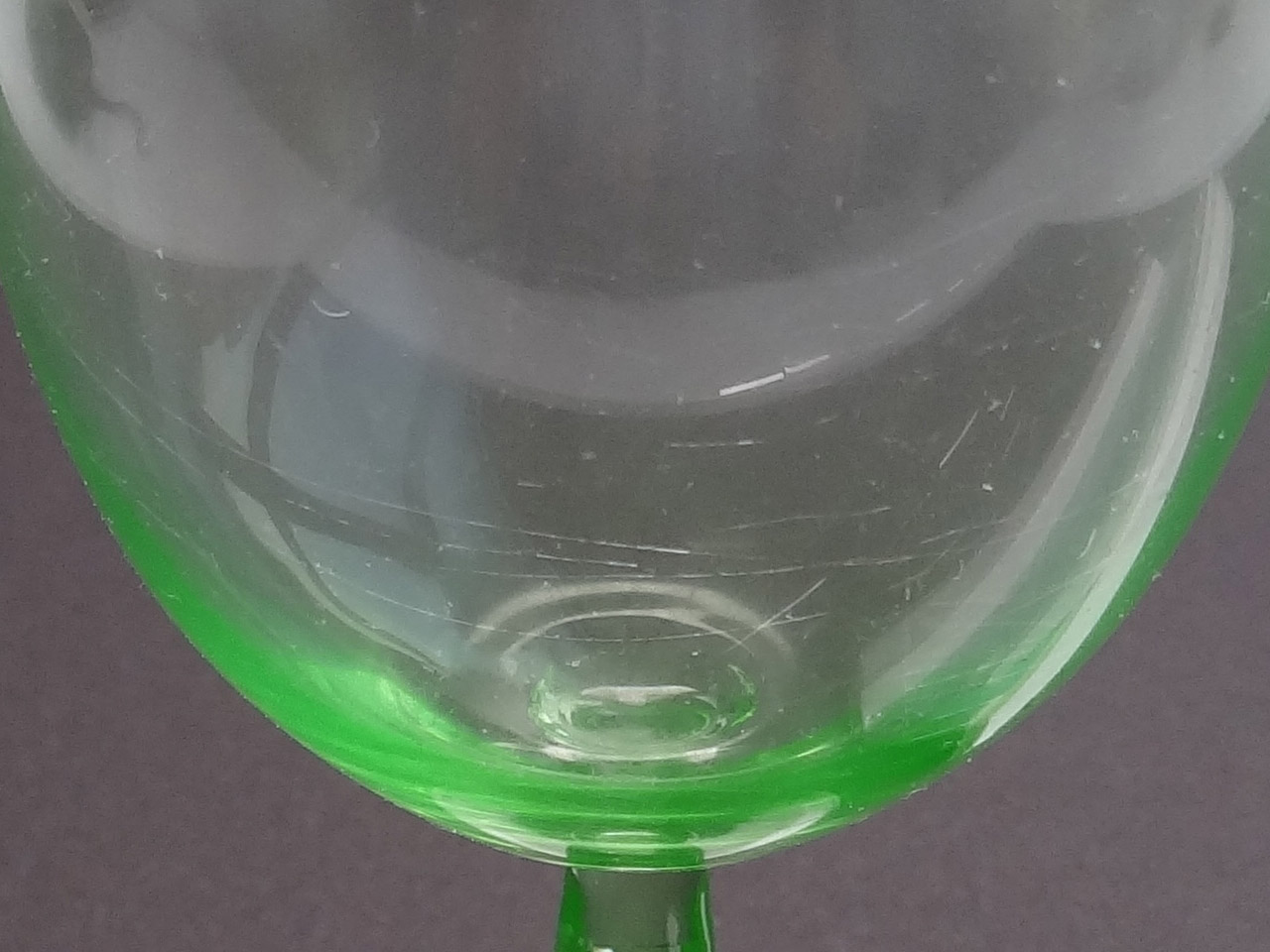
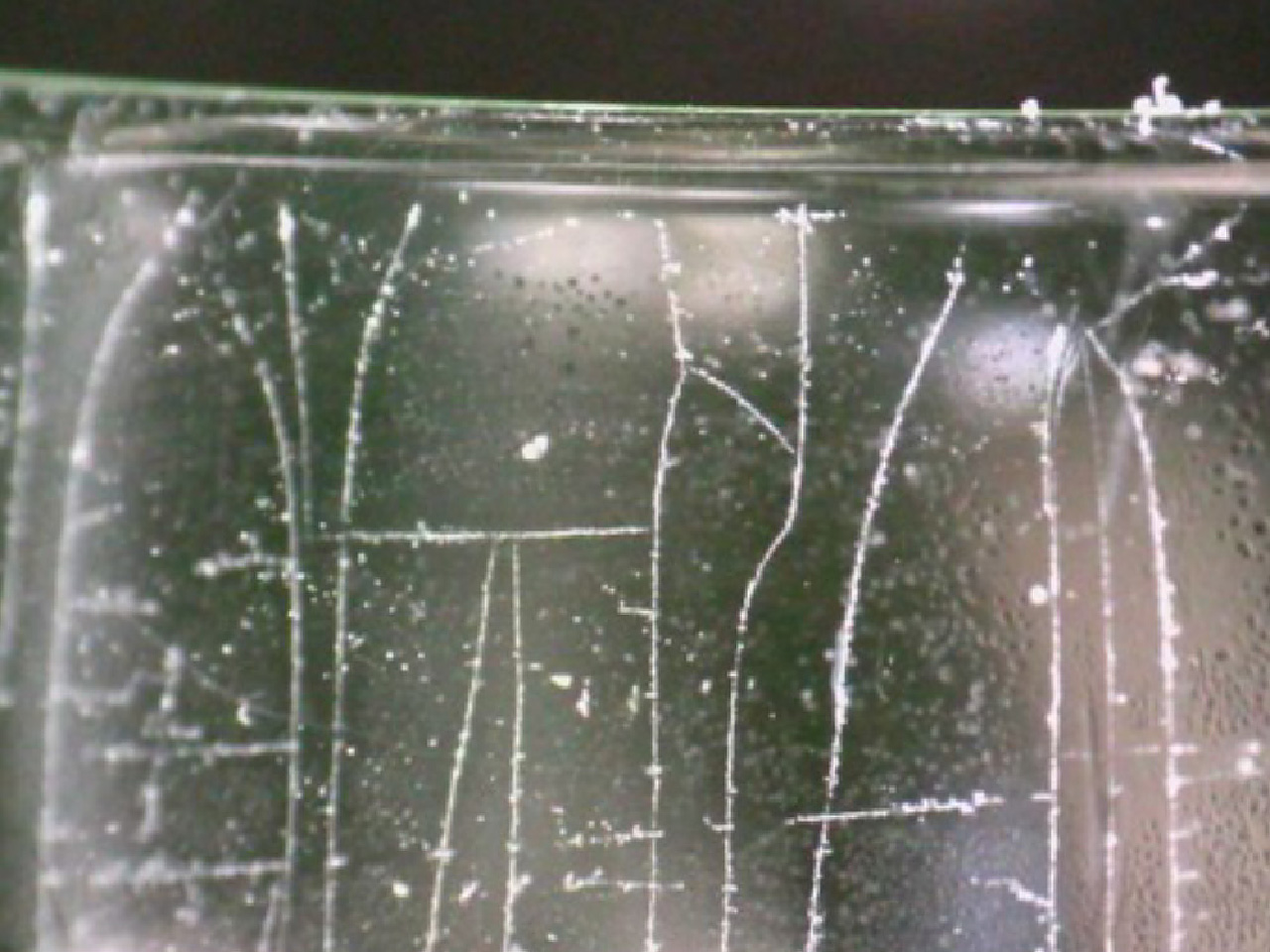
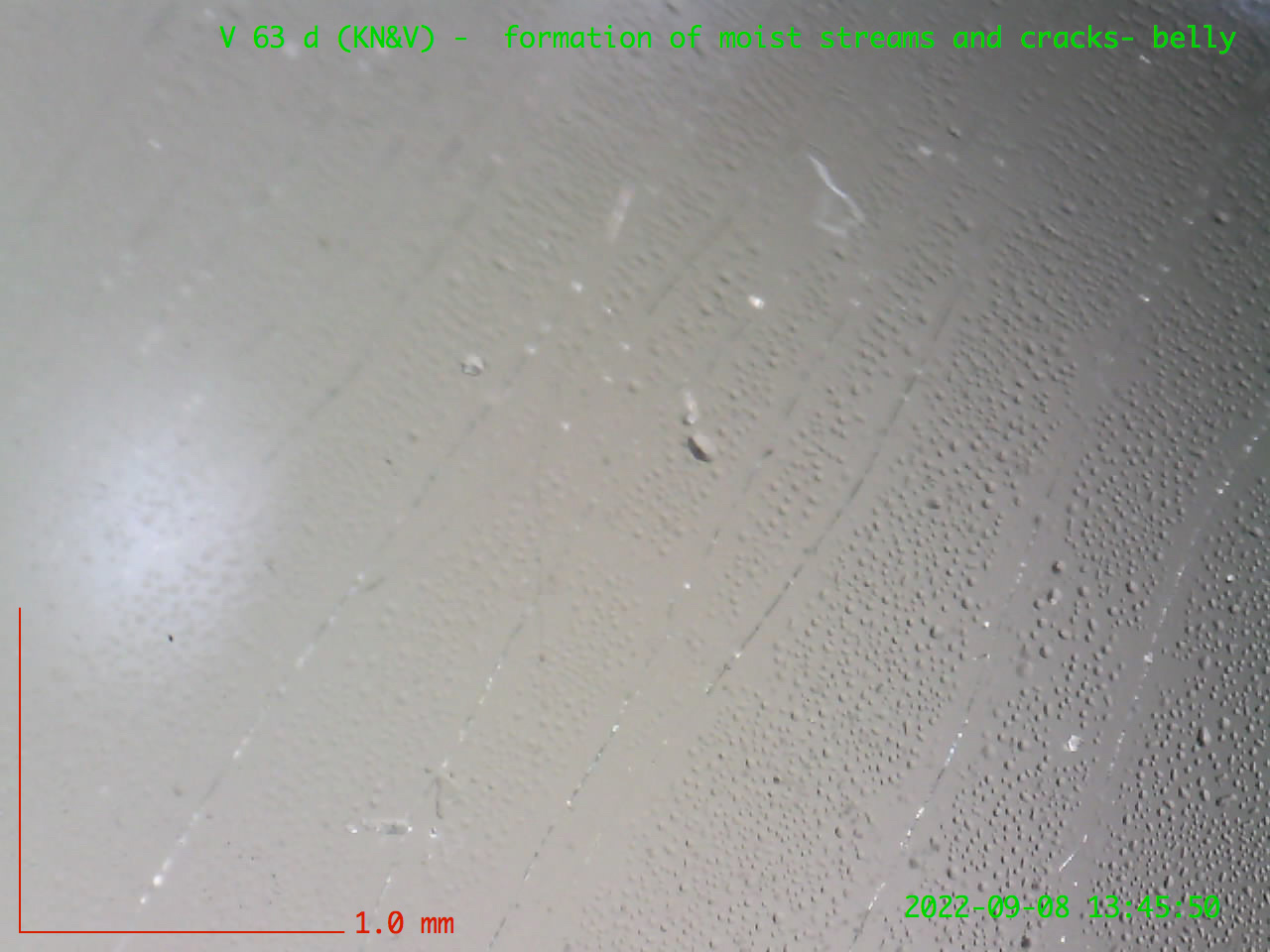
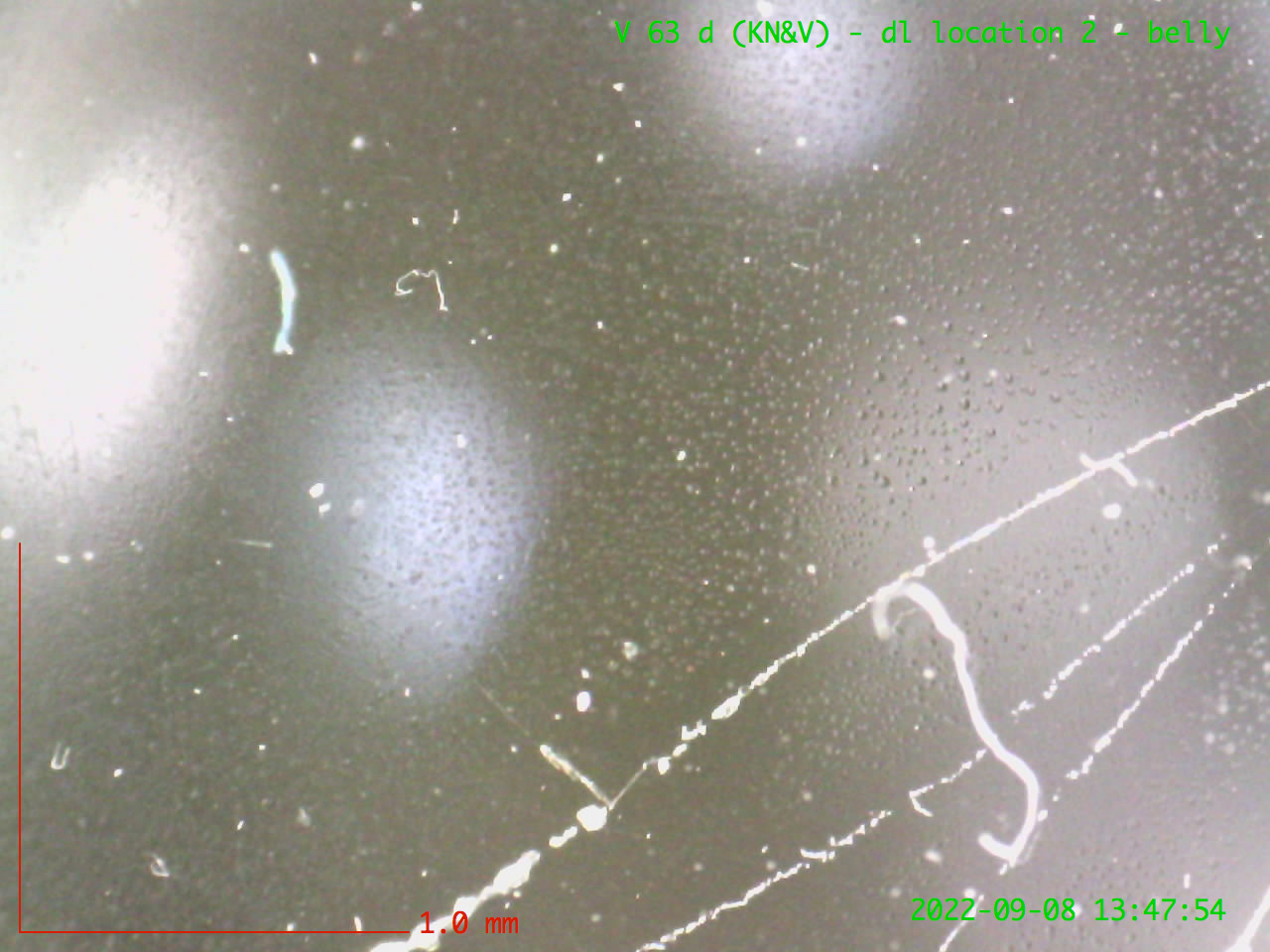
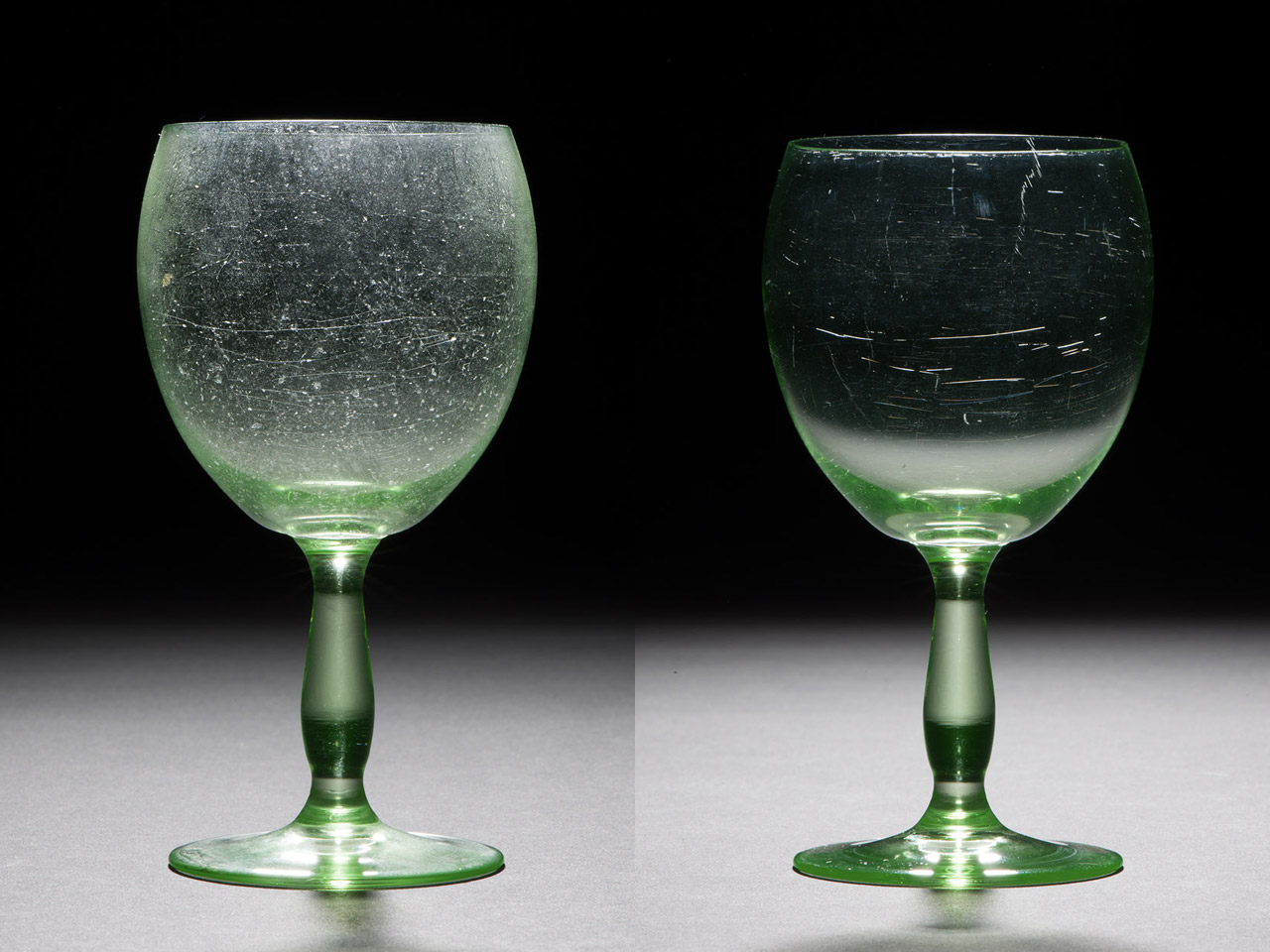
b.1 scratches, b.2 cracks, b.5 dust/dirt/stain(s), c.1 cloudy appearance, c.2 slippery surface
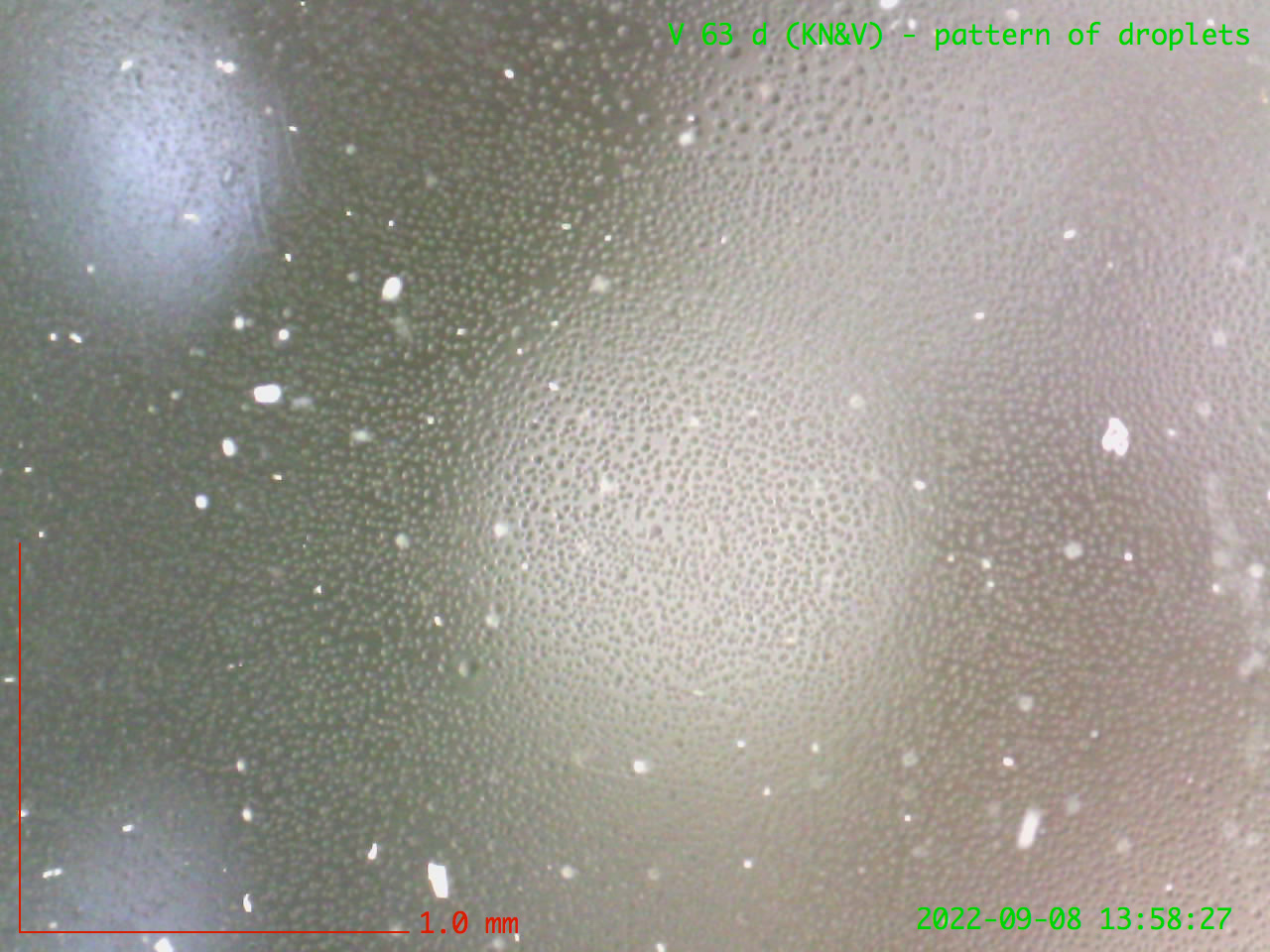
Various forms of salt have been observed on the surface of this object at different times. Left image shows salts in droplet form. Right image shows the same salts in crystalline form. These differences in state are due to slight fluctuations in relative humidity.
IC analysis of ion concentrations on the surface
High alkaline concentrations on the outer glass surface, particularly sodium and formates.
pXRF analysis of the composition
Lead-alkali soda-lime glass (lead glass with K2O and lime). Presence of uranium. High lead content, low lime content. Low concentrations of Na2O and K2O.
Previous treatments
The object was cleaned in 2013 with demineralised water and ethanol in a 4:1 ratio. Immediately after cleaning, it became clear that the object was also crizzled. This was not visible beneath the dirt before cleaning. The crizzling pattern corresponds to the fracture lines of V61 a 1 (KN&V).
Condition diagnosis
Condition (visual) very poor
Condition (IC) likely unstable
(Click on photos to enlarge)
advice & treatment
Suggestions for packaging, handling, storage and transport
Advice: record the vulnerabilities of this object in the (museum) documentation system and/or at the relevant location in the (museum) storage facility. Note that it is slippery and must be handled with care. The object has been diagnosed as ‘likely unstable’. Both droplets and crystals have been observed (see object diagnosis). The object may therefore be very slippery. Handle it as little as possible and take care when wearing nitrile gloves. Transport the object in a box or on a trolley whenever possible until it is set down at its final location.
If packaging is necessary, care should be taken to minimise contact between the packing materials and the glass. The packing material may absorb the droplets and create a microclimate that is not conducive to the conservation of the unstable glass object.
Keep the object in a separate cabinet with other unstable glass. Ensure the object is positioned so that its condition can be easily monitored and that it is readily accessible for inspection.
Suggestions for monitoring the environment and climate
Keep the object in a stable environment with minimal fluctuations in humidity and temperature. It is highly advisable to monitor both the condition of the object and the climatic conditions regularly to detect changes at an early stage and to analyse any links with the environmental conditions. The object is not suitable for loan.
Suggestions for treatment
Research indicates that the condition of the object is deteriorating. The concentration of ions on the glass surface has begun to rise again following a previous cleaning treatment. This deterioration is currently being investigated to devise specific cleaning strategies. Cleaning the object is advisable because droplets on the surface contribute to further degradation.
Only a glass conservator can determine whether cleaning is desirable and feasible, which cleaning method to use and how to closely monitor the condition.
If undertaken, only a glass conservator should clean the glass.
Suggestions for further research
Further research into glass instability, particularly in relation to cleaning methods and techniques, and into the storage of unstable glass is urgently needed.