cristallo
The glassblowers of Murano sought ways to make glass as colourless and transparent as possible, in imitation of the precious clear rock crystal. Around the 15th century, they succeeded in making transparent colourless glass by adding manganese as a decolourant. This glass was named cristallo, a reference to rock crystal. Plant ash (soda ash or natron) was added as a flux, producing a soda-lime glass that could be blown very thin and often had a faint yellowish or greyish tint.
The production of Venetian or façon de Venise cristallo glass was therefore an experiment that pushed the standard glass formula to its limits. The composition was modified so that the glass remained workable for longer and hardened less quickly. The resulting impressive achievements came at a cost because some of these glasses in museum collections are now unstable.
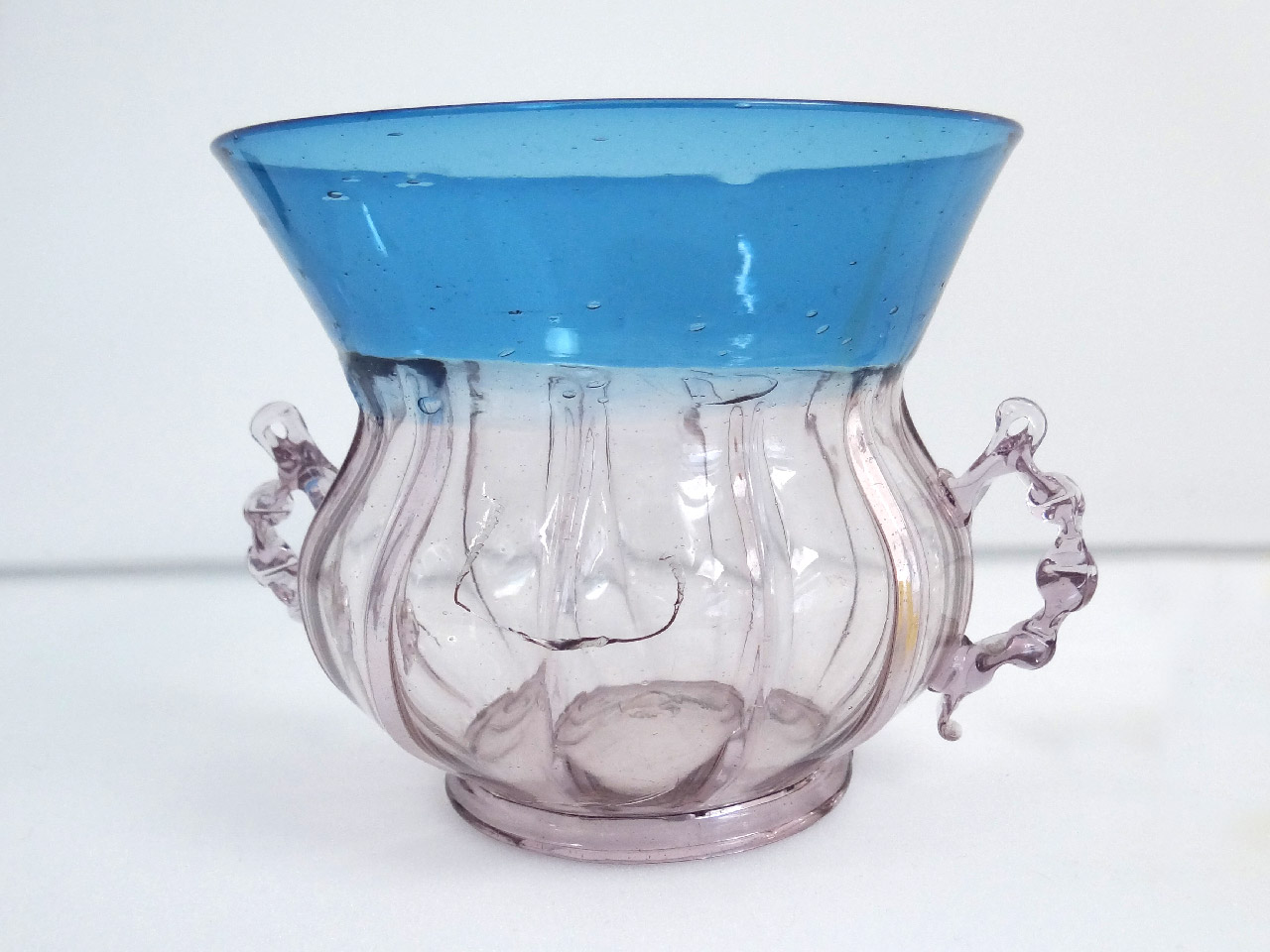
unknown, bowl, 1600 / 1700