creation
making process
what is glass?
composition
ingredients
glass types
glass and colour
making techniques
à la façon de Venise
snake glass
(art) history
glass nomenclature
cristallo
Philips glass

creation

making process

making techniques


à la façon de Venise

Glassmakers gathered in the Italian city of Venice and across the Venetian lagoon, sharing formulas and developing new techniques. Venice became an important centre of glass production and the glassblowers’ guild was established there. From the end of the 13th century onwards, glassmakers were permitted to work only on the neighbouring island of Murano because Venice was built on wooden piles and highly vulnerable to fire.

The glassblowers of Murano sought ways to make glass as colourless and transparent as possible, aiming to imitate precious rock crystal. Around the 15th century, they succeeded in producing transparent, colourless glass by adding manganese as a decolourising agent and using plant ash (soda ash or natron) as a flux. The resulting soda-lime glass, named ‘cristallo’ in reference to rock crystal, could be blown very thin and often had a slight yellowish or greyish tint.

Venetian glass was enormously popular, and the city guarded its formulas jealously. Foreign glassblowers were unwelcome, and Venetian glassblowers who left risked punishment. Nevertheless, glassmakers elsewhere attempted to replicate it, producing what became known as à la façon de Venise, French for ‘in the style of Venice’.

Producing Venetian or façon de Venise ‘cristallo’ glass meant experimenting with the standard glass formula and pushing it to its limits. The formula was modified to keep the glass workable for longer and slow its hardening. Despite the impressive results, some of these glasses in museum collections are now unstable.
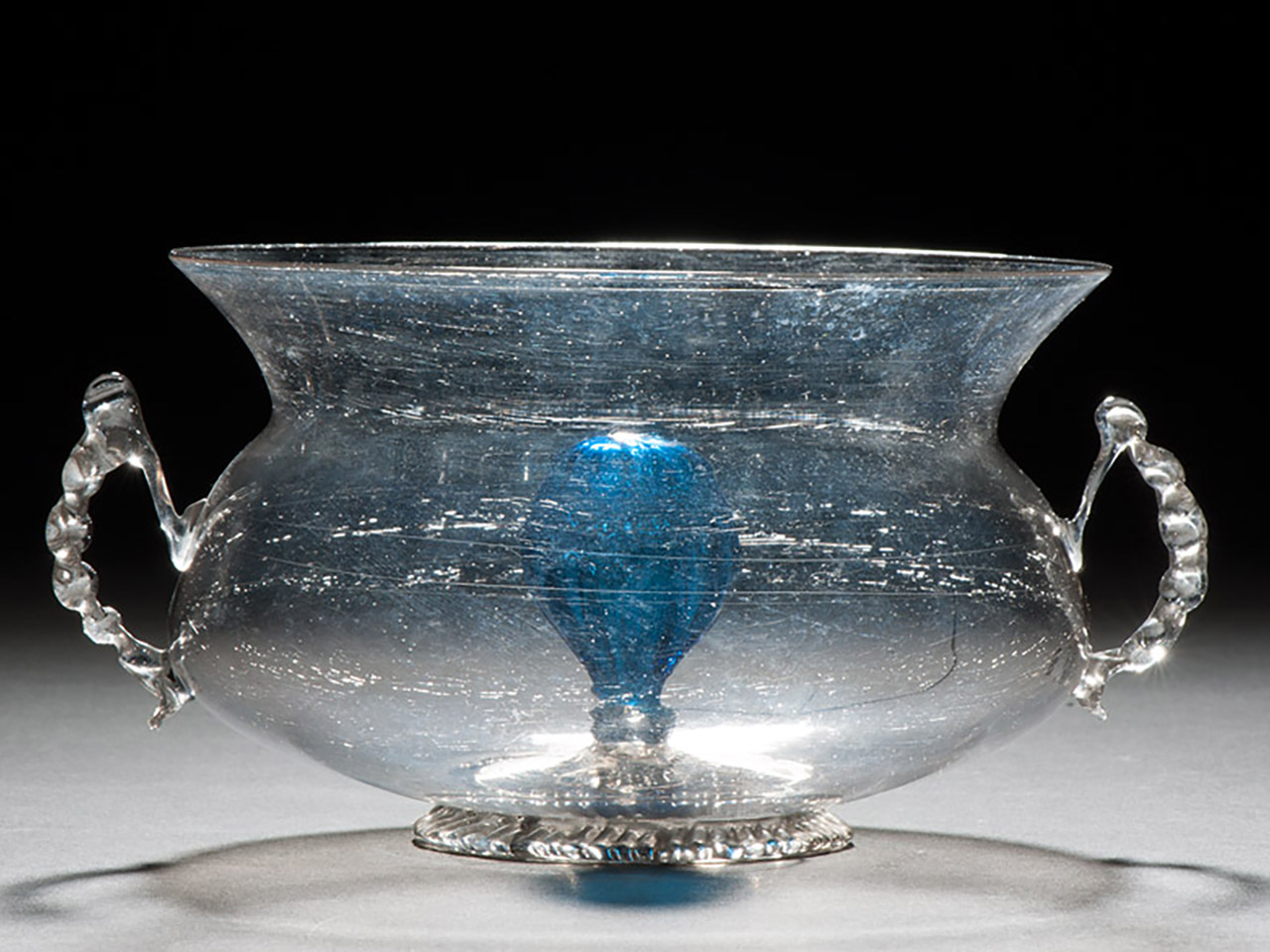
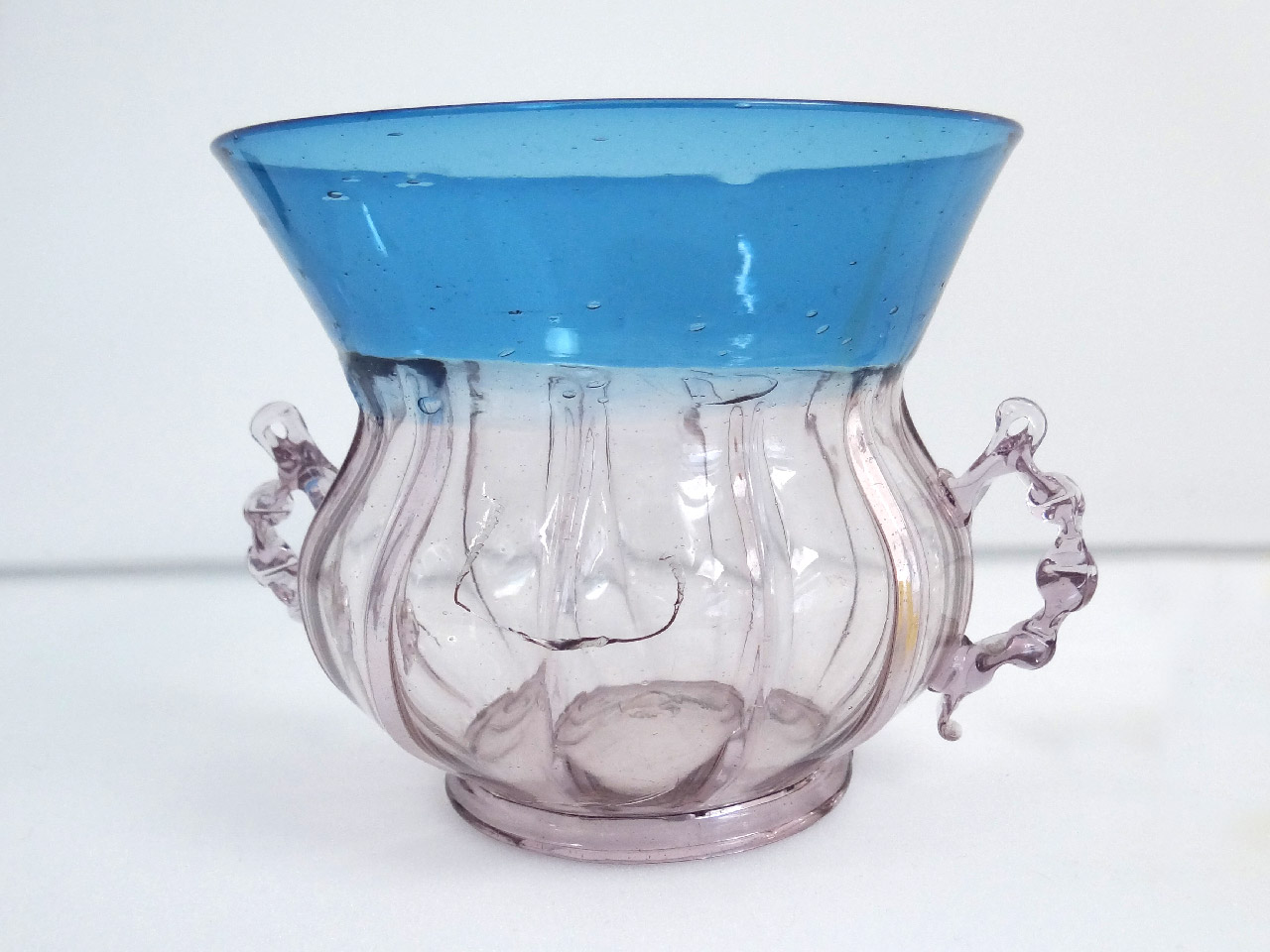
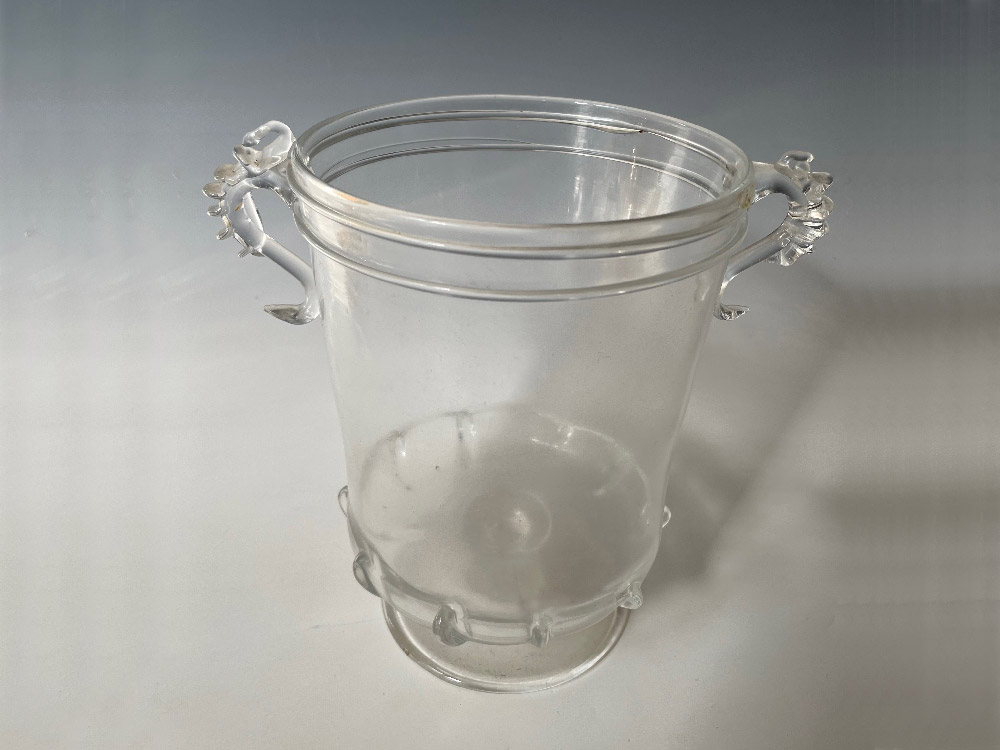
unknown, bowl, 1700 - 1800


unknown, bowl, 1600 / 1700


making process inner blue ball
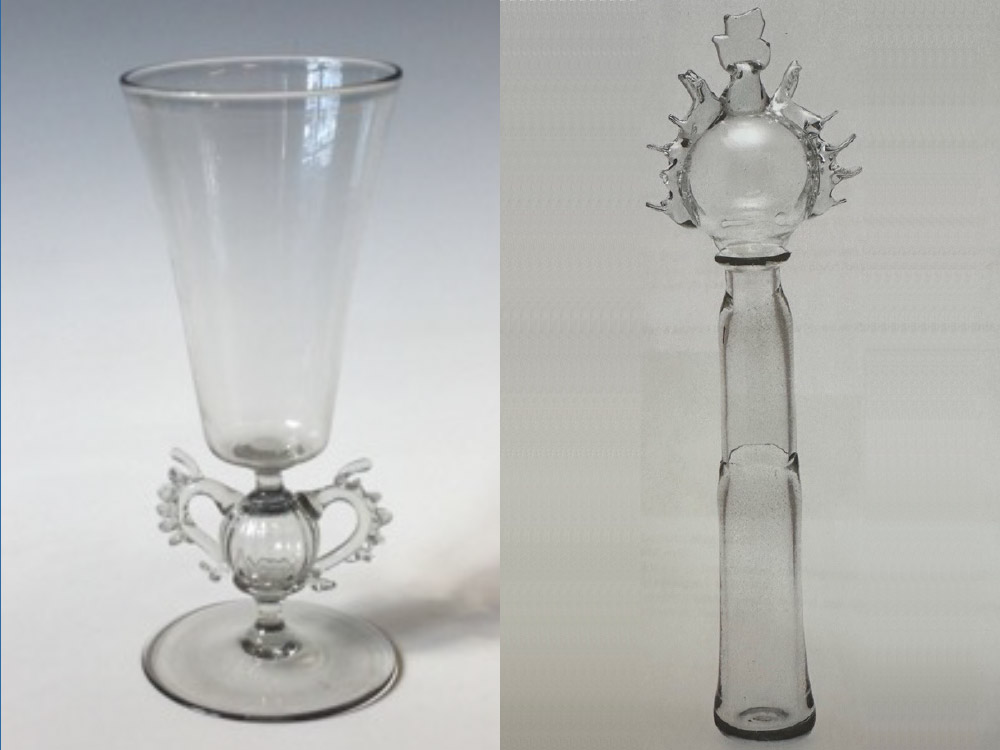
The SBHK study collection contains a glass from the Valkema Archive that was made by Anthony Shafermeyer in Leerdam during the 1997 Drinkglas (Drinking Glass) exhibition using façon de Venise techniques. He used a glass formula developed by Philips for the manual production of light bulbs. It had a low melting point and could be used to make very thin-walled objects.

However, the formula proved to be highly unstable. This object now shows clear signs of atmospheric degradation, appearing dull and slippery due to microscopic droplets on the surface. At the time, it was claimed that ‘Philips glass’ could be stabilised by exposing it iron chloride vapours in the annealing oven. This has since been shown not to be the case.

The new wooden mould made to produce this glass may also have caused the dull appearance. The first items created in a new mould are usually of lower quality because the acids must first be steamed out of the wood. The mould only becomes suitable after it has been used several times.

Study collection
Valkema Archive


Venetian techniques, hollow optic-blown knops, a blown foot and pinched forms.
LEFT Anna Carlgren. RIGHT Durk Valkema, Drinkglas (Drinking Glass) exhibition, 1997 PHOTO Wyke Valkema


sources / further reading
Corning Museum of Glass, Q. What is the history of clear or colorless glass? - Ask a Glass Question
Glass of Venice, History of Murano Glass
Corning Museum of Glass, Venetian Glassmaking Techniques
Stichting het Historisch Gebruiksglas, Vleugelglas in Façon de Venise stijl
ResearchGate, Onderscheid venetiaans en à la façon de Venise
De Raedt, I., K. Janssens, J. Veeckman, On the distinction between 16th and 17th century Venetian and façon de Venise glass, Journal of Analytical Atomic Spectrometry, 2002
Grand Curtius, Les verres à serpent à la façon de Venise
Laméris, K., Barreda, M., Schertsglazen Vernuftig drinkvermaak, 2022 Walburg pers. Walburg pers
Wikipedia, Cristallo