The simplest glass formula consists of sand, soda and lime, but virtually every chemical element in the periodic table has at some point, intentionally or unintentionally, formed part of a glass composition. There are countless glass formulas, and the range continues to expand. Throughout history, glassmakers have made practical use of cullet (recycled waste glass), melting the previously made glass and adding other ingredients as needed.
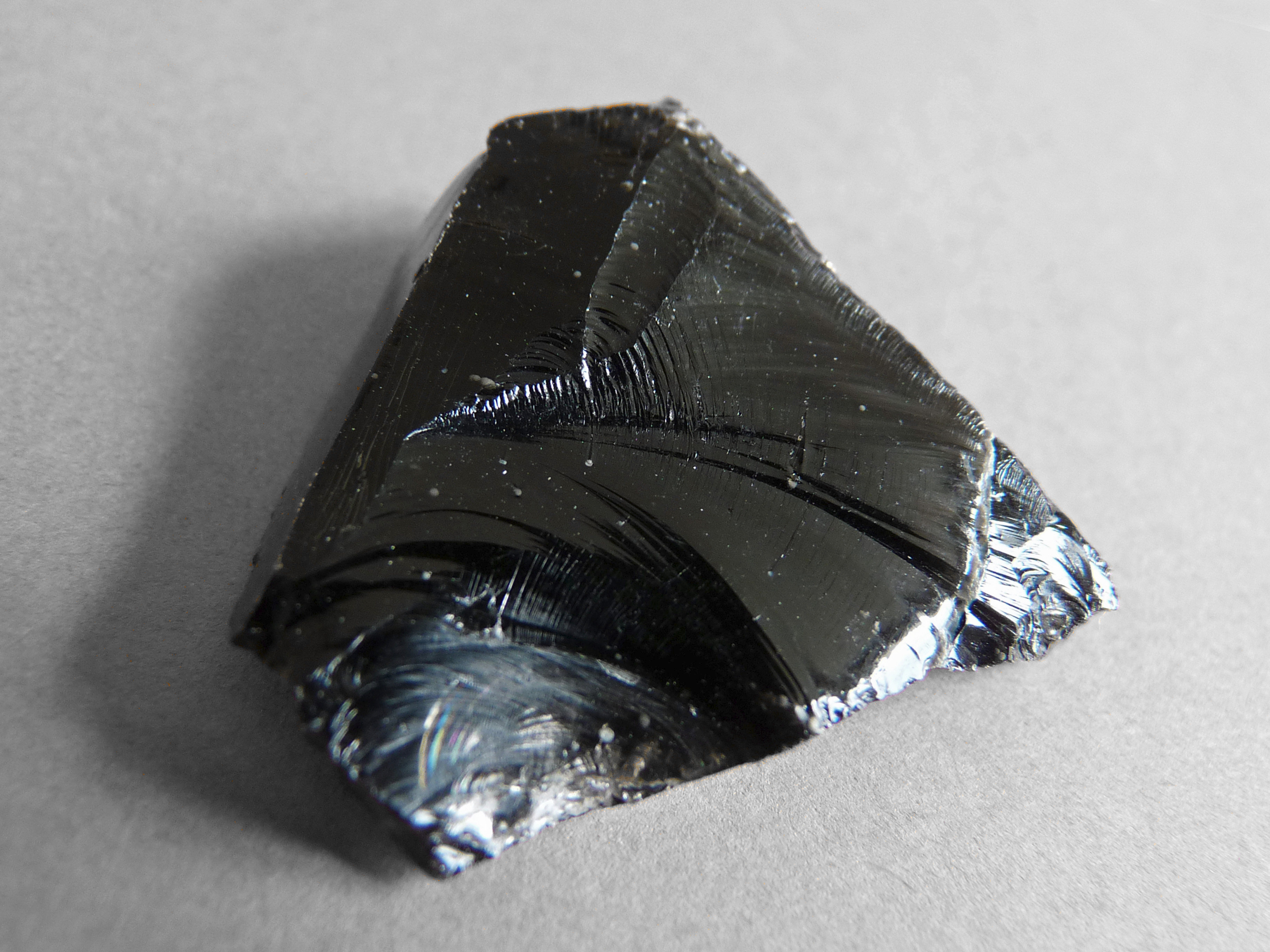
Glass also occurs naturally. Obsidian, for example, can form when the intense heat of volcanic activity or a meteorite impact fuses sand, soda and lime into glass.
Glass can be described as a solid with the molecular structure of a liquid. After the ingredients have been melted, slow cooling produces a viscous mass which, whilst still hot, can be shaped elastically using tools. At this stage, the temperature of the mass is above the glass transition temperature but below the melting temperature. Further cooling transforms the viscous mass into a brittle end product. Heating it above the glass transition temperature makes it malleable again. This magical transition is illustrated in the following video about the making of a vase.
Network formers
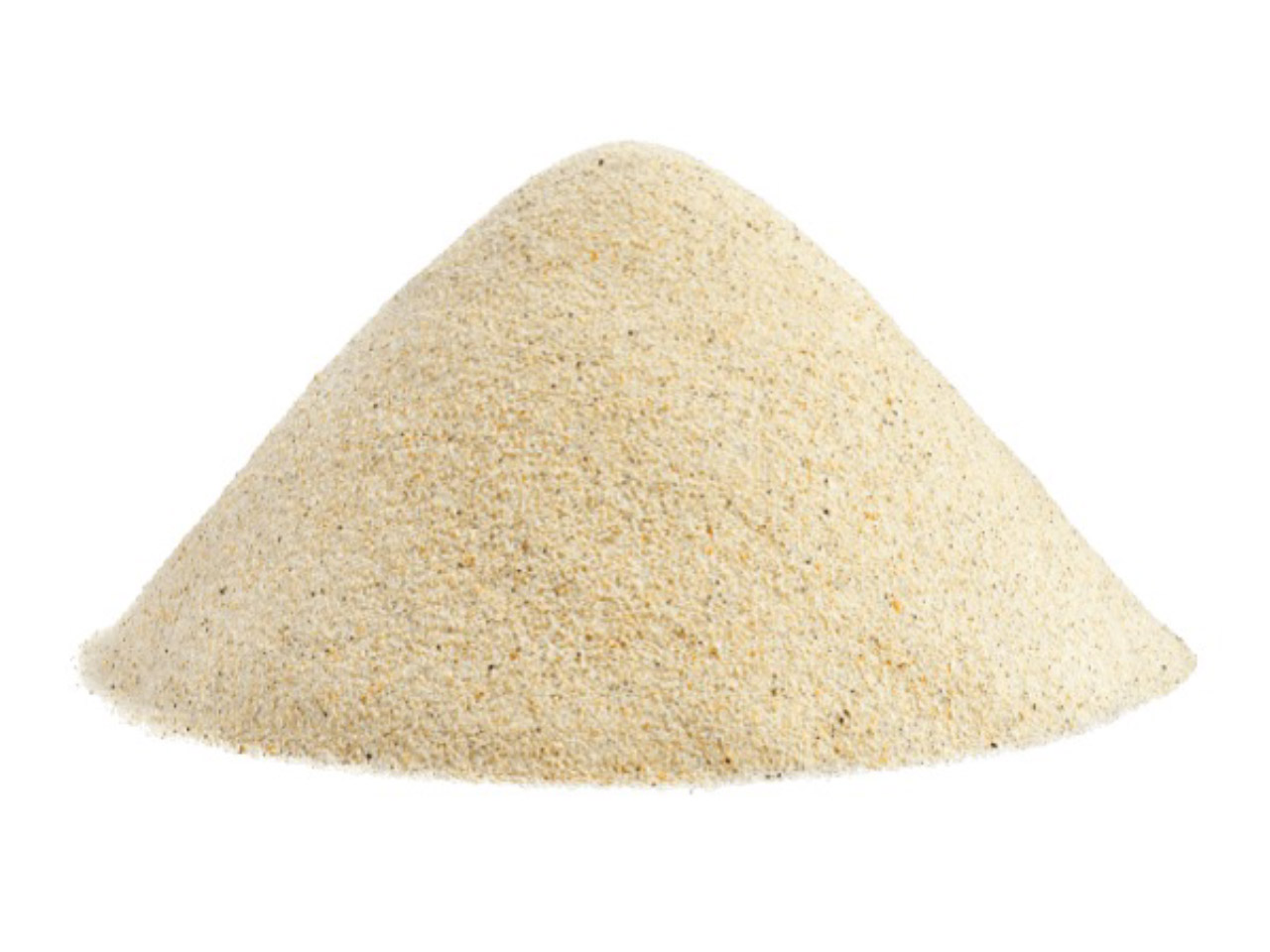
Sand or quartz Sand or quartz serves as the source of the glass-forming agent silica (siliciumdioxide SiO
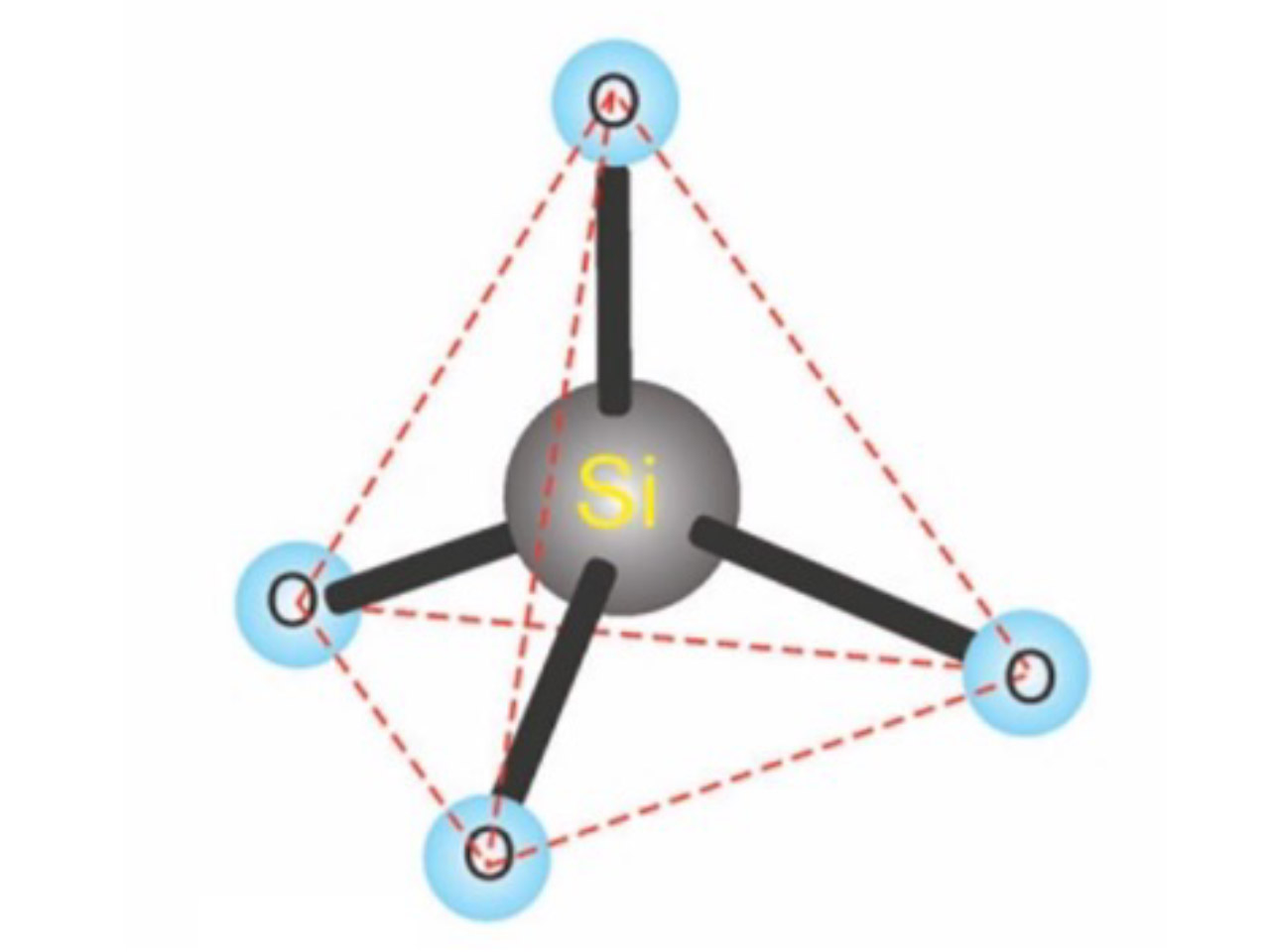
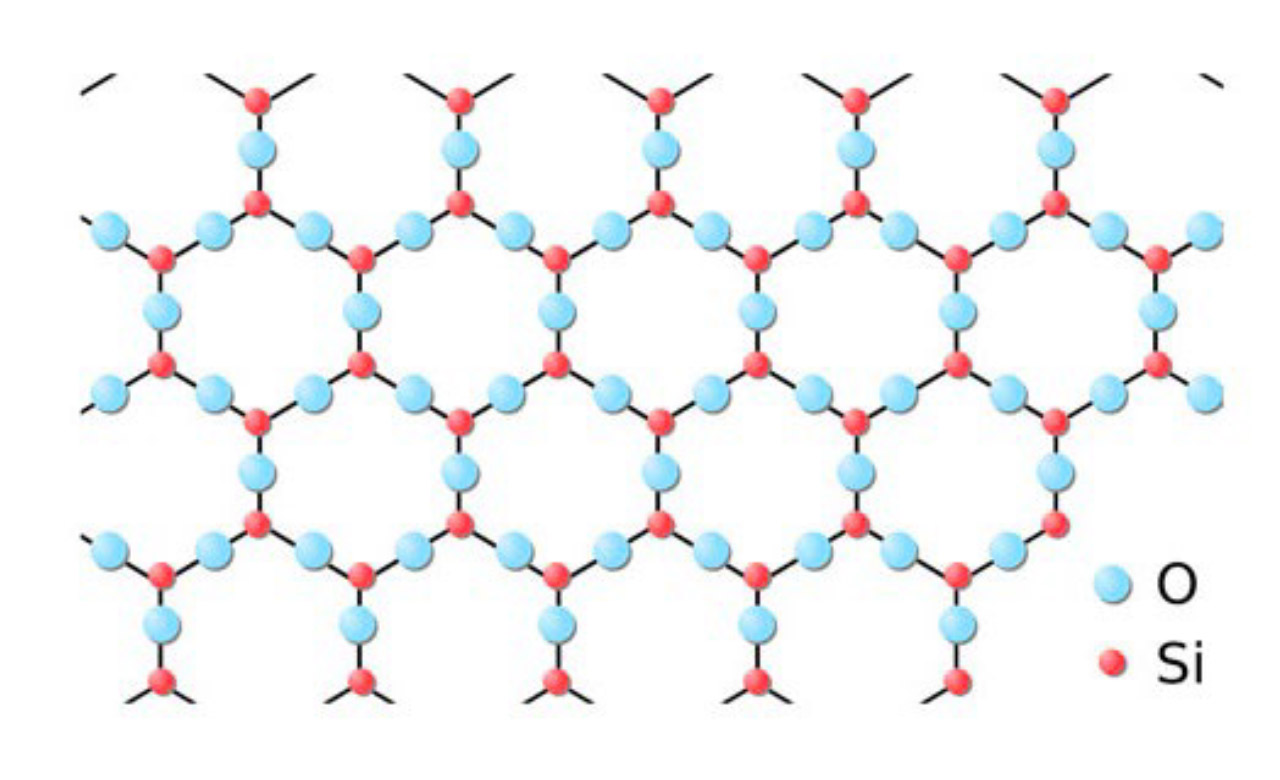
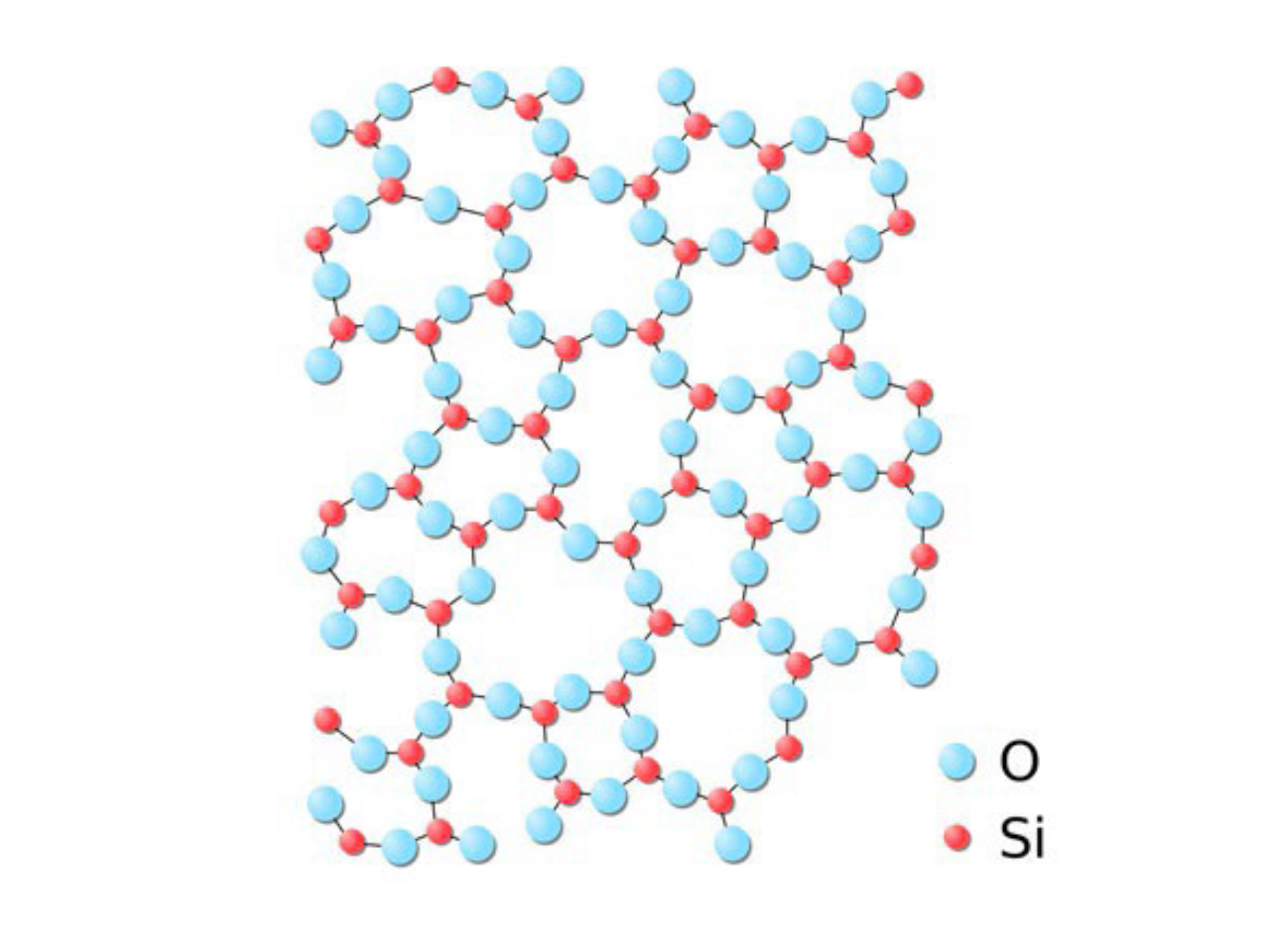
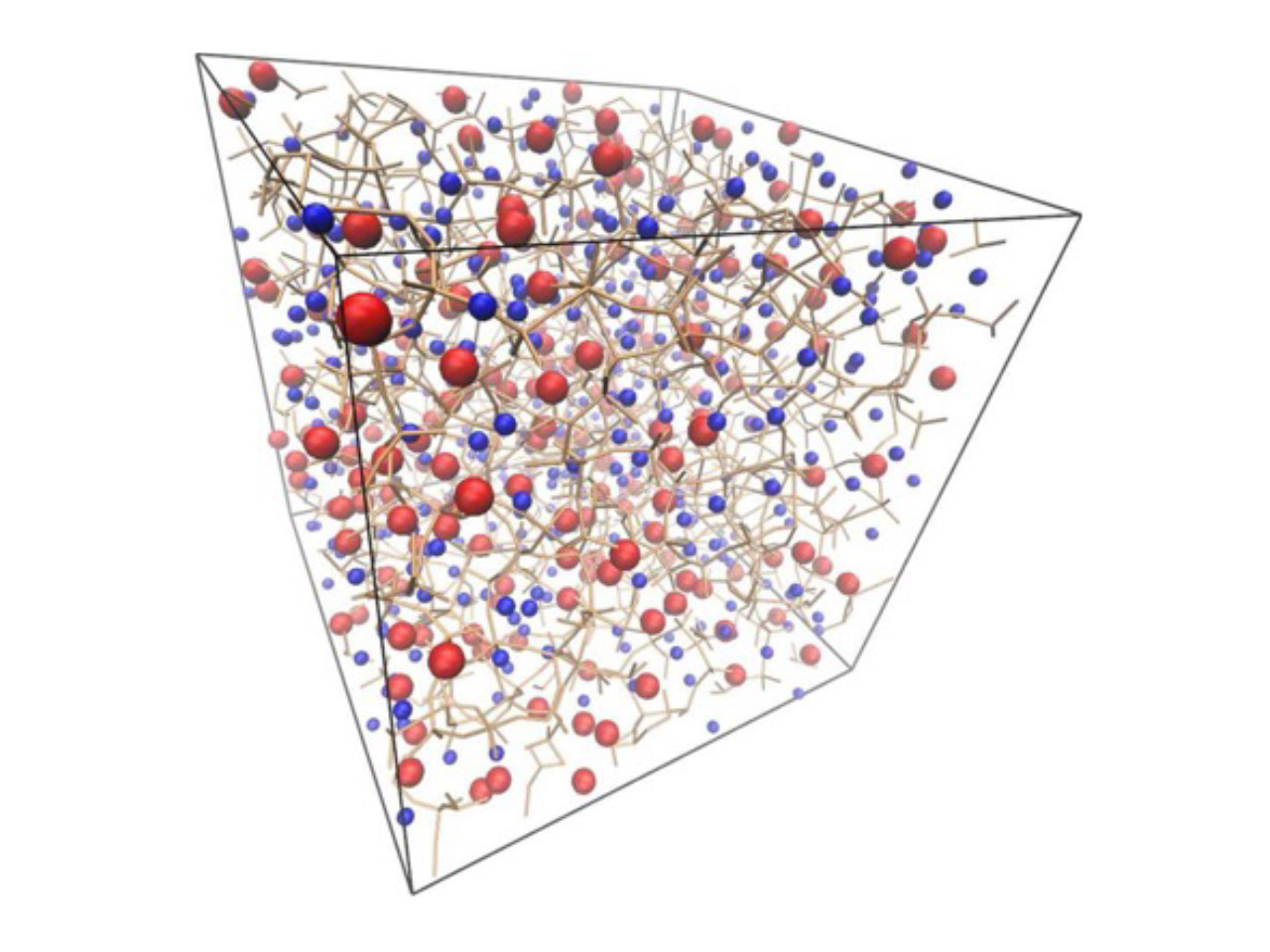
2). If we chemically examine pure quartz, it has a beautiful crystal structure composed of tetrahedra of silicon and oxygen. When pure quartz is melted, the tetrahedra are no longer arranged in such an orderly way. We call this an ‘amorphous structure’, and the resulting material is glass. Melting silicates requires a temperature of 1,700 °C which was unattainable in early furnaces and remain too high for most glass-studio ovens today. Besides silicon dioxide, other glass forming compounds include lead oxide, boron oxide and germanium oxide.
Fluxes (melting-point depressants)
SodaGiven silica’s high melting point, the formula must contain fluxes, either added deliberately or present in the raw materials. Well-known alkali components with a fluxing effect are soda (sodium carbonate) or potash (potassium carbonate). See
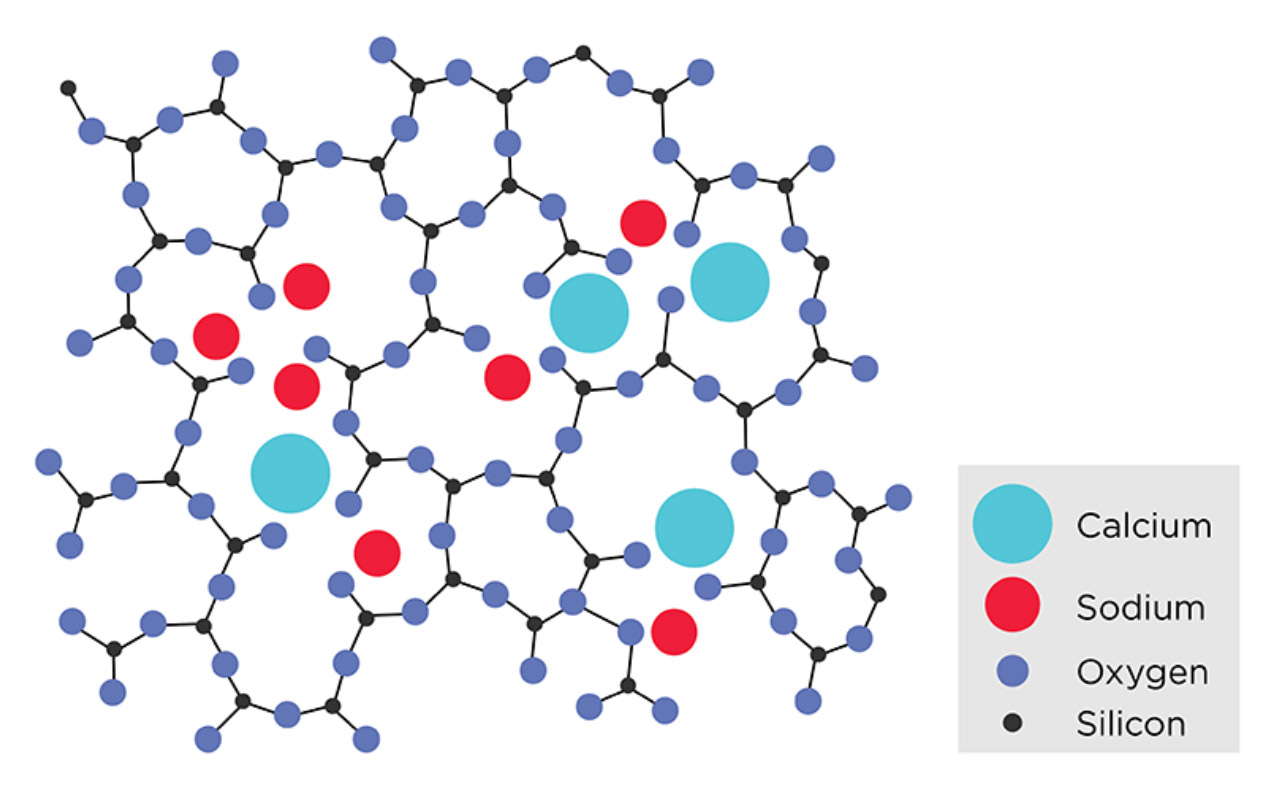
glass types. Adding alkali components partially breaks up the silica network. Oxygen atoms that are no longer bonded to silicon atoms can then form ionic bonds with sodium or potassium, lowering the melting temperature. Depending on the amount of glass, the melting temperature can be reduced to around 1,100 °C.
Stabilisers
LimeAdding lime (calcium carbonate) or lead can stabilise the glass formula. Oxygen atoms that break free during the glass melting process can then also bond with calcium atoms. Two oxygen atoms are needed to bond with one calcium atom. The calcium thus ensures the stability of the glass.
Other materials that can modify the glass network include magnesium, aluminium, boron, lead, lanthanum and many more.