creation
making process
glass and colour
The raw materials used to make glass are often obtained from natural sources and frequently contain impurities such as iron oxide, which imparts a green colour. Colours can also be produced intentionally by adding oxides to a glass formula. On the other hand, decolourising agents (such as manganese oxide) can be added to make glass colourless. See also
‘Coloured glass’ in the glossary.
A glass object’s colour depends on a range of chemical reactions that occur during the melting and annealing processes, with the glass composition, temperature and furnace conditions all influencing the outcome. In general, colour can be produced by adding transition metals such as copper, cobalt, manganese, iron, nickel, vanadium and titanium. Selenium, cadmium sulphide or cadmium selenide can produce a vivid orange-red colour. Colour can also be achieved by combining oxides, such as mixing manganese, iron and copper to produce a grey-brown colour.
colour chart
| Iron |
blue-green |
| Iron and chromium |
green (wine bottle) |
| Sulphur, carbon and iron |
amber |
| Manganese |
purple (green at low concentrations) |
| Cobalt |
blue |
| Nickel |
blue, violet or black (depending on concentration) |
| Cadmium sulphide |
yellow |
| Uranium |
fluorescent yellow or green |
| Metallic copper |
dark red, ruby red |
| Silver |
orange red to yellow |
| Gold |
ruby red |
decolouring
Adjusting the cooling process or adding oxidising agents such as manganese or antimony can change the blue-green colour of reduced iron (bivalent form: Fe(II) or Fe2+) to a yellowish oxidised form (trivalent form: Fe(III) or Fe3+). The purple of the manganese offsets the yellow, producing colourless glass. Oxidising agents such as manganese dioxide can be added to the glass formula. In the past, plant ash from plants naturally containing manganese or antimony was sometimes used to make glass colourless.
enameling & stained glass
Besides adding pure oxides to the batch, colour can be applied to glass after it has been formed. Enamel painting uses a mixture of fine glass powder and metal oxides that is suspended in an oil-based medium and painted onto the glass surface. This is then fused onto the glass in a muffle kiln at a relatively low temperature (around 500–700 °C). This technique is similar to stained-glass painting, in which colour is created by applying metal oxides to the glass surface and firing it at around 500 °C.
opacifying
Not all glass is transparent. Adding substances such as tin oxide can produce small crystalline particles that make the glass translucent or opaque. This gives opaline glass its translucent appearance. Opacification can also result from the thermal history of the glass, namely its cooling and reheating, especially if the batch contains bone ash (calcium phosphate).
Examples collection Museum Boijmans Van Beuningen
Tapio Wirkkala, Vase 503-1, 1966 - 1967
Grey section: nickel and zinc
Green-blue section: copper, iron and manganese
Unknown maker, Goblet, 1600 - 1700
Red colour derived from manganese, copper and other elements
Ettore Sottsass, Sol, 1972
Red: cadmium selenide
Green: copper and chromium Blue: copper
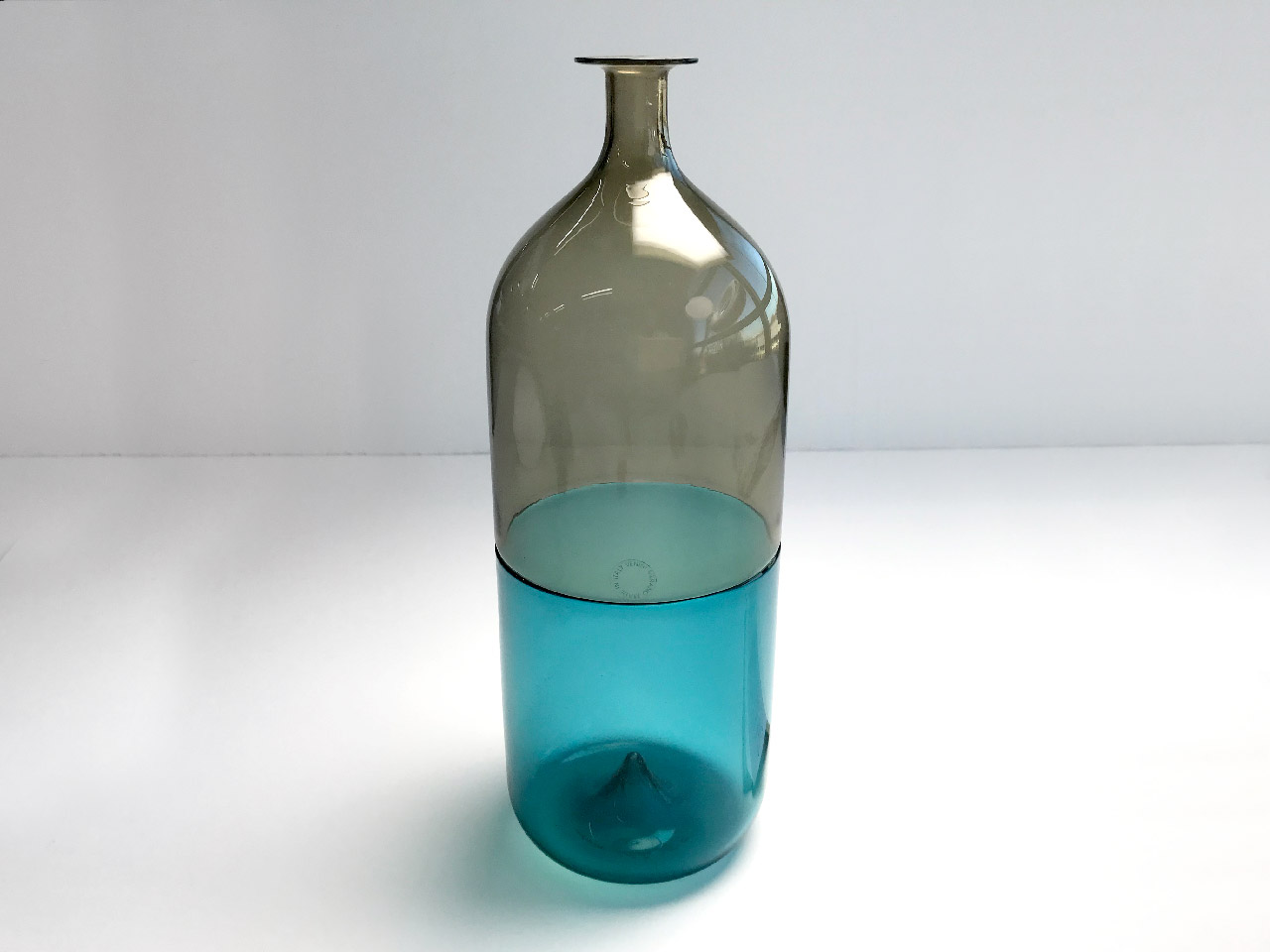
Tapio Wirkkala, Vase 503-1, 1966-1967
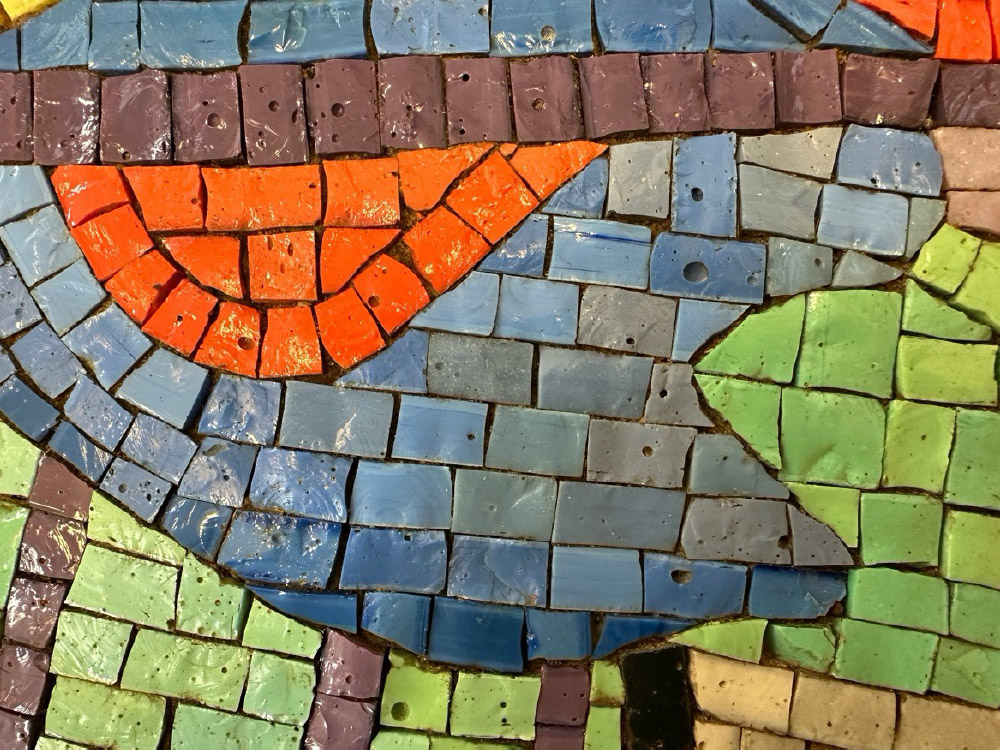
Mosaic
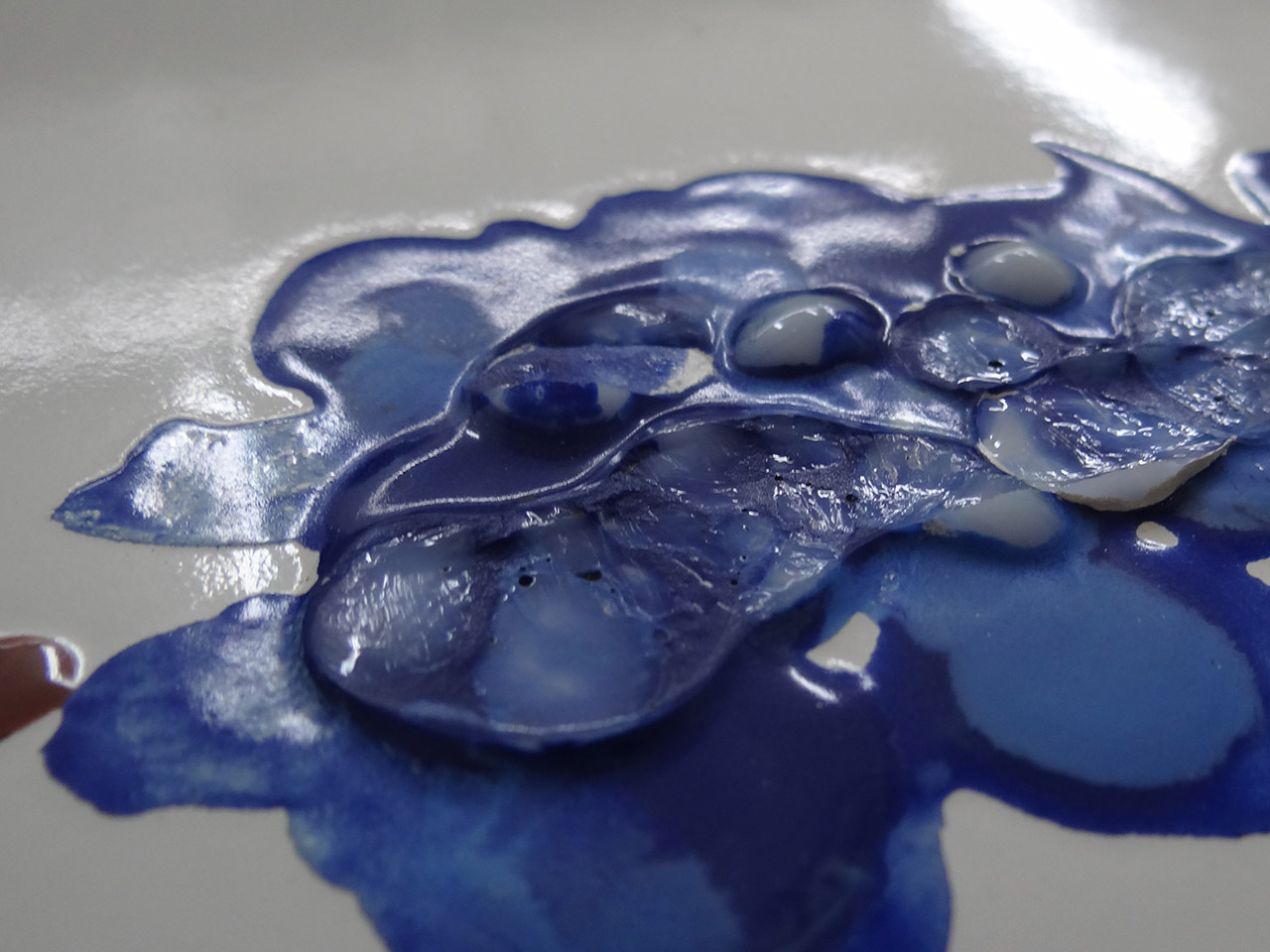
enamel
.jpg)
Unknown maker, Goblet, 1600 - 1700
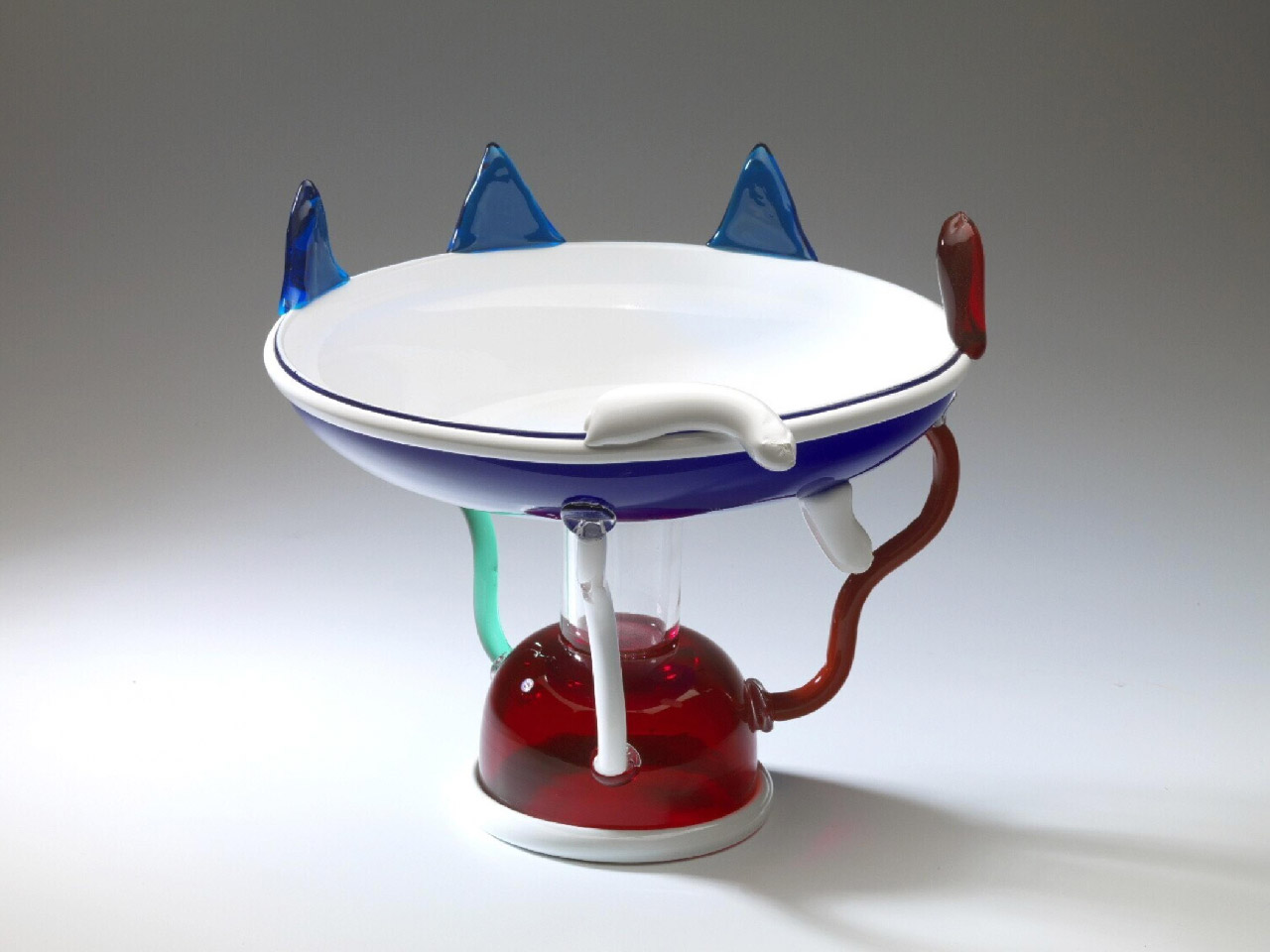
Ettore Sottsass, Sol, 1972
coupe.jpg)
Unknown maker, Coupe 18th/19th century
COLLECTION Museum Boijmans Van Beuningen
Opaline kenmerken, niet door tinoxide. Wellicht dat titanium of arseen een rol speelt in de opaline uistraling van het voorwerp.
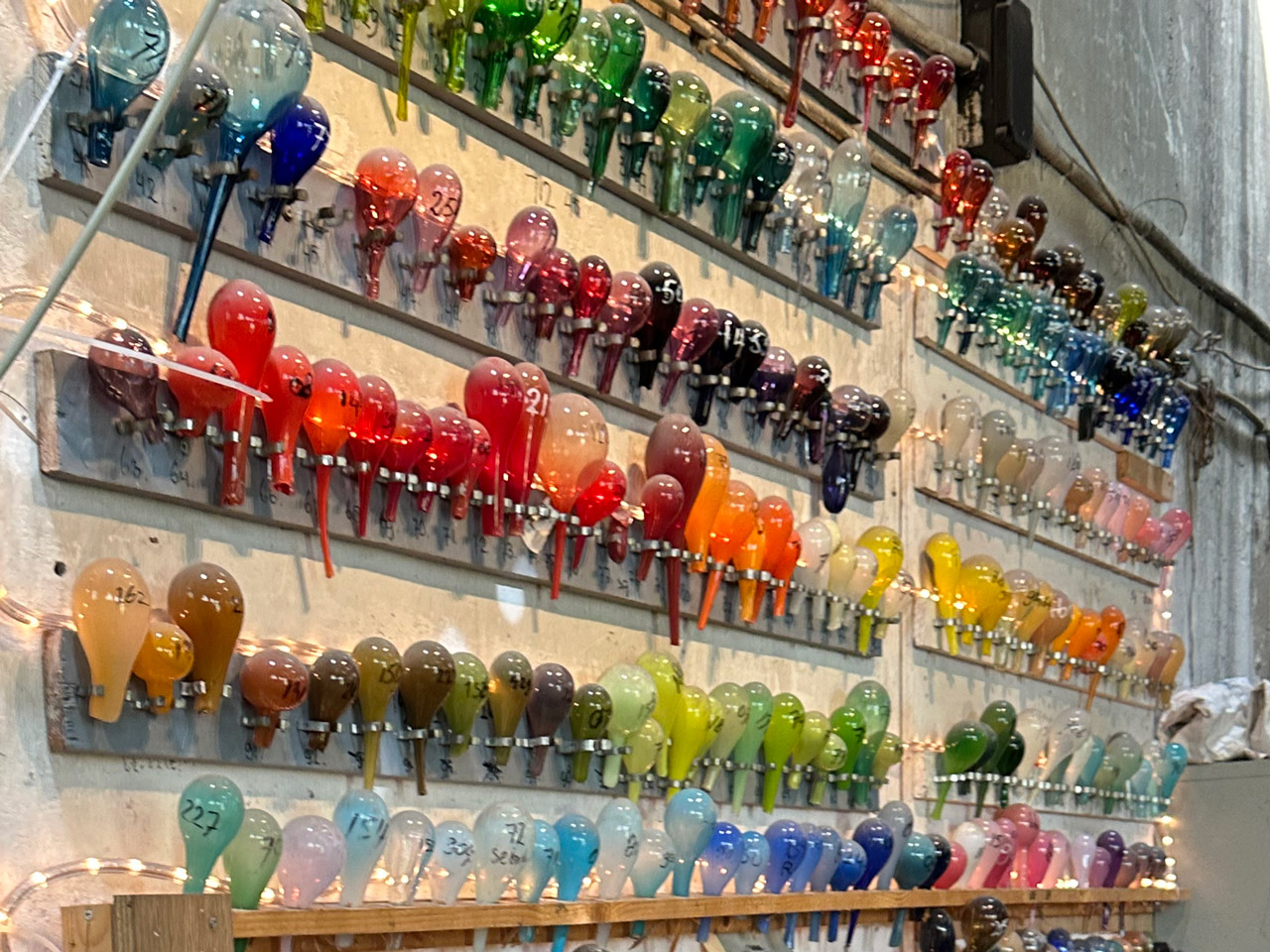
colour glass examples, glassblowing studio de Oude Horn, Acquoy
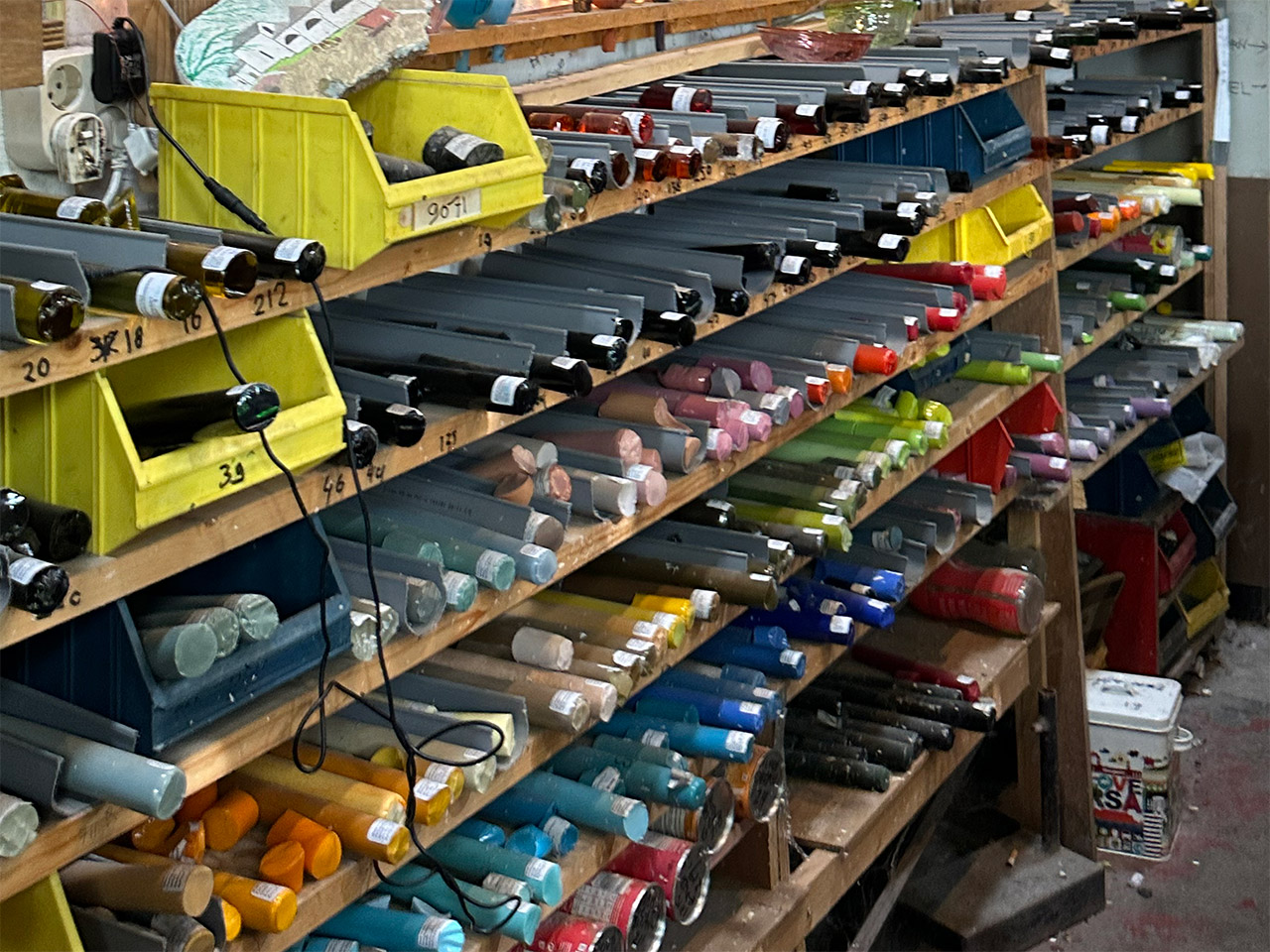
colourrods, glassblowing studio de Oude Horn, Acquoy