conservation
research & diagnosis
technical analysis of materials
X-Ray Fluorescence Spectrometry (XRF) analysis
This technique allows qualitative analysis of the glass composition and identifies most of the elements present. Although it does not show how the elements present are chemically structured, specialists can use the results to identify the composition with a high degree of confidence. A portable XRF, or
pXRF, is often used by museum collection departments to analyse objects in situ. No sample is required, making it a non-destructive method for obtaining information about glass composition.
Although XRF can detect many elements, it has limitations with light elements such as hydrogen and sodium. Careful calibration of the instrument and comparison with standardised glass compositions make it possible to accurately determine the composition of any type of glass. An expert should interpret the data, particularly when comparing objects. The results can be correlated with visual observations of the glass condition and with findings from other analytical techniques used to examine the glass. Close cooperation among all parties involved is essential.
A point a few millimetres in diameter on the glass surface is exposed to X-rays. The atoms in the glass absorb this energy and fluoresce, emitting X-rays in response, which are picked up by a detector. By measuring the energy of these X-rays, most of the elements present in the glass can be identified and their relative concentrations determined. The result is displayed as an energy spectrum in which each element appears as a peak. The peak positions identify the elements, and the peak heights indicate their relative amounts.
It is important to record exactly where on the glass the measurement was taken and the thickness of the glass at that point. Any practical difficulties, such as areas that are difficult for the instrument to access, should also be recorded. This information is important when interpreting the data.
Safety precautions are required when carrying out XRF measurements and should be discussed with the analyst beforehand. The glass surface must be placed against the device, and the conservator’s instructions regarding the object’s vulnerabilities must be followed. The conservator should determine the measurement locations based on the research question and the object’s condition and stability.
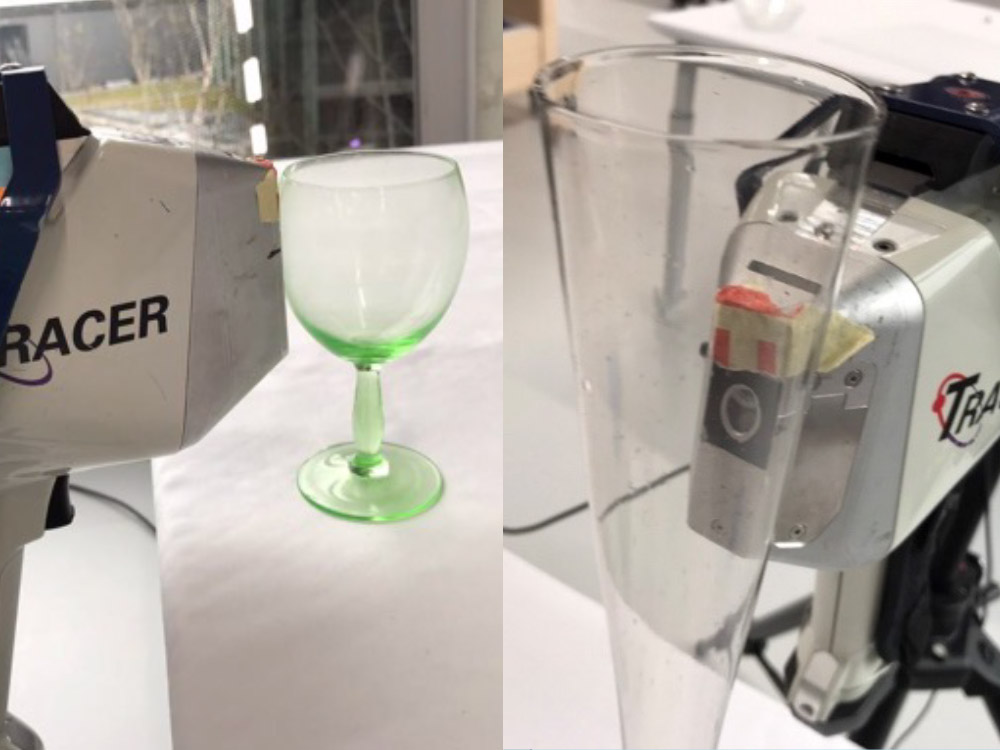 Portable XRF (pXRF) instrument positioned against a glass object during measurement.
The following document can be used to record the data from an XRF analysis of an object. Examples of completed forms can be found under
objects from the ‘guide collection’ of Museum Boijmans Van Beuningen.
By comparing data from similar objects, findings can be studied in a broader context. Correlations between objects may reveal anomalies or areas that warrant further investigation.
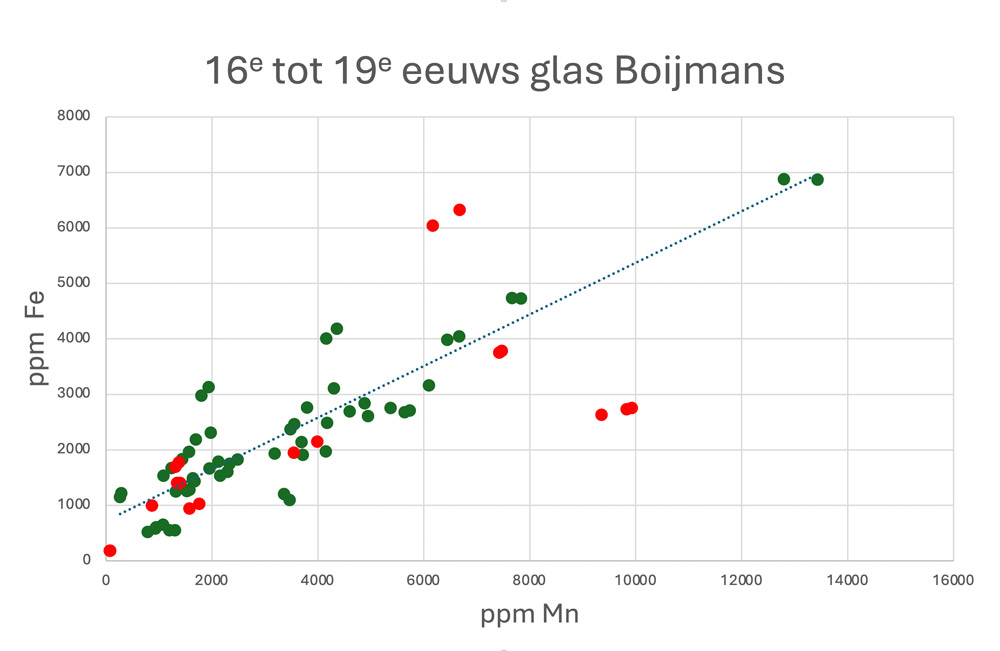 16e tot 19e eeuwse glas Boijmans = 16th–19th-century glass, Boijmans
Comparison of Museum Boijmans Van Beuningen collection objects based on measured manganese concentrations. GRAPH L. Megens, Cultural Heritage Agency of the Netherlands. (RCE)
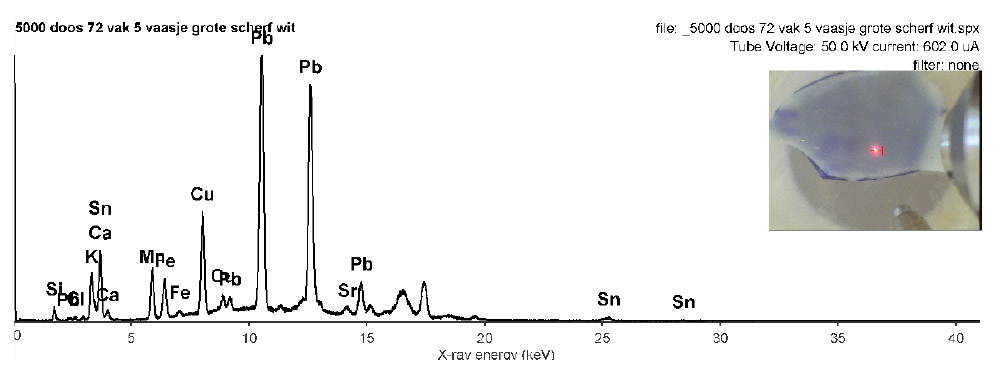 5000 doos 72 vak 5 vaasje grote scherf wit = 5000 box 72 compartment 5 vase, large white shard
Example of an energy spectrum obtained from XRF analysis of a glass fragment.
documents
links (dutch)
> General information laboratory research RCE> Research application form RCE
sources / further reading
Megens, L.,
Verkenning van de samenstelling van verschillende types glas in het Nationaal Glasmuseum Leerdam in relatie tot het risico op degradatie, RCE projectnummer 2020-110, Amsterdam, Rijksdienst voor het Cultureel Erfgoed, Rijkserfgoedlaboratorium, 2021
Megens, L.,
Chemische analyse van de glazen in de gidscollectie van Museum Boijmans van Beuningen, RCE projectnummer 2023-099, Amsterdam, Rijksdienst voor het Cultureel Erfgoed, Rijkserfgoedlaboratorium, 2025