photographing glass
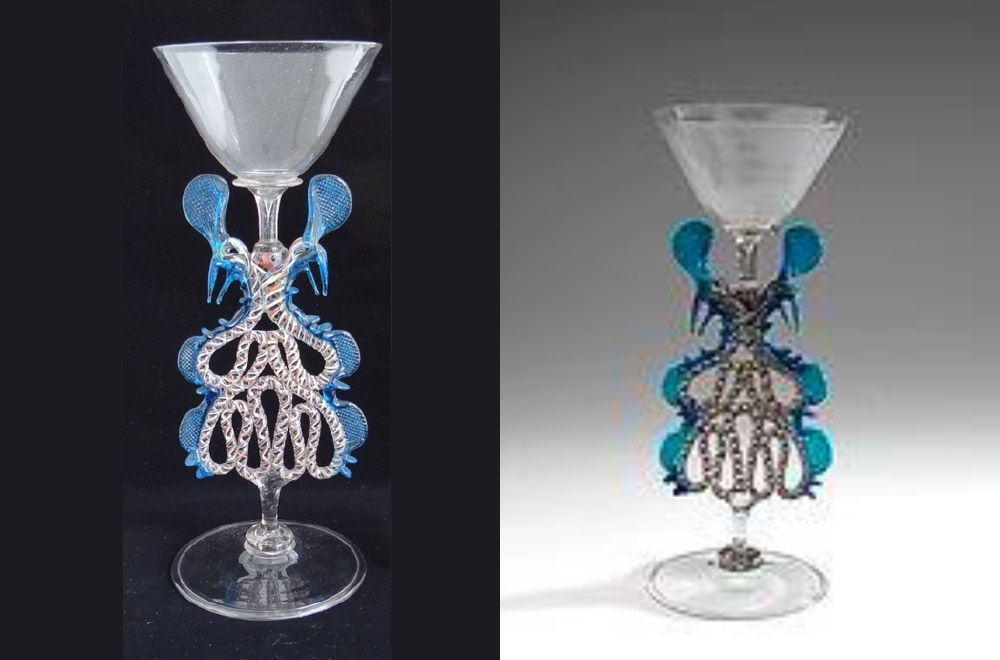
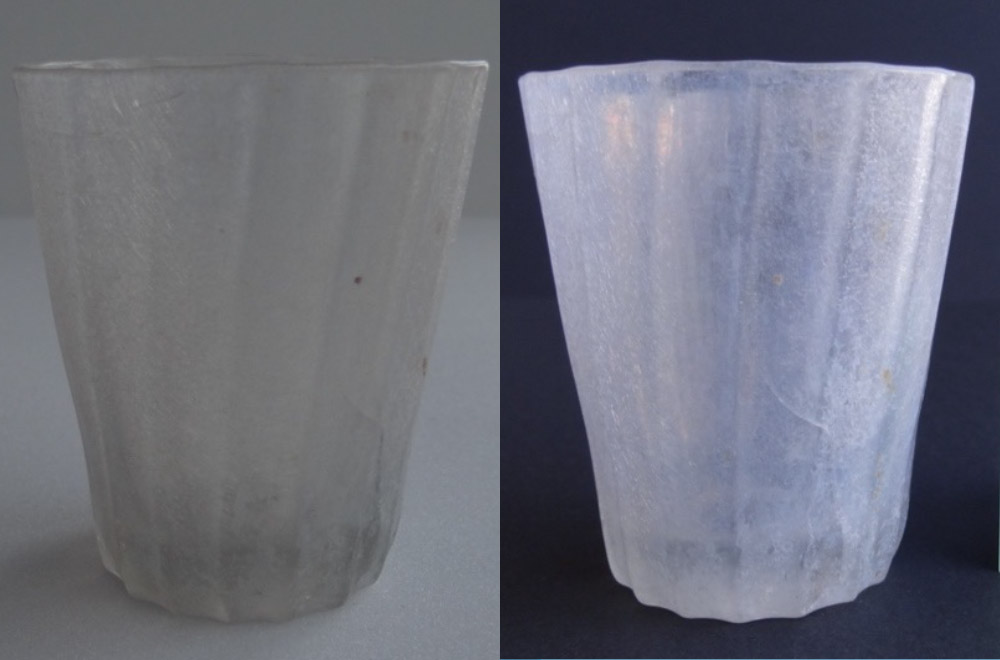
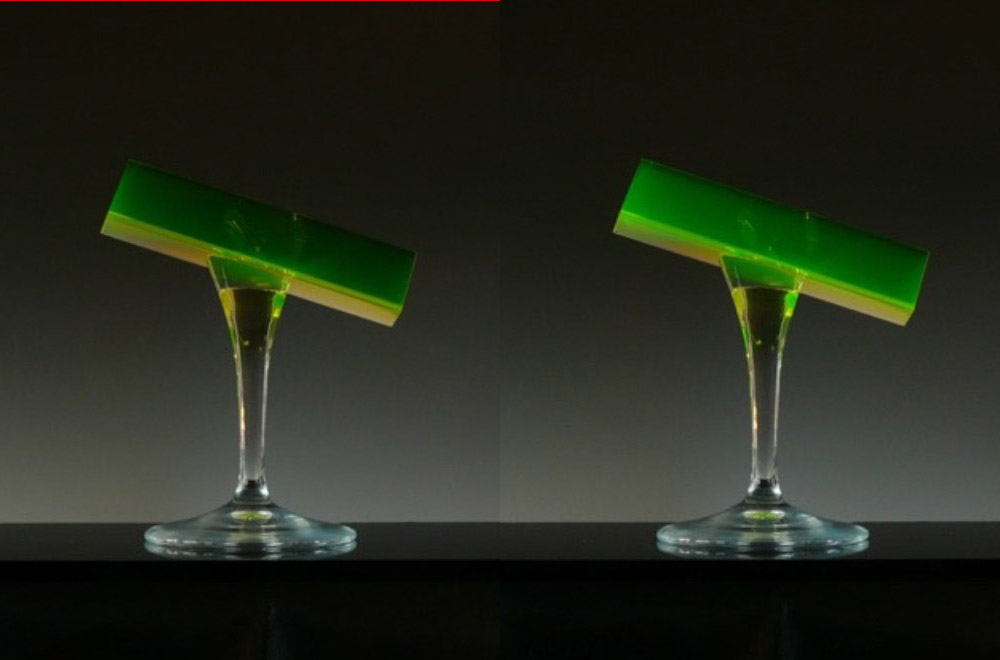
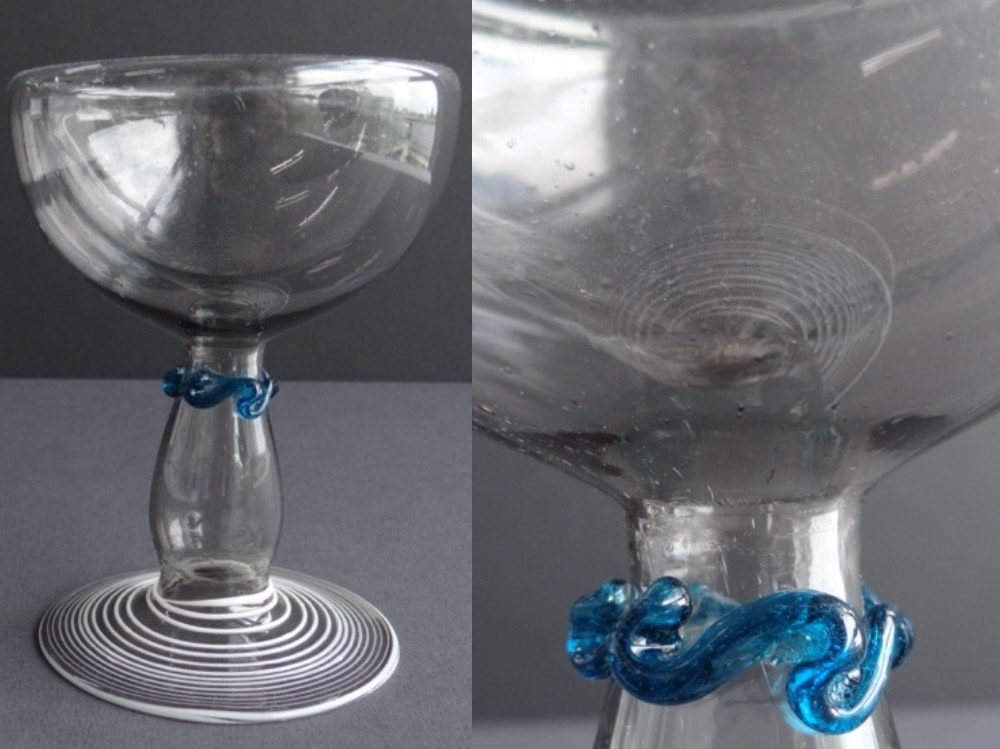
Photographing glass, especially transparent and highly reflective glass, is difficult. Whether the aim is to capture the object itself or document a stain or scratch, obtaining a good photograph can be challenging for conservators and professional photographers alike. Glass with a matte surface is somewhat easier to photograph.
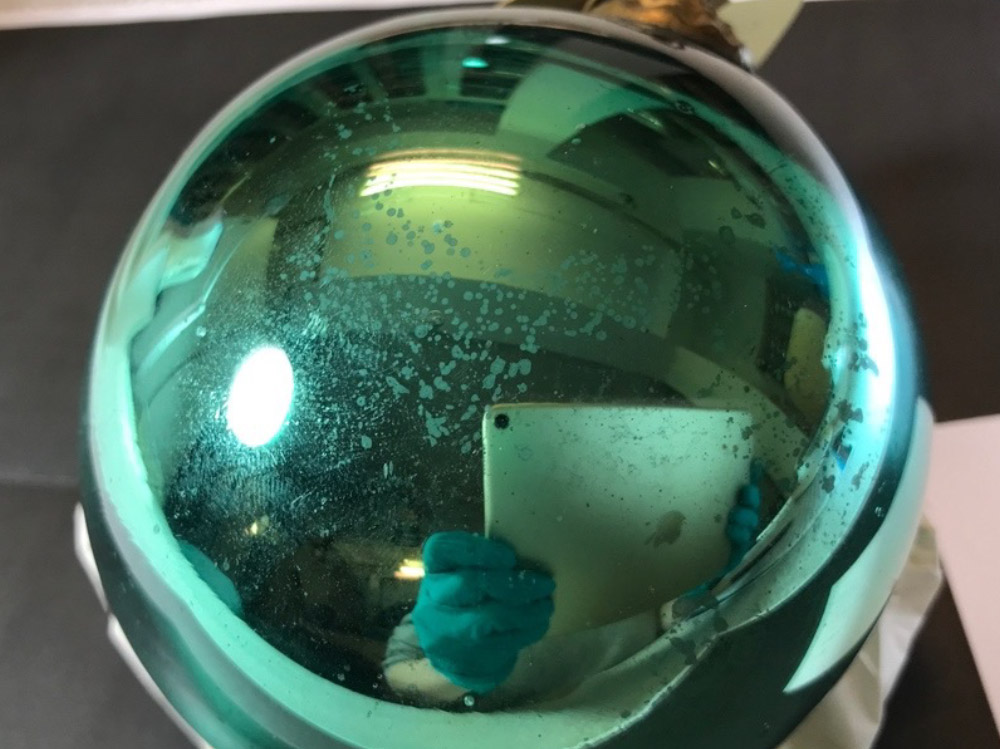
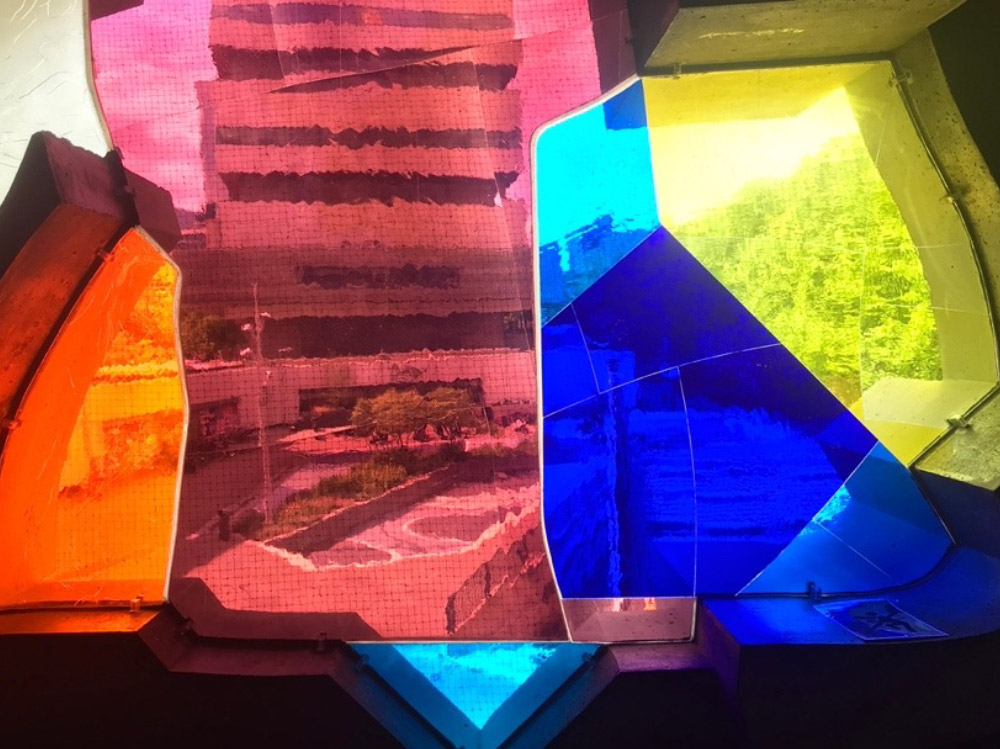
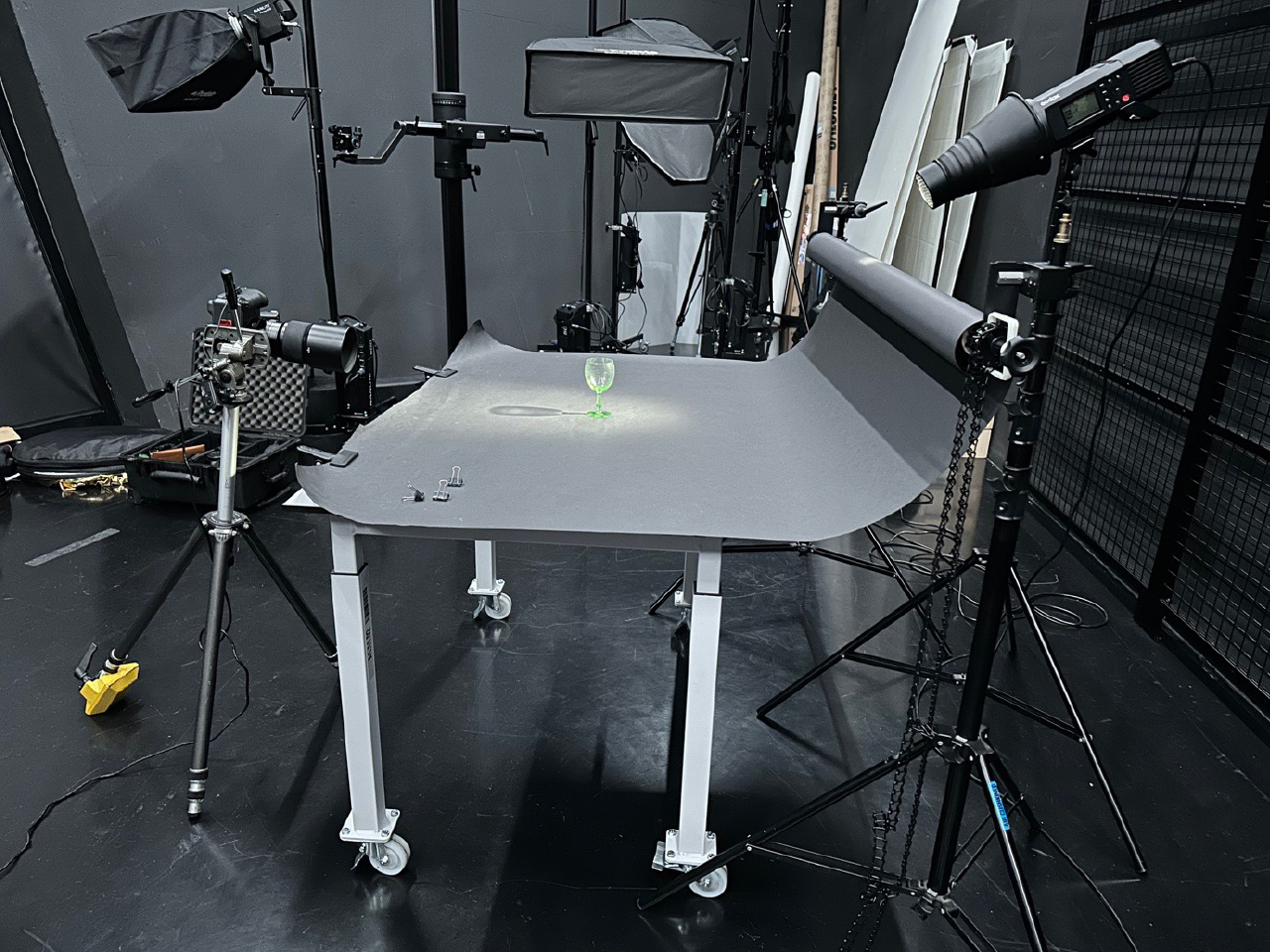
Glass reflects its surroundings, and transparent glass also reveals what lies beneath or behind it. A light source or even the photographer can easily be reflected in the glass. When photographing glass in buildings, the surroundings become part of the photo. Photographing on an overcast day or varying the angle of illumination can help.
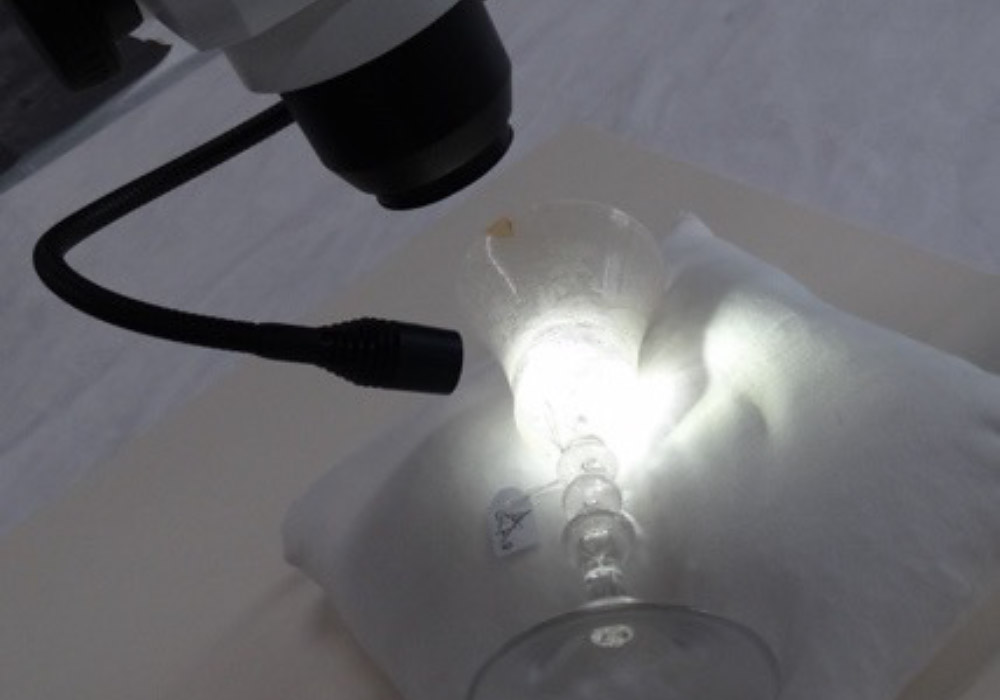
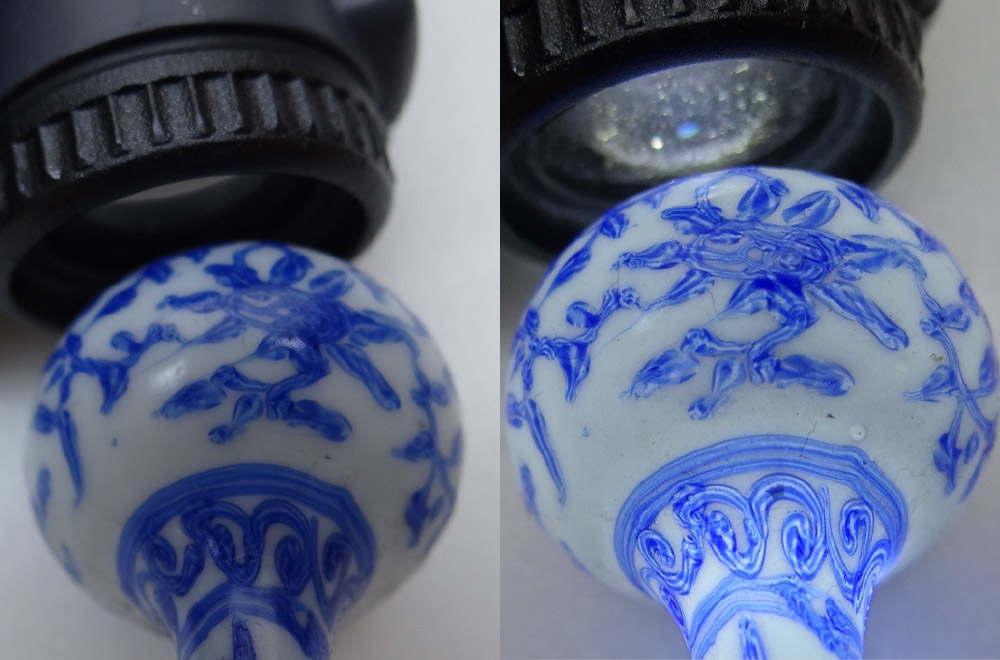
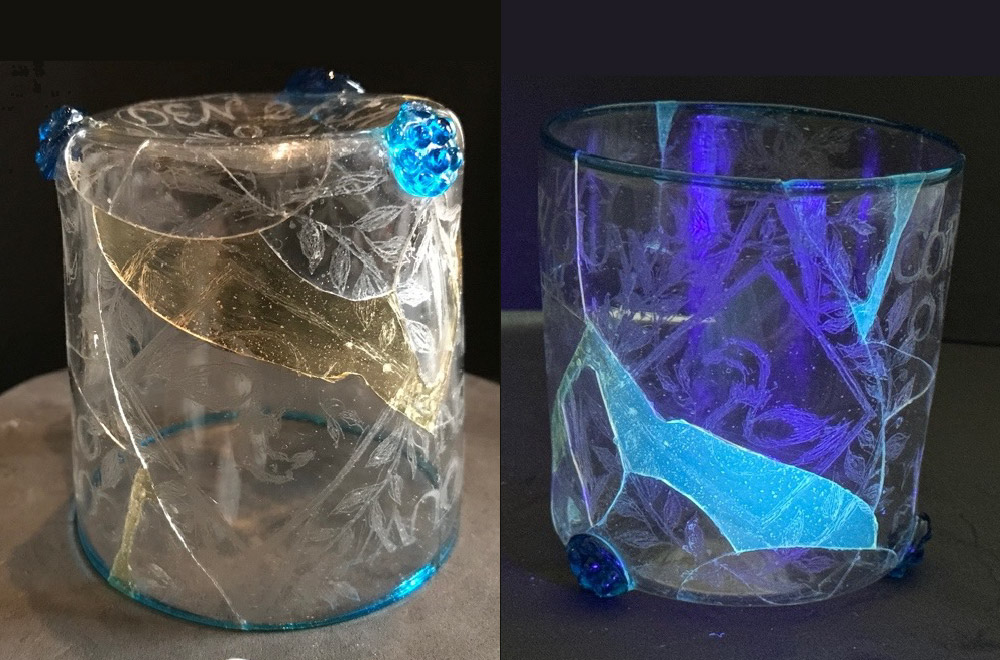
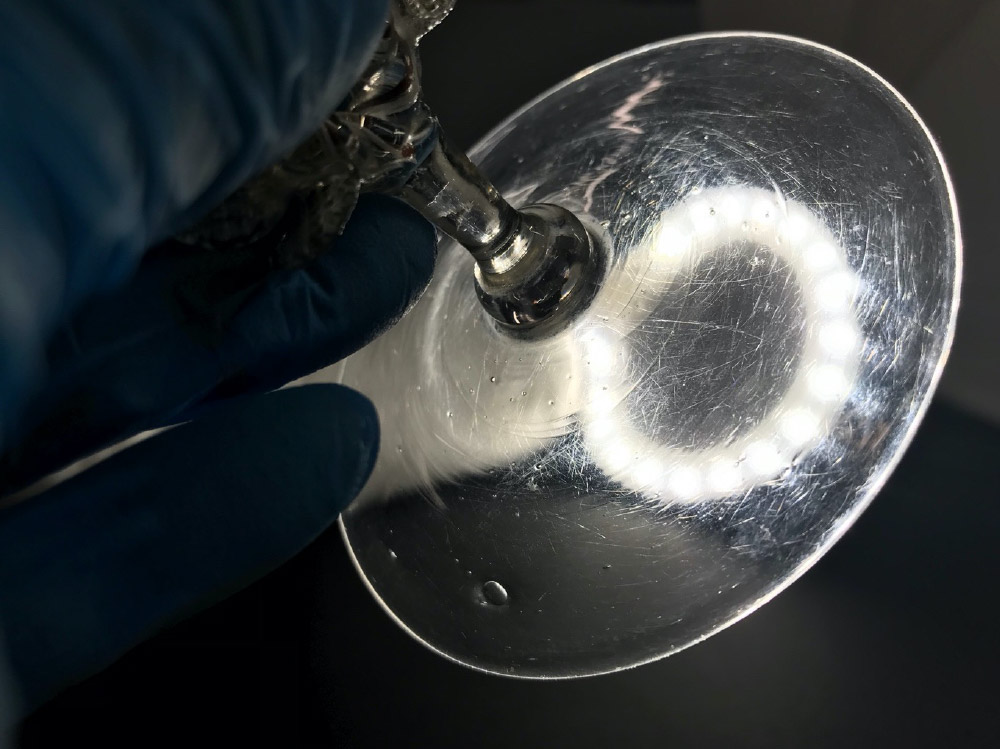
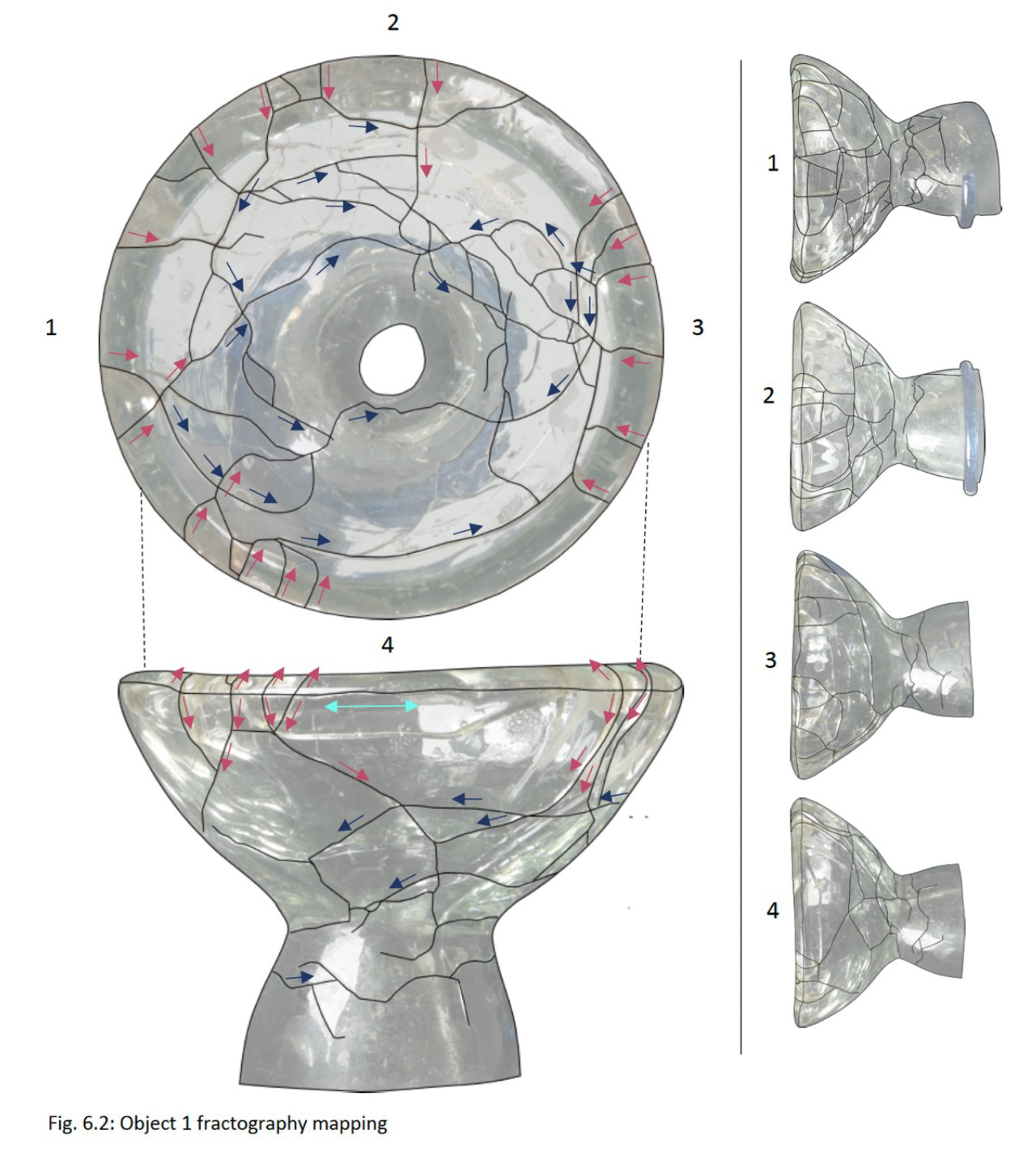
Sometimes unusual lighting is needed to capture specific features. In such cases, the quality of the photograph is of secondary importance. Photographing details can nevertheless be challenging. The priority is to document the feature in question.
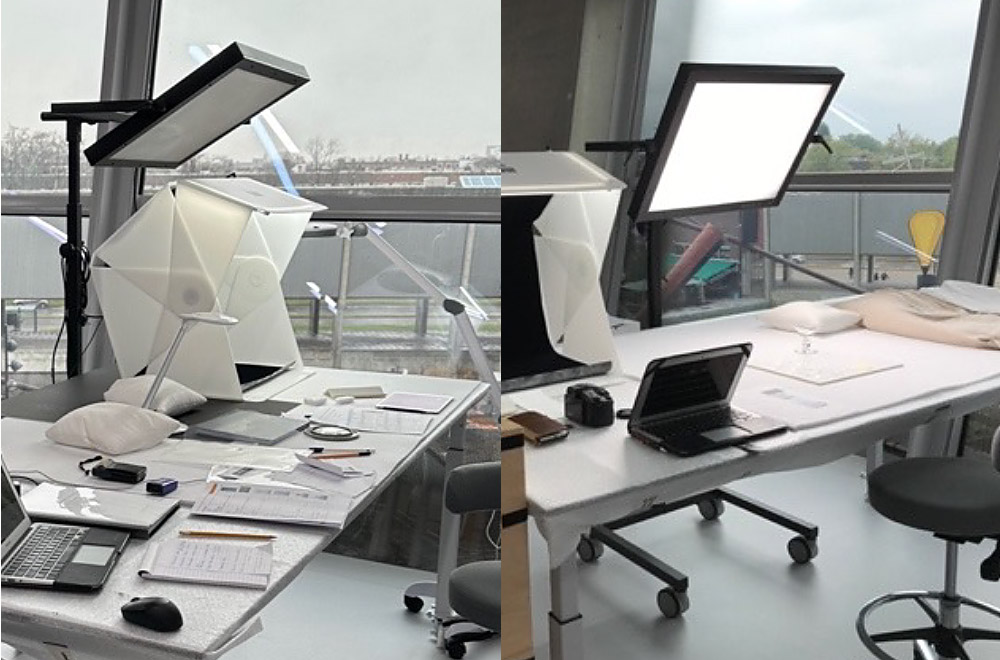
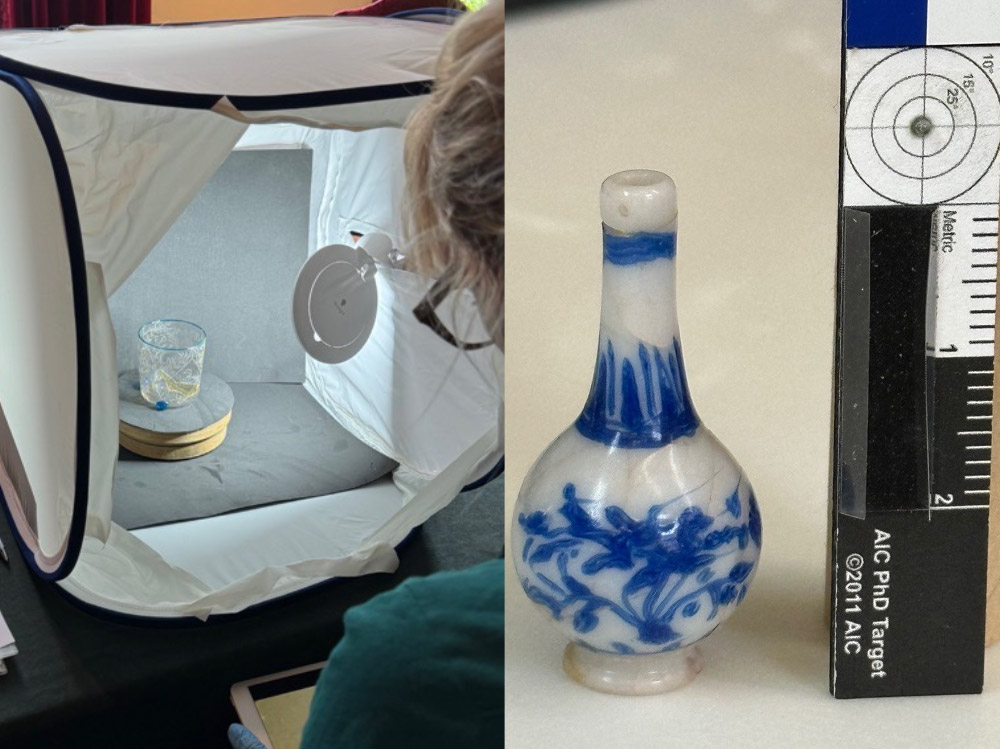
For in situ photography of small objects, a light tent can be useful, with the object placed on a turntable against a light or dark background as required. Light tents may feature built-in daylight-balanced lighting, adjustable light intensity and a small front flap through which the camera lens can be inserted to minimise reflections from the surroundings. Additional lamps can also be added to them. When documenting, it is important to record the object’s dimensions.
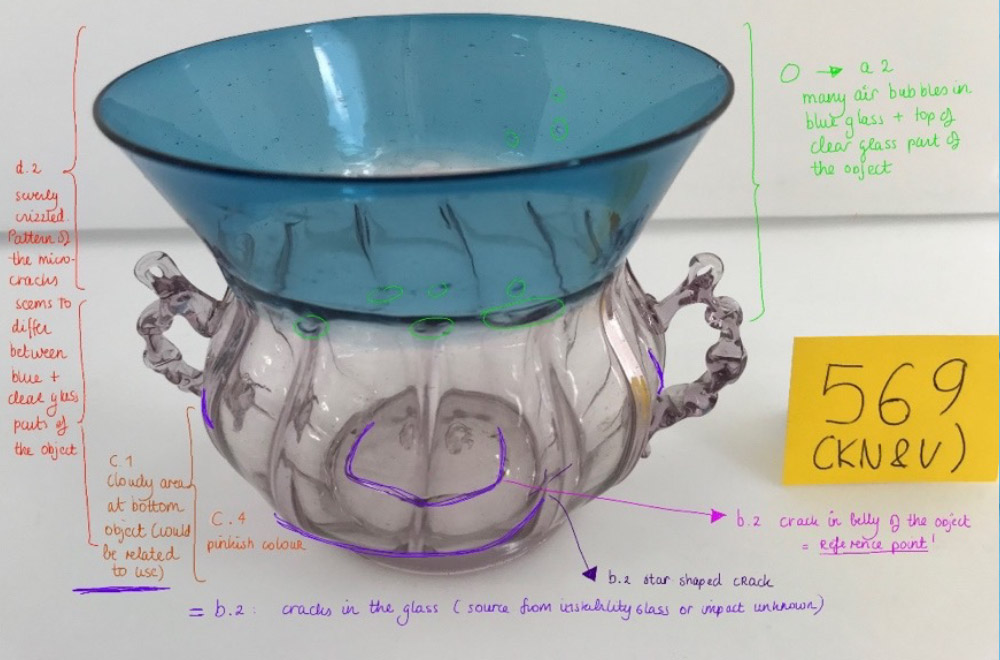
Using photography to monitor the condition of glass requires help from a professional photographer, with a conservator on hand to assist. When dealing with a large group of objects, the photographer can photograph a representative selection to document their condition. In the case of the Boijmans’ Glass Collection Research, the registrar or conservator took many of the photographs, alongside images made by a professional photographer.
The Cultural Heritage Agency of the Netherlands has published a
dutch guidance on photographing flat glass.