conservation
research & diagnosis
vulnerabilities in glass
atmospheric degradation
characteristics
The deterioration of glass resulting from chemical instability and influenced by atmospheric conditions is a gradual process. The first sign is the dulling of the glass. Salts may begin to form on the surface and, depending on the climatic conditions, may appear as droplets or crystals. Sometimes the droplets are minuscule and can only be observed under a microscope, but they may coalesce to form larger droplets that can even run down the glass. At a more advanced stage, hairline cracks appear in the glass, which can become a network that spreads so extensively that the glass cracks completely and even falls apart.
Objects may also exhibit several symptoms simultaneously, such as having both cracks (crizzling) and droplets. Crizzled glass has a unique fracture pattern, although this can vary depending on the location and the object. It can be difficult for a non-specialist to distinguish between cracks caused by atmospheric degradation and those caused by stress or impact. (see also
fracture and fracture pattern)
Visual and tactile identification of glass instability
The classification of symptoms of existing and potential glass instability forms part of the General Condition Form and is partly based on a system developed by glass conservator Stephen P. Koob. To facilitate international collaboration, the English terms used in research and literature have been adopted. (see
General Condition Form)
droplets and crystals
Atmospheric degradation can make glass appear dull or feel slippery, which can be difficult to distinguish from glass with a dirty or greasy surface. When unstable glass is cleaned and stored in a clean environment, the dullness may return, sometimes quite quickly. Dullness and a slippery feel caused by glass instability result respectively from minuscule droplets and salts on the glass surface.
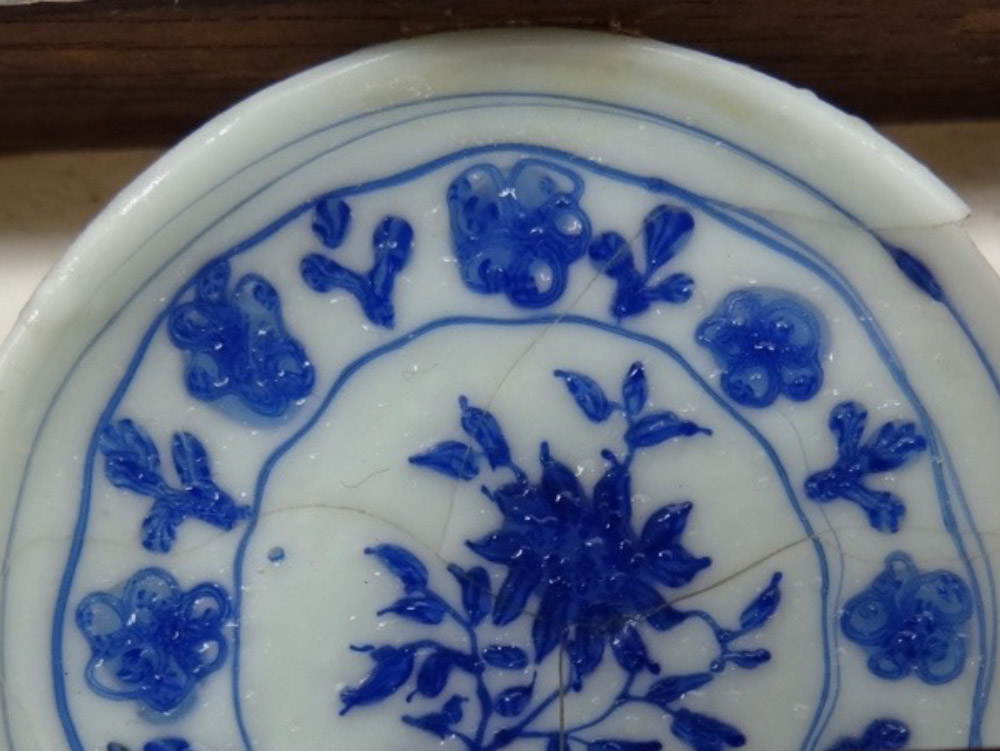 Droplets on the surface of unstable glass. Glass object from a dolls’ house. PHOTO M. Slager
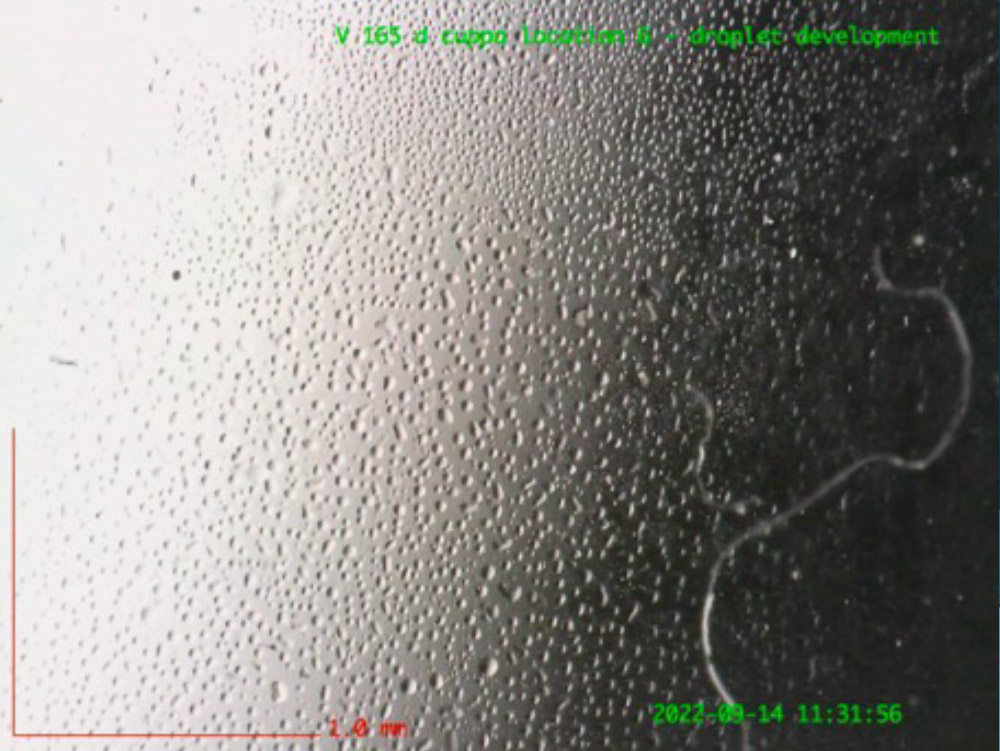 Slippery surface. Droplet formation visible only under a microscope. PHOTO M. Slager
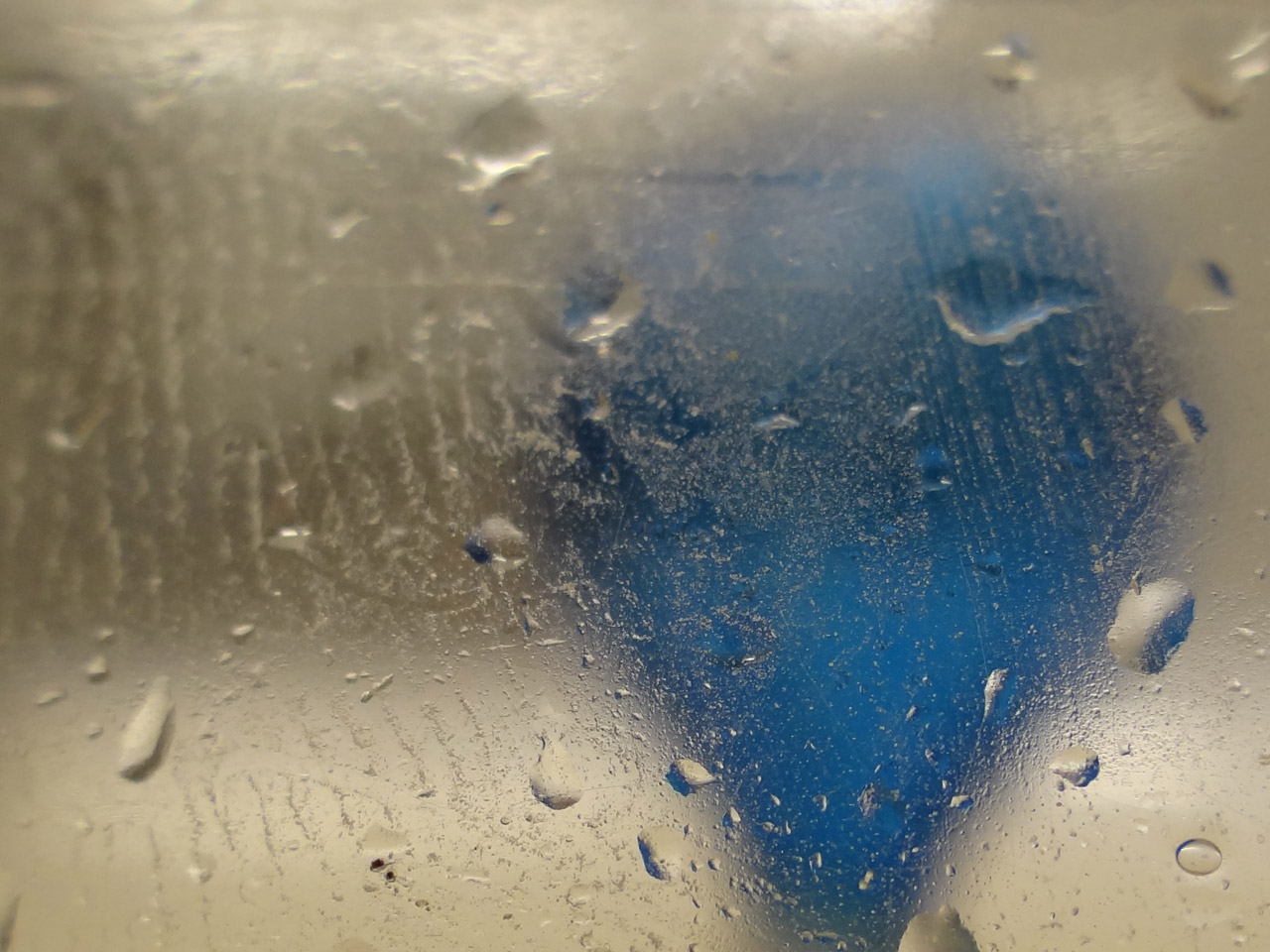 Droplets and slippery surface) with finger prints PHOTO M. Slager
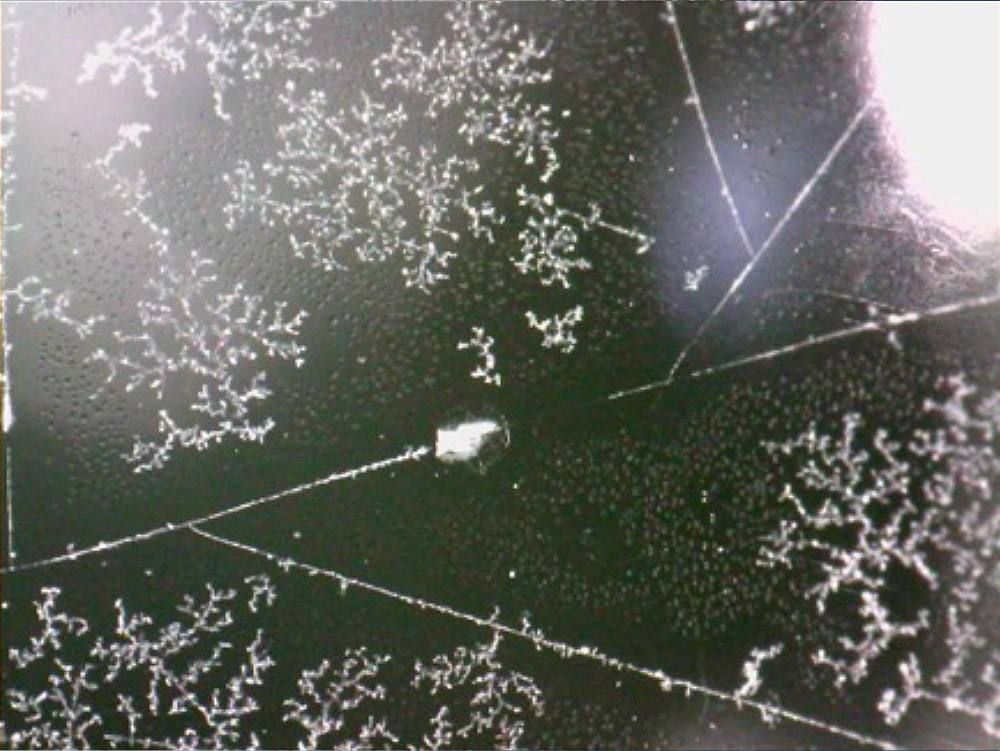 Crystals on the surface of an unstable glass. FOTO M. Slager
crizzling
Incipient crizzling Crizzling caused by chemical instability and atmospheric degradation occurs in four stages. Initially, very fine hairline cracks form, sometimes barely visible to the naked eye.
Full blown crizzling These cracks spread across large areas of the surface and become easier to see with the naked eye.
Advanced crizzling Once the cracks have developed into an extensive network, the glass has reached an advanced stage of crizzling.
Fragmented stage At the most severe stage, the glass loses its structural stability. Fragments may detach from the surface, or the object may break into shards.
See
misleading characteristics.
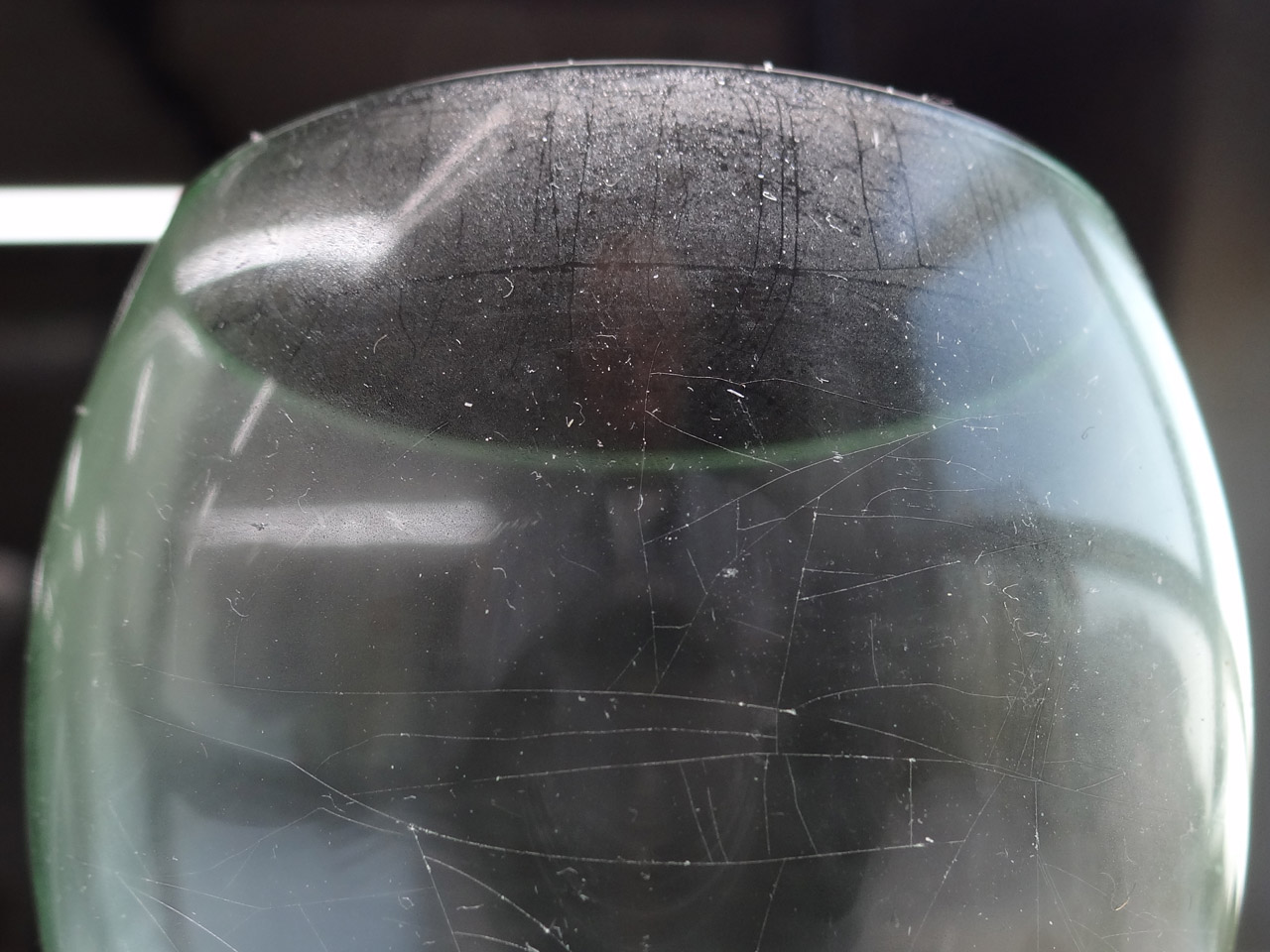 The onset of hairline cracks visible in the bowl of a glass. PHOTO M. Slager
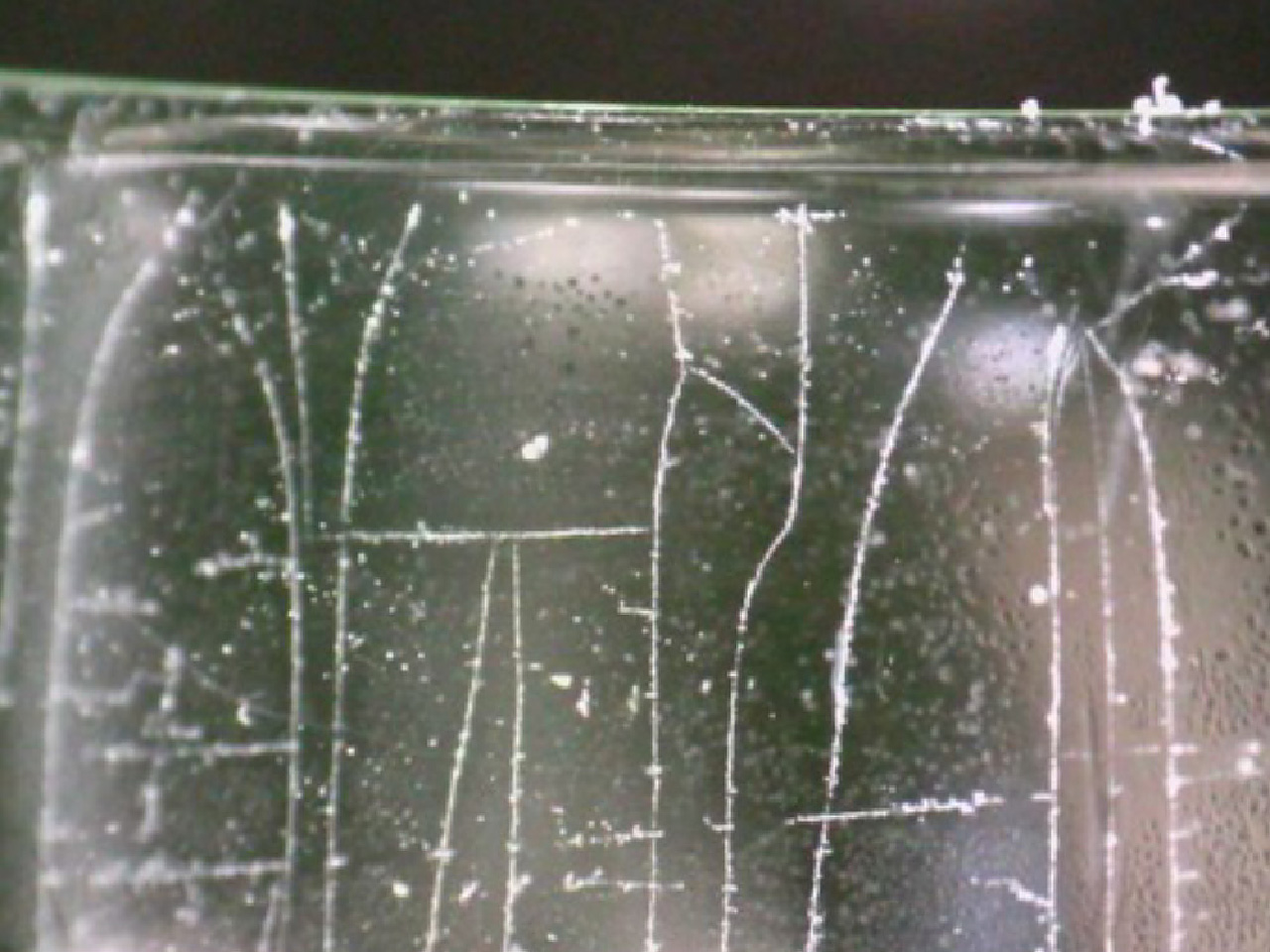 Crizzling in the bowl of a glass, with drops and crystals also visible. PHOTO M. Slager
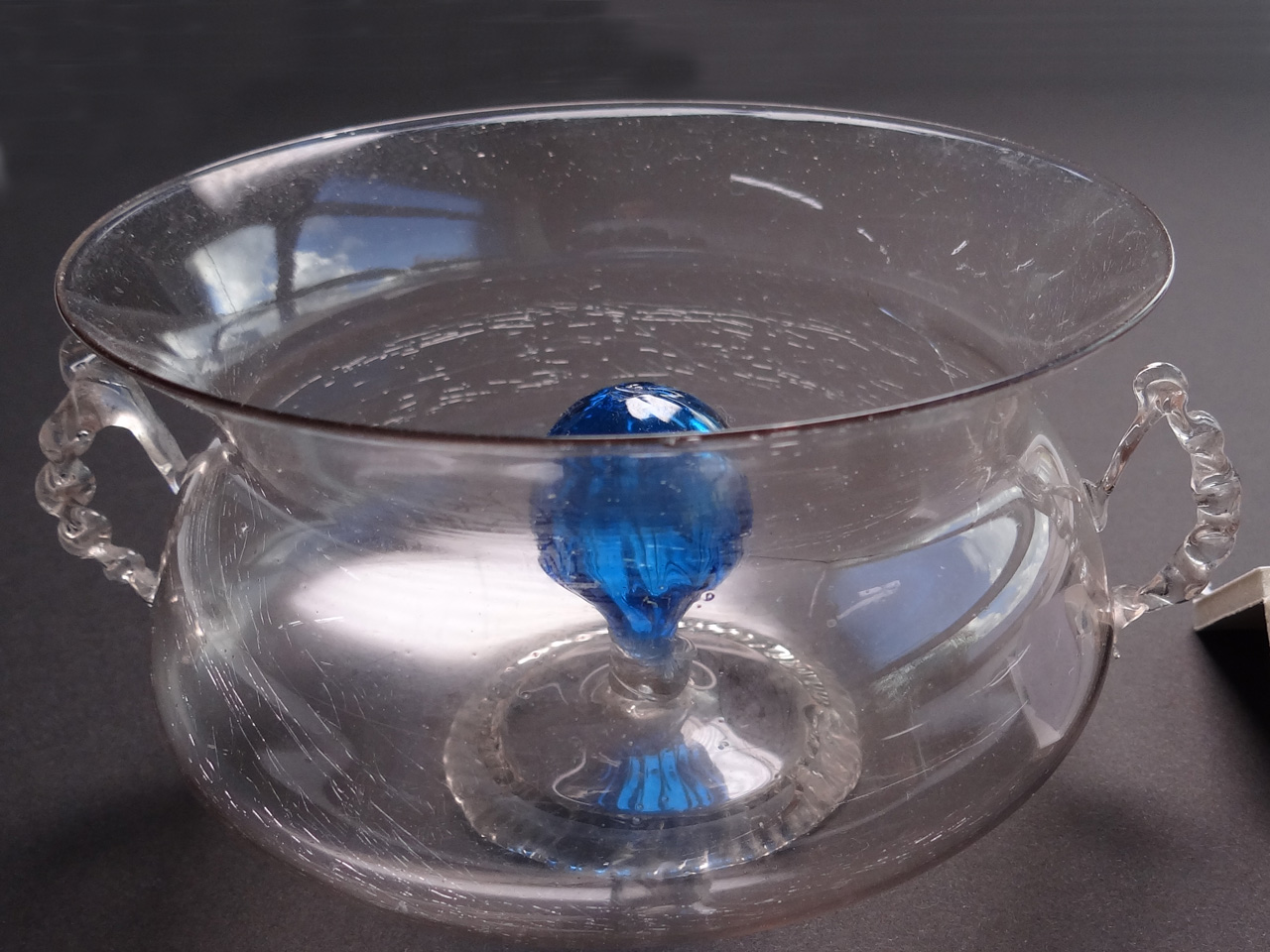 Full blown crizzling throughout an object. PHOTO M. Slager
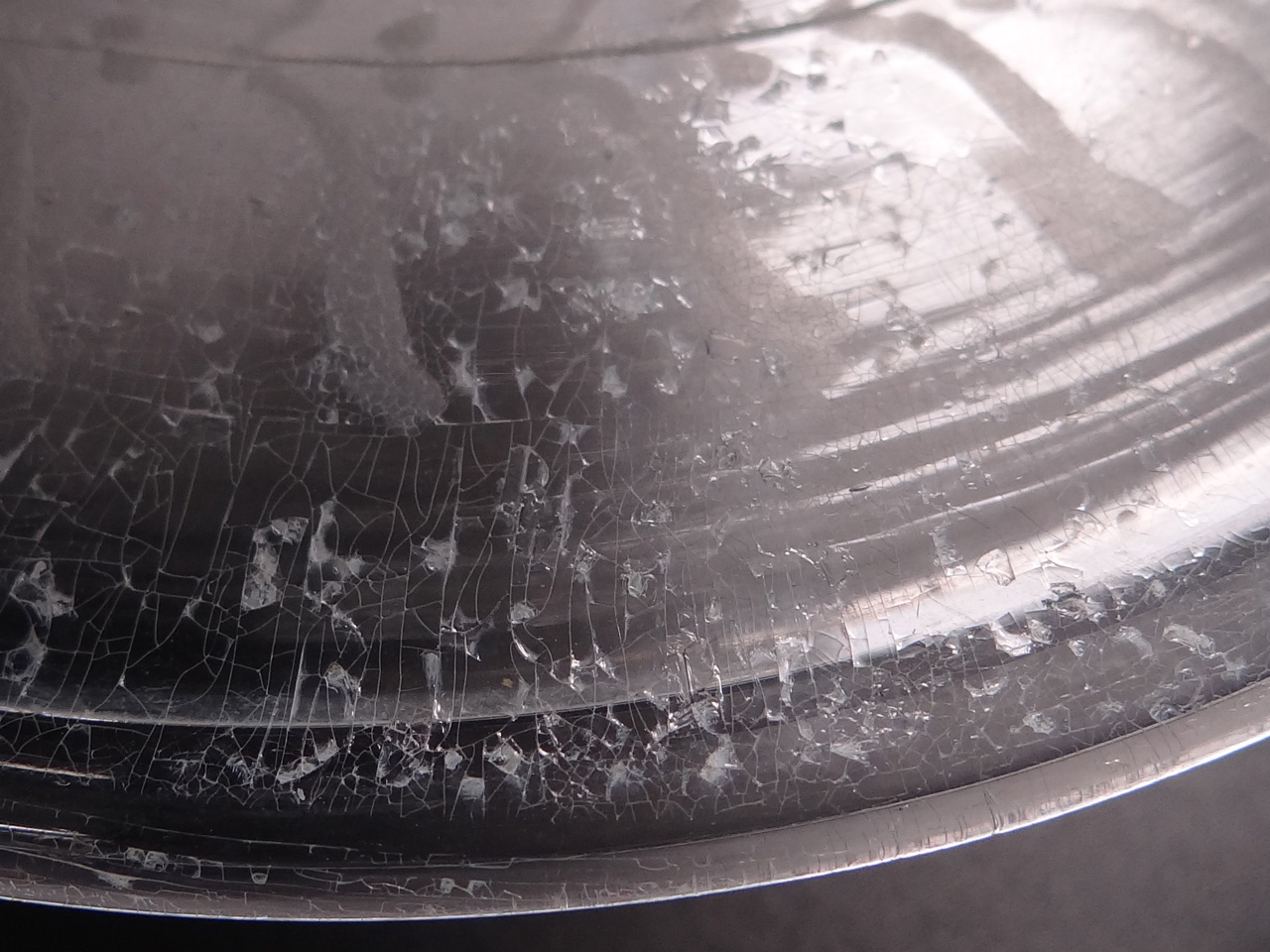 Fragmented stage of crizzling PHOTO M. Slager
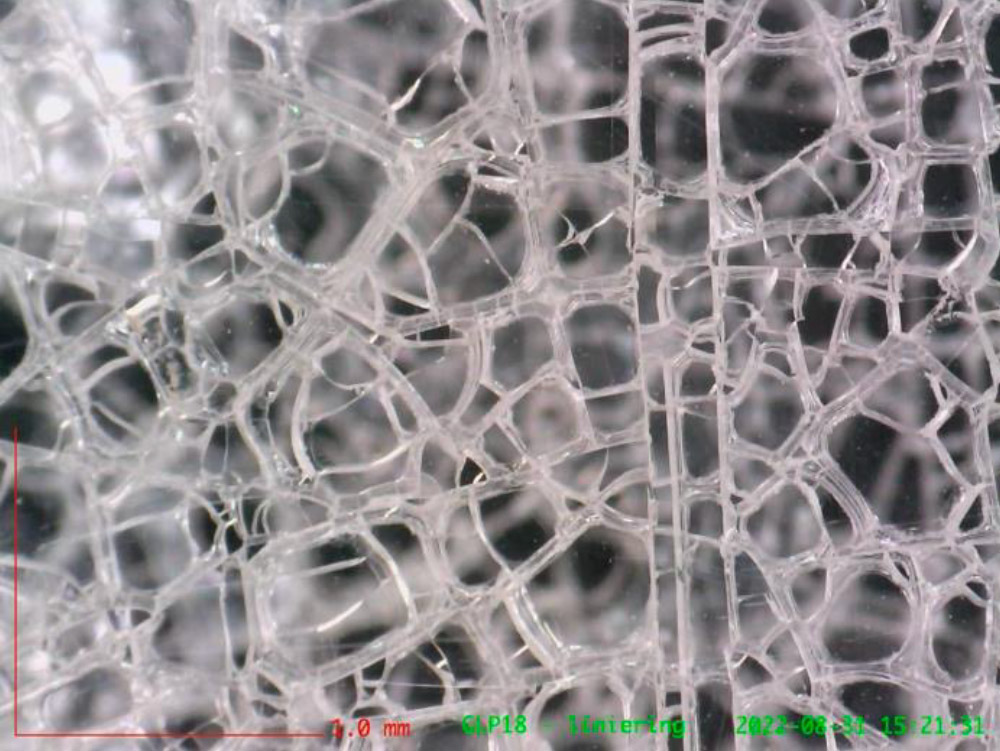 Object at an advanced stage of crizzling PHOTO M. Slager
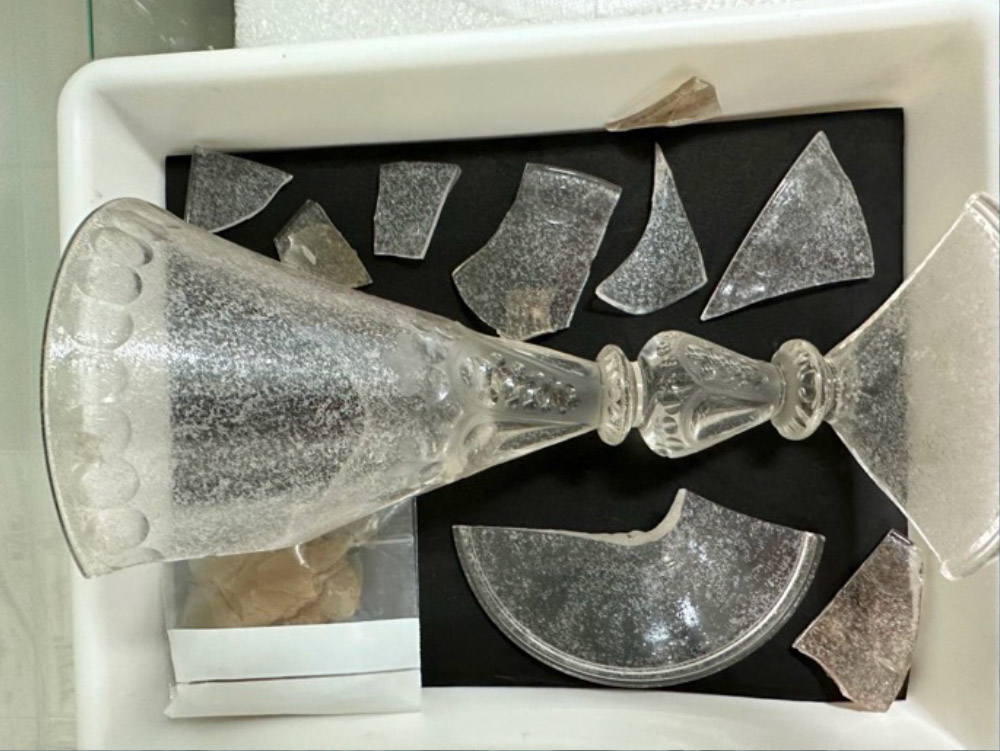 Fragmented stage. Broken into shards. Object from the study collection of the University of Amsterdam. PHOTO M. Slager
possible colour alteration
In some cases, colourless glass contains Mn
2+ cations which are susceptible to photo-oxidation and subsequently transform into pink-purple Mn
3+ cations. This process is called solarization because it occurs under the influence of UV light. Unstable glass may also exhibit a pinkish glow. In such cases, the oxidation process occurs in conjunction with the degradation processes taking place within the glass object. A pink-purple colour in glass may also be intentional, such as to make the glass appear older, or result from small fragments of iron from the blowpipe becoming embedded in the glass and colouring it through reflection. Since the exact original glass colour is frequently unknown and any colour change has often not been monitored, an observed colour difference in such cases is referred to as a
‘possible colour alteration’.
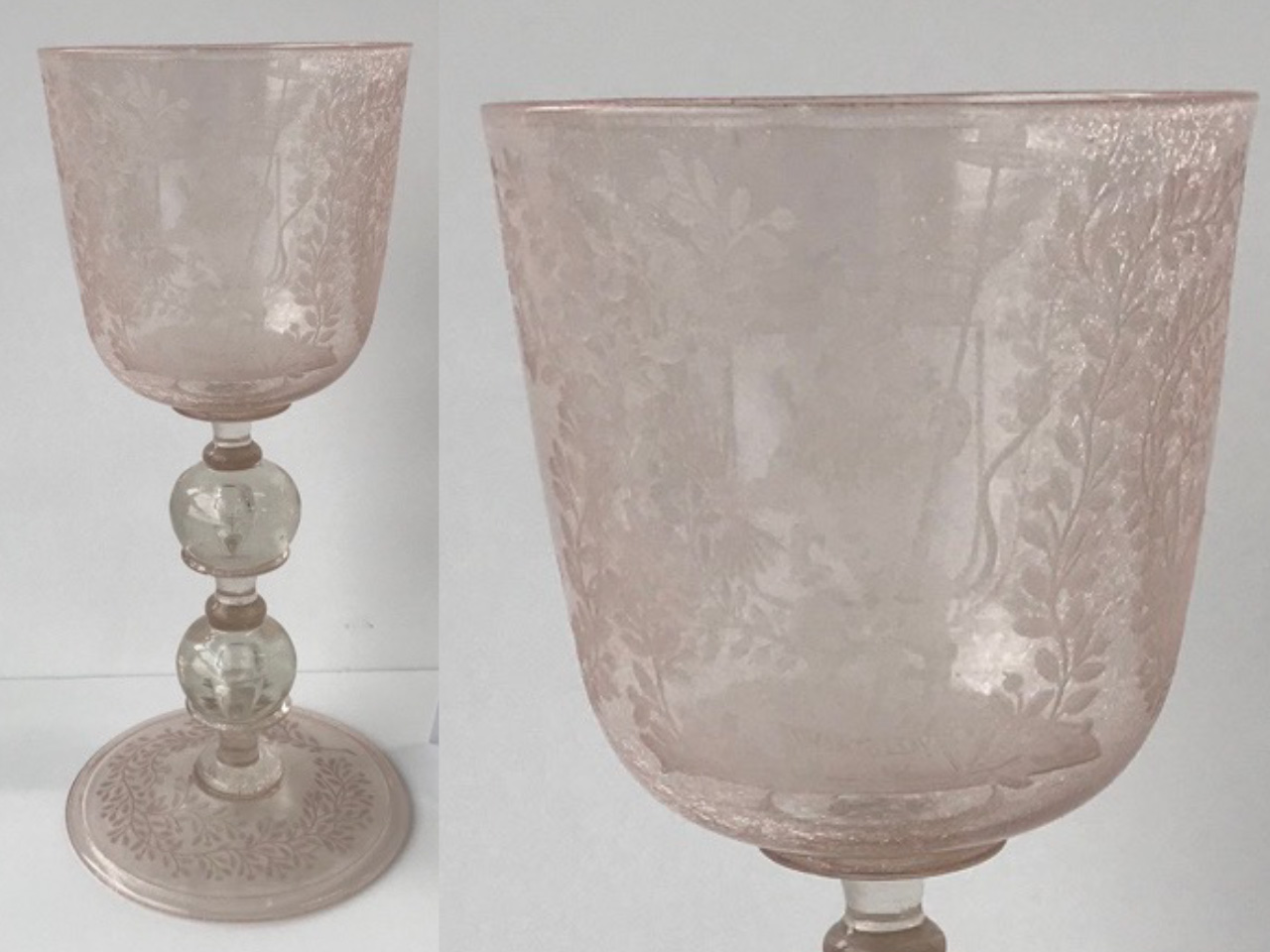 Colourless glass that has turned pink collection Museum Boijmans Van Beuningen PHOTO M. Slager