unknown maker, Goblet, 1600 - 1700
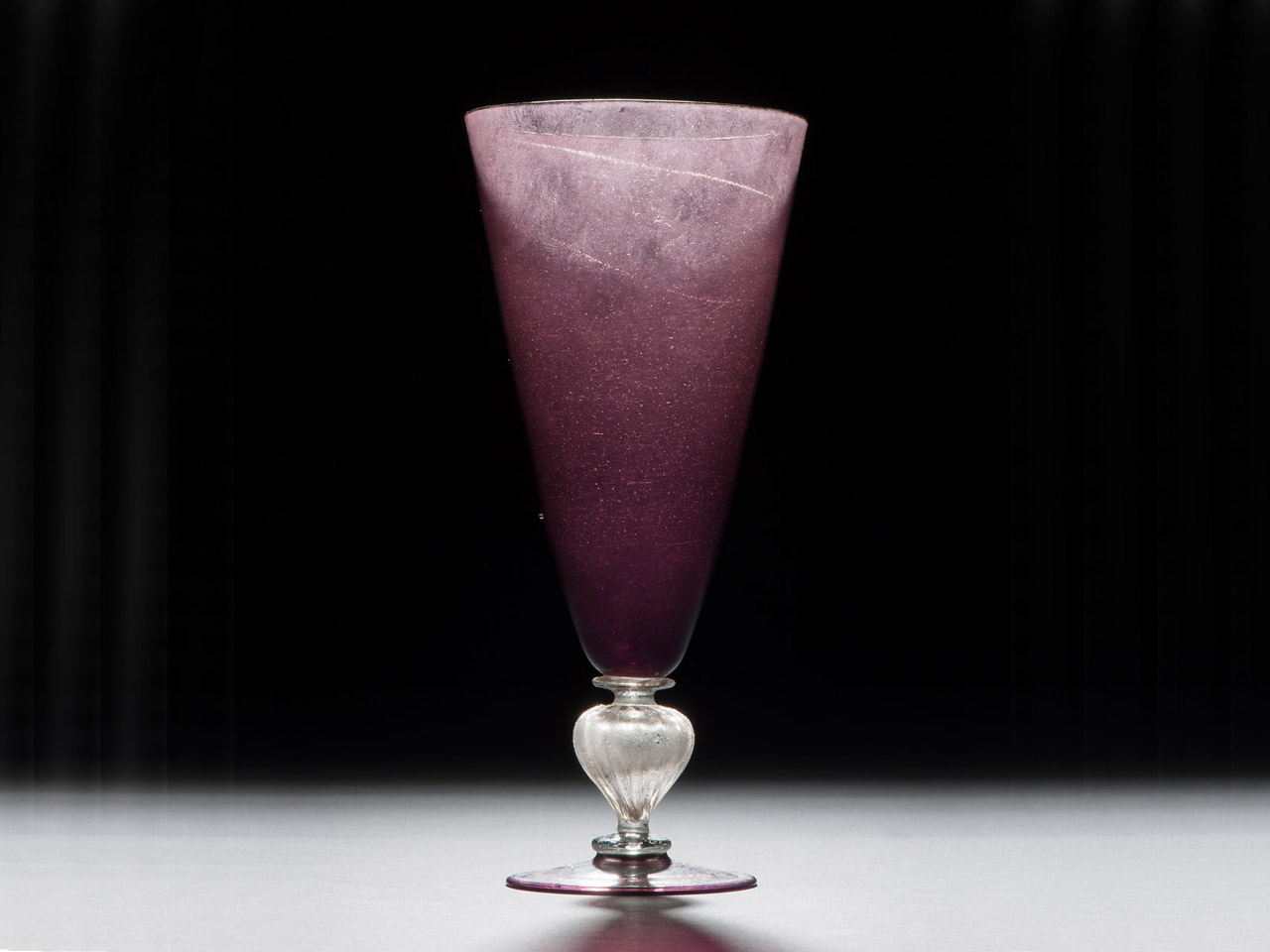
21 × 9.4 cm, 911 (KN&V)
COLLECTION Museum Boijmans Van Beuningen
creation
making process
Material coloured and uncoloured clear glass
Technique free blown Hot working cut, blown stem and foot. Blown on a blowpipe and then transferred to a
pontil Cold working bowl subsequently opened and formed
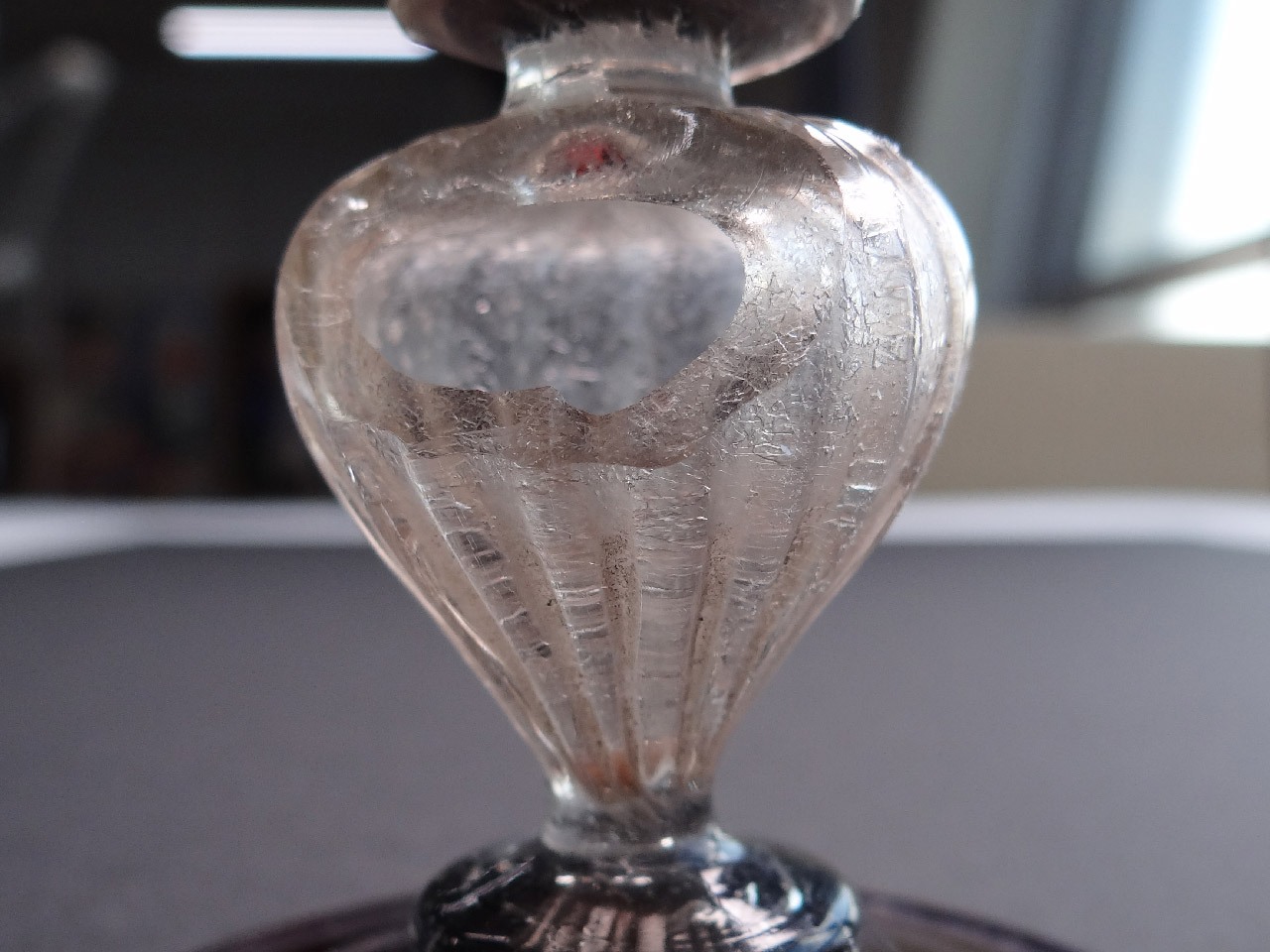
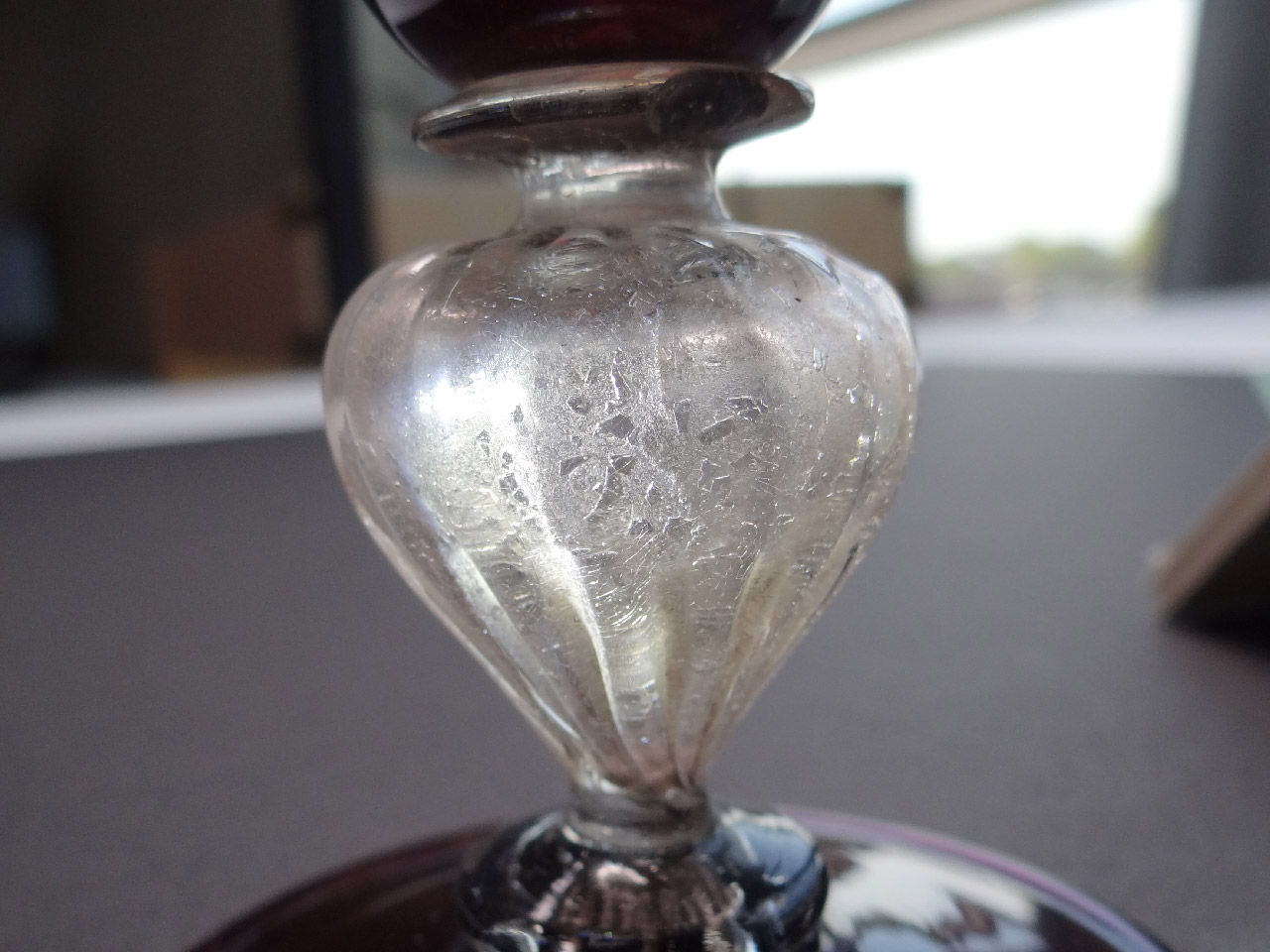
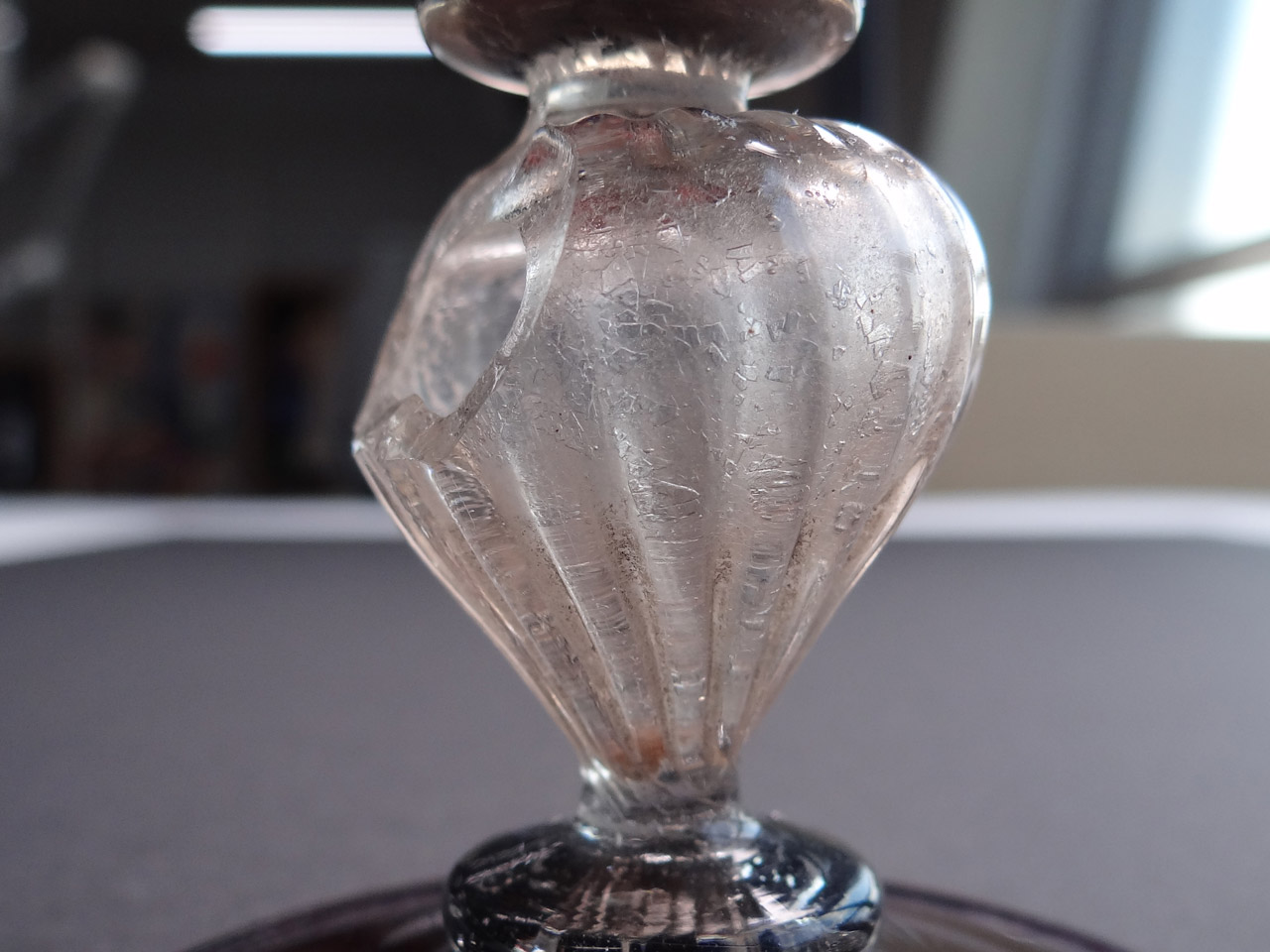
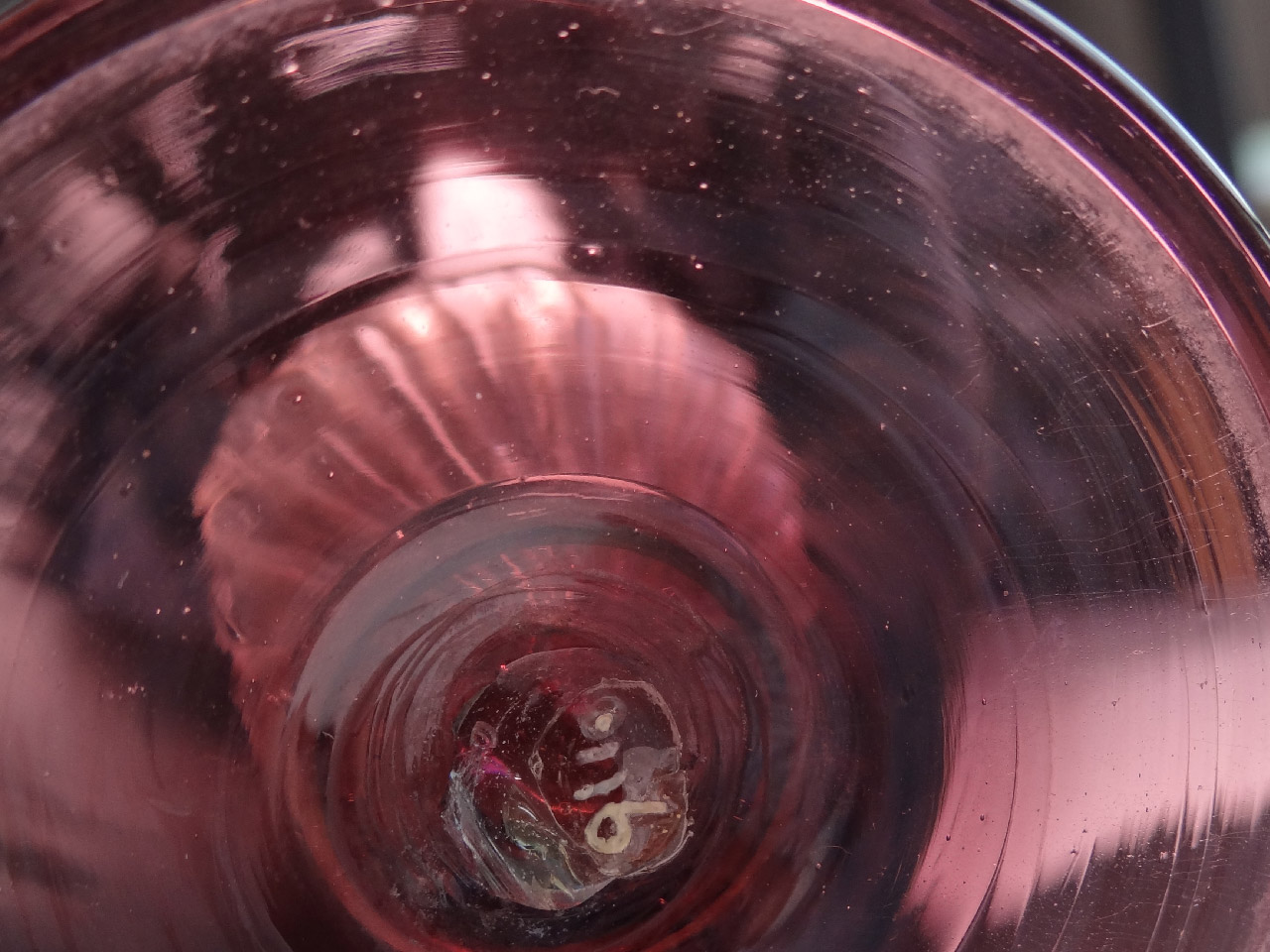
The knop in the stem is ribbed on the outside. Such ribs are formed when a glassmaker slowly blows a
small glass bubble into an optic mould, which presses the glass into the mould. In Italian this process is called stampa because the glass is ‘stamped’ into the mould, creating a ribbed surface.
The unusual colourless ‘
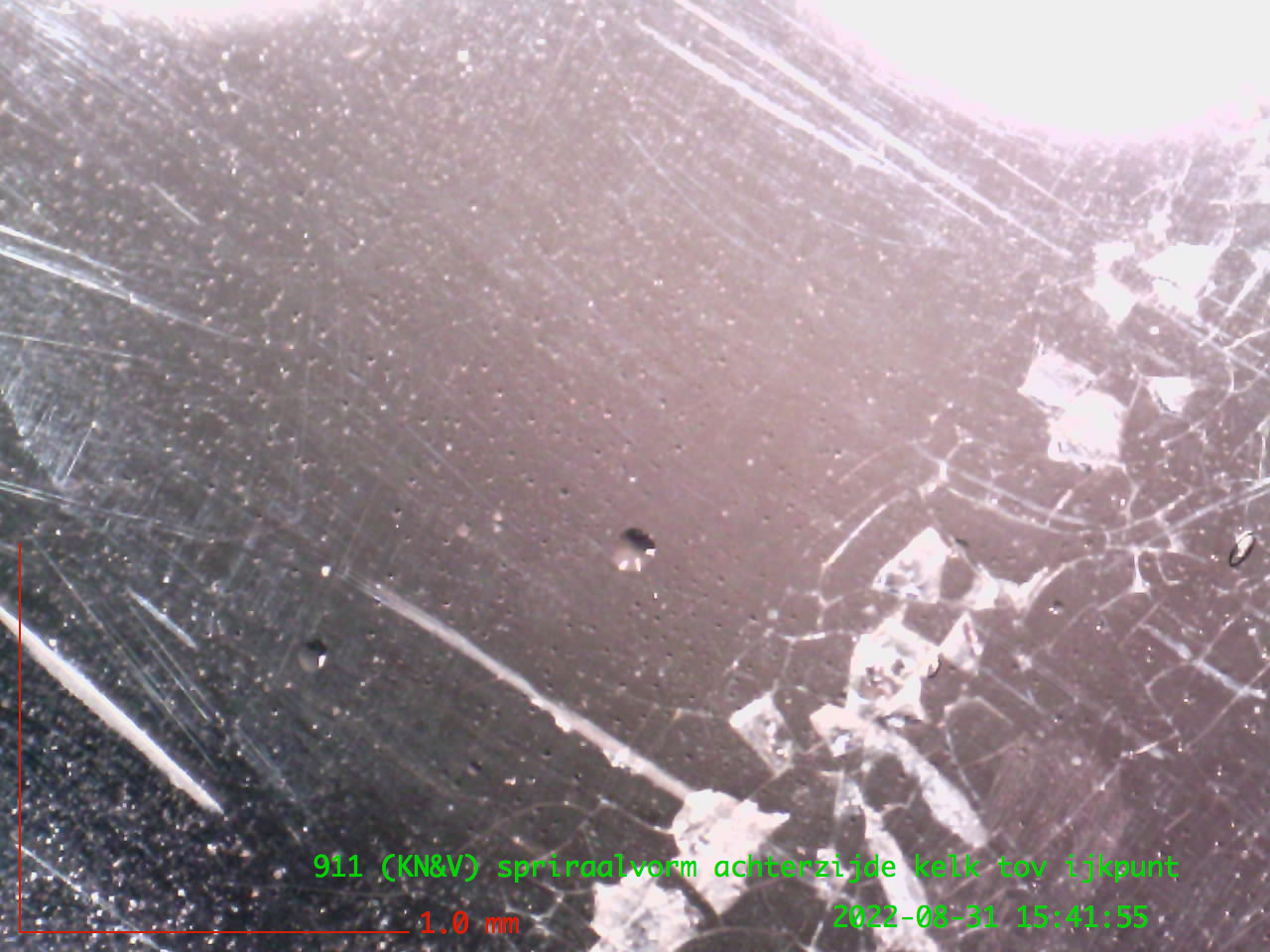
streak’ that spirals around the red bowl results either from an inhomogeneous melt or from a glass composition that causes alkalis to evaporate from the melt surface.
conservation
research & diagnosis
technical analysis
visual examination
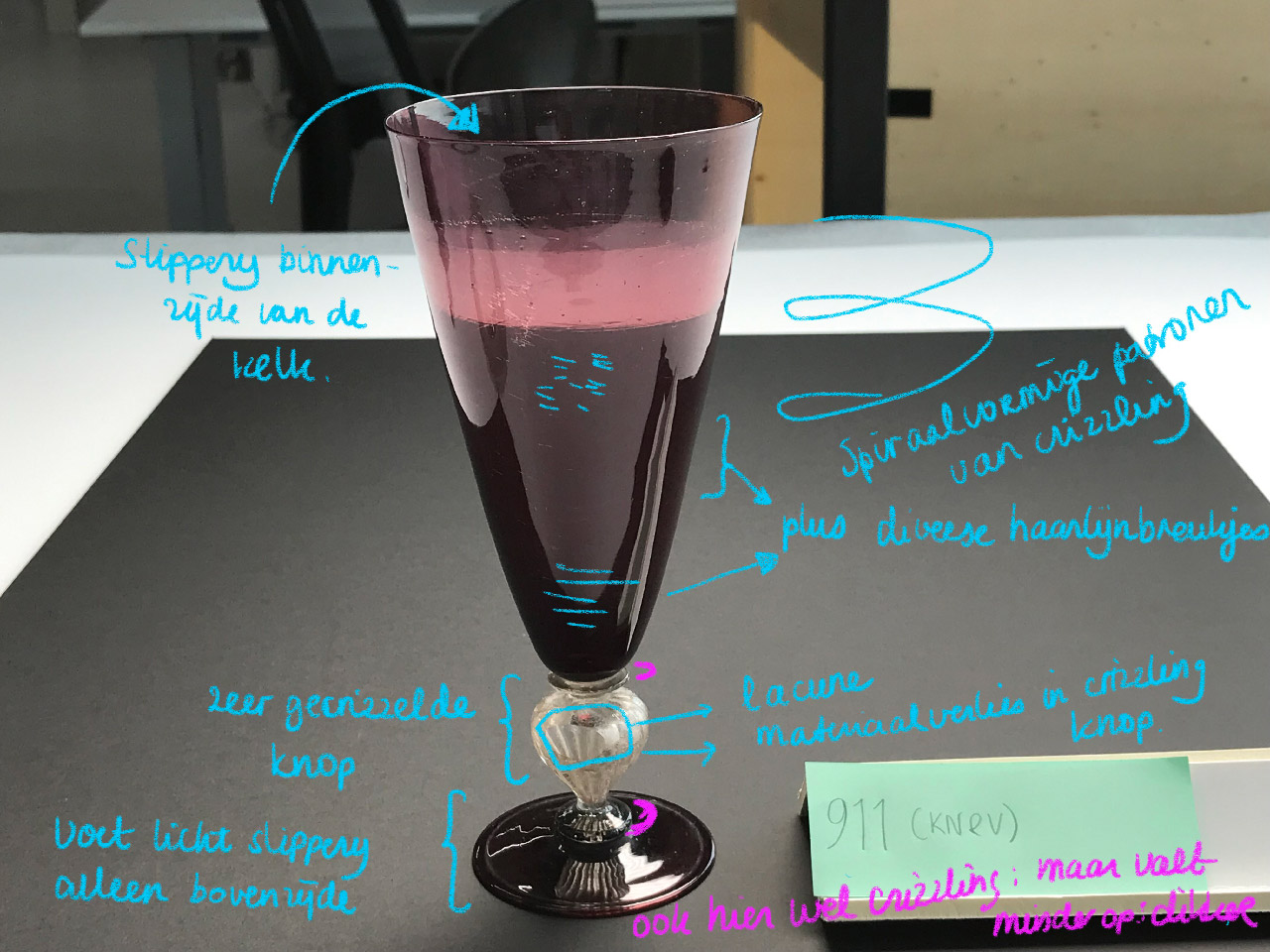
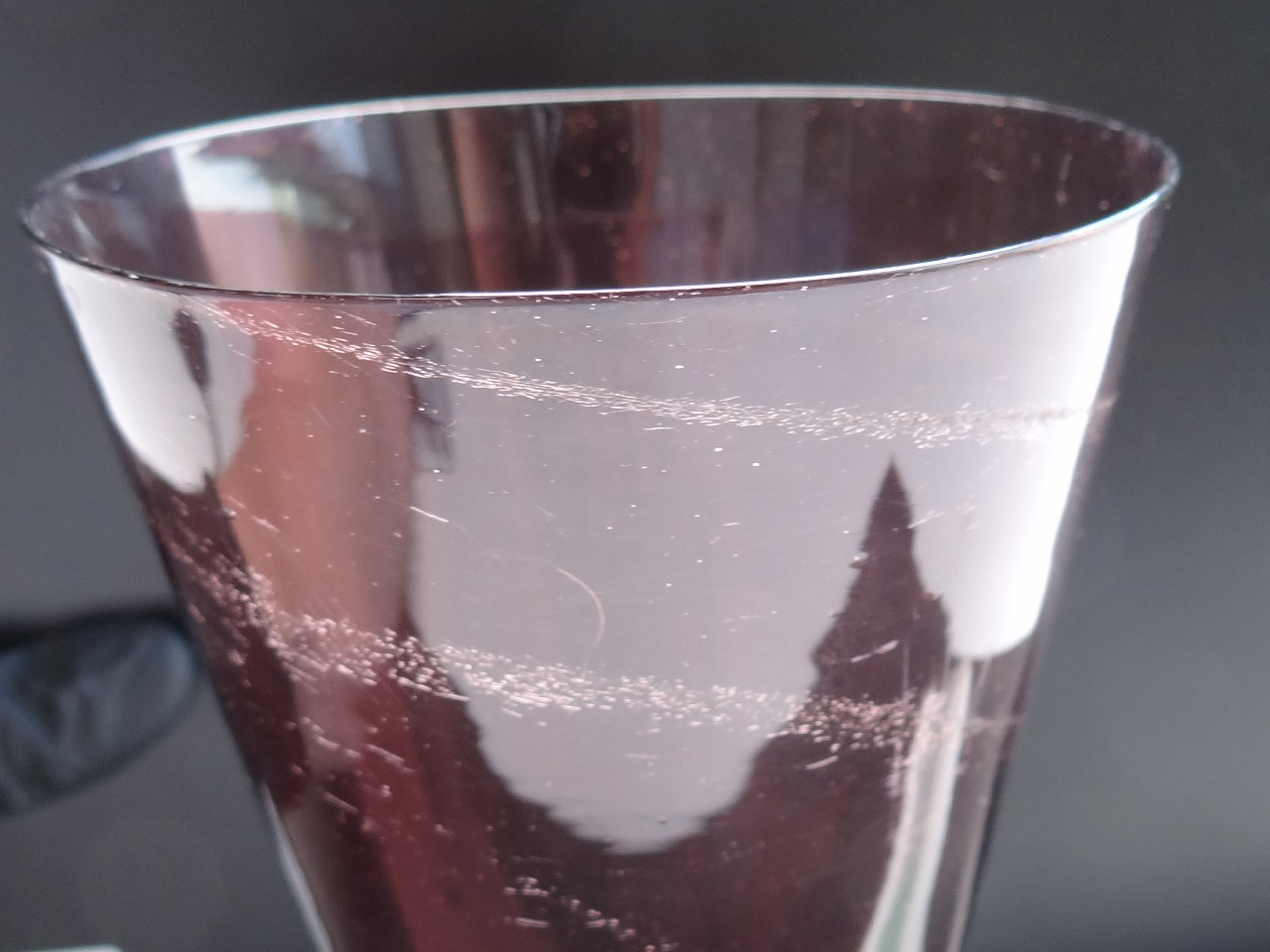
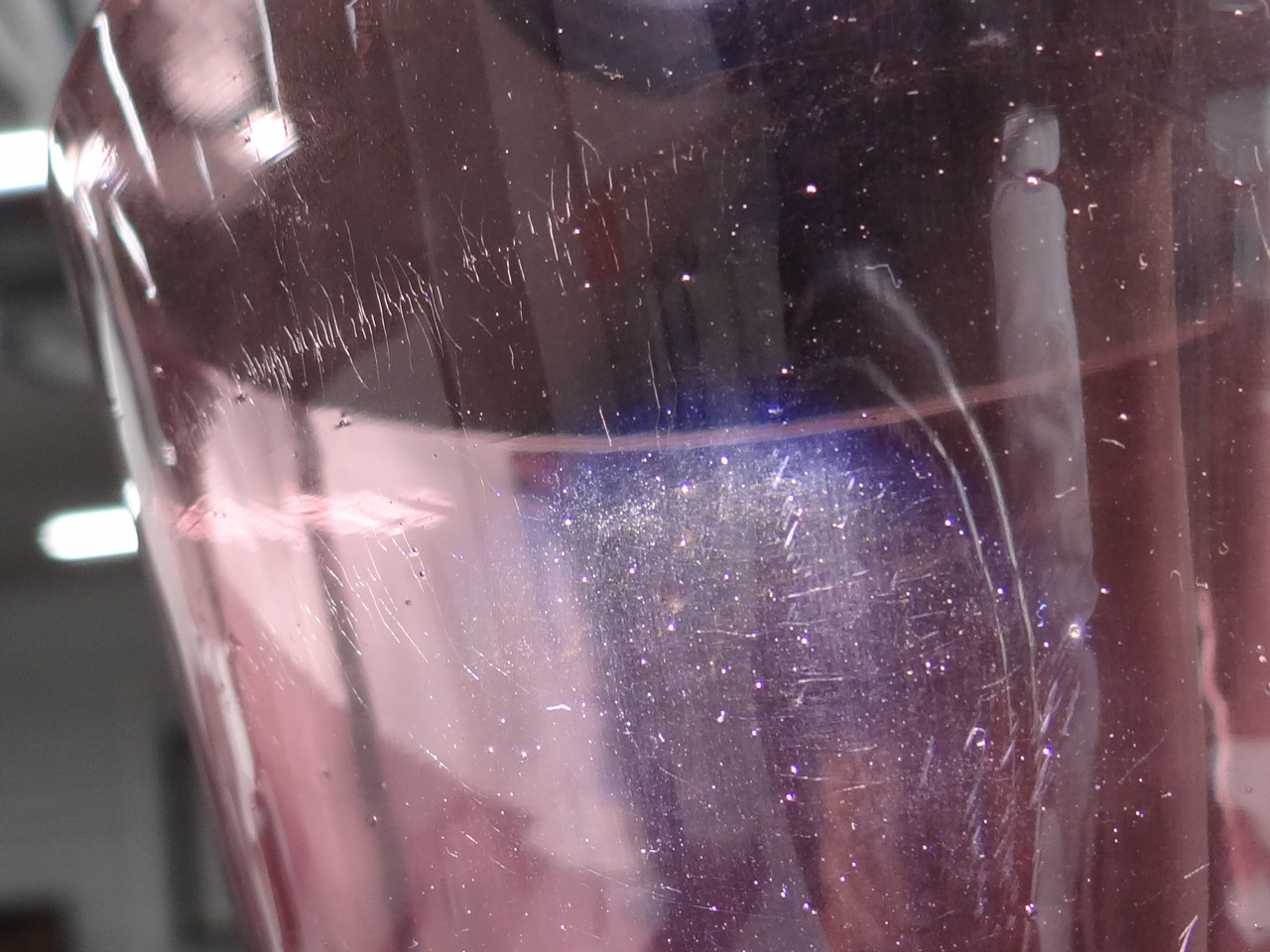
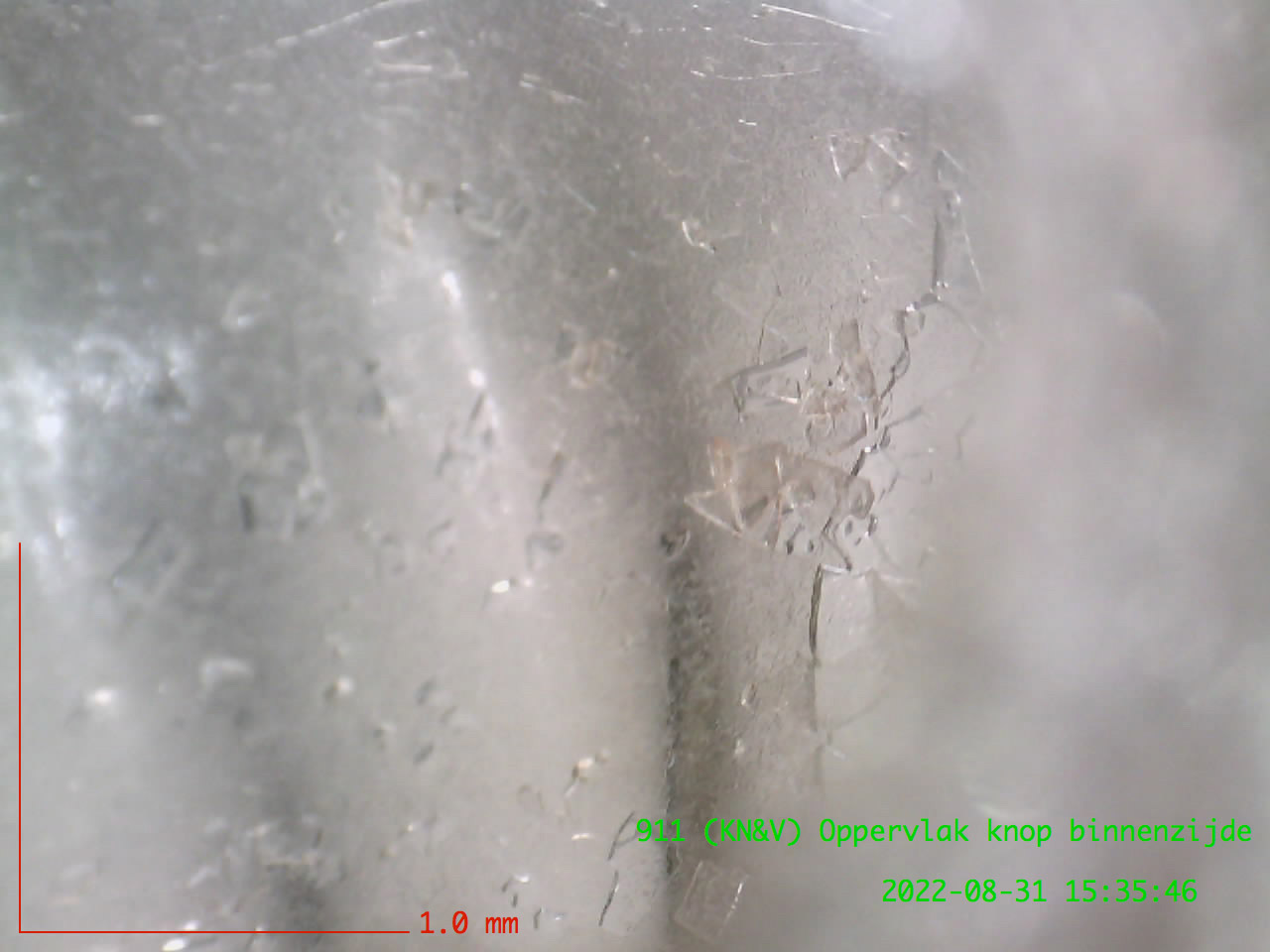
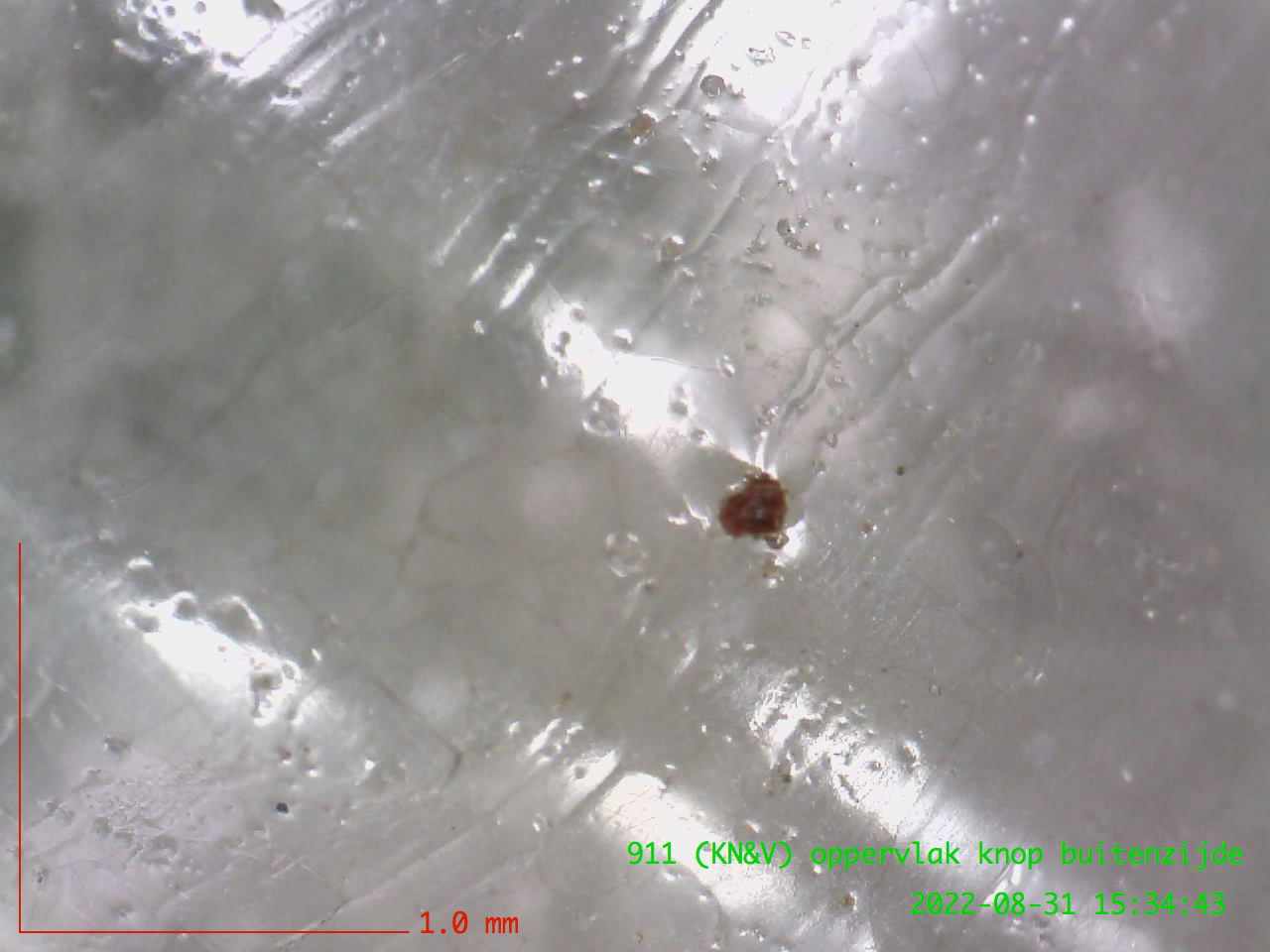
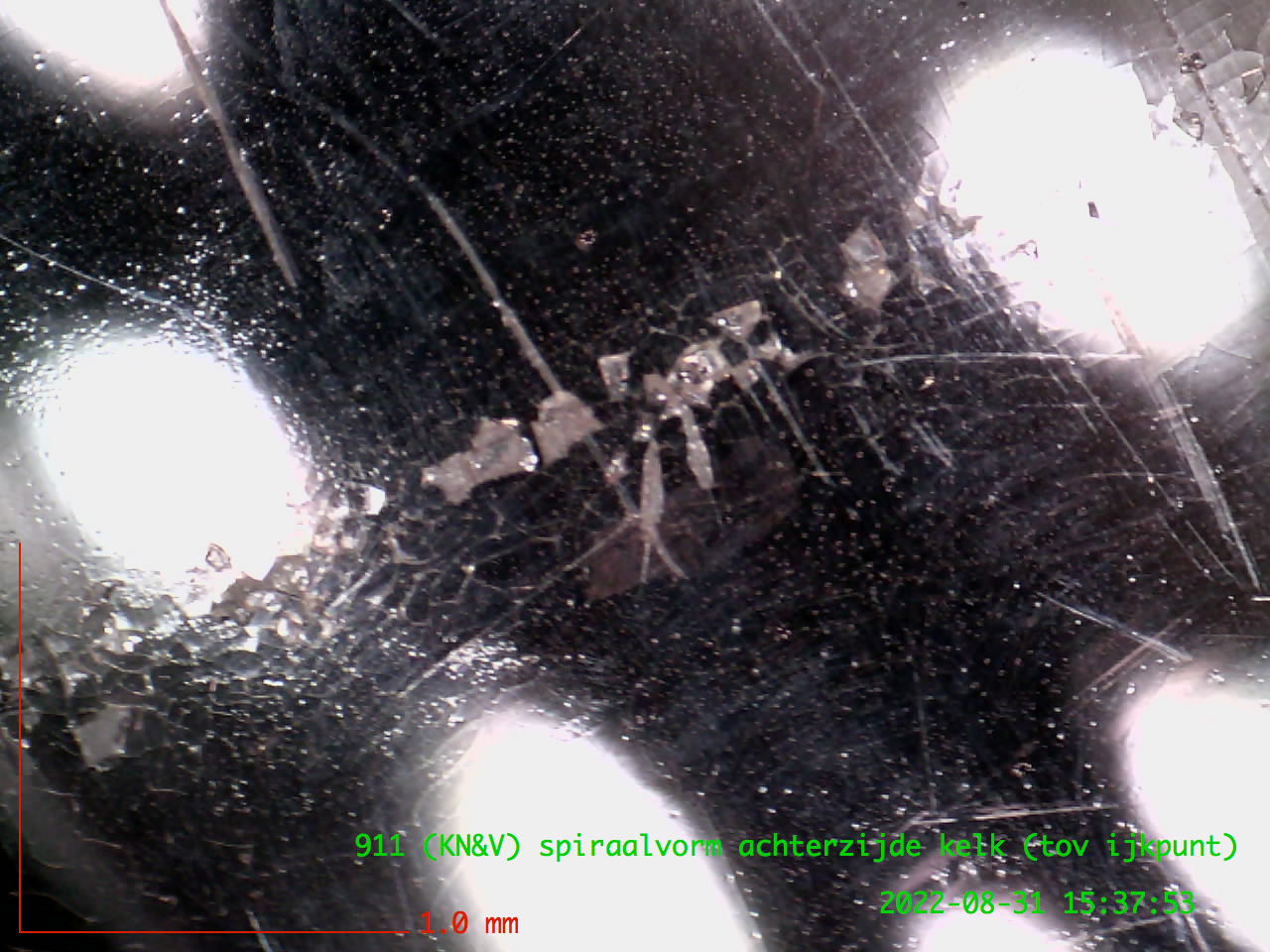
b.1 scratch(es) or abrasion, b.4 lacuna(e), b.5 dust, dirt or stains, c.1 cloudy appearance, c.2 slippery surface, c.3.2 dust, d.1.2 crystal deposits, d.2.2 incipient crizzling, d.2.3 advanced crizzling.
IC analysis of ion concentrations on the surface
The results of the IC analysis show very high sodium concentrations. Formates, chlorides and calcium were also identified.
pXRF analysis of the composition
The glass is probably a mixed-alkali lime silicate glass with a relatively low lime content. The reddish-purple colour is due to the addition of manganese and a small amount of copper. Manganese may have been added in the form of manganese ore, which often contains manganese oxide and iron oxide. This may explain the high iron content. Given the colour, the copper must have been reduced either by melting the glass in a reducing atmosphere or through internal reduction, that is, a reaction between a copper compound and another compound in the glass, causing the copper to be reduced.
Condition diagnosis
Condition (visual) very poor
Condition (IC) likely unstable
The streaks in the bowl may have caused stress within the object. The glass in this area has a different composition. It also appears that the morphology of the cracks in the colourless streaks differ from that in the red glass of the bowl.
It is possible that the instability is related to the object’s low lime content (see XRF form).
The ion concentration on the surface increased between 2017 and 2020. The object’s condition is deteriorating. Samples were taken from the outside of the bowl for IC analysis. The inside of the chalice is slippery.
(click on photos to enlarge)
.jpg)
advice & treatment
Suggestions for packaging, handling, storage and transport
Advice: record the vulnerabilities of this object in the (museum) documentation system and/or at the relevant location in the (museum) storage facility. Note that it is severely crizzled and has a slippery inner surface. Handle it with care.
Because of its extremely fragile condition (see research & diagnosis: likely unstable – thin-walled – cracks and lacunae), the object must be handled as little as possible and with extreme care. It should therefore be placed in such a way that it can be moved and handled without direct contact with the object.
In such situations, care must be taken to ensure that there is as little contact as possible between packaging materials and the glass. Packaging materials may absorb droplets and create a microclimate that is not conducive to the conservation of the unstable glass object. If touching the object is needed, bear in mind that it is severely crizzled. Lift it with both hands and provide adequate support. Always wear nitrile gloves. Place the object in a portable container and handle it only when absolutely necessary.
Keep the object in a separate cabinet with other unstable glass. Ensure the object is positioned so that its condition can be easily monitored and that it is readily accessible for inspection.
Suggestions for monitoring the environment and climate
Place the object in a stable environment with minimal fluctuations in relative humidity and temperature. It is highly advisable to monitor both the condition of the object and the climatic conditions regularly to detect changes at an early stage and to analyse any links with the environmental conditions. The object cannot be loaned.
Suggestions for treatment
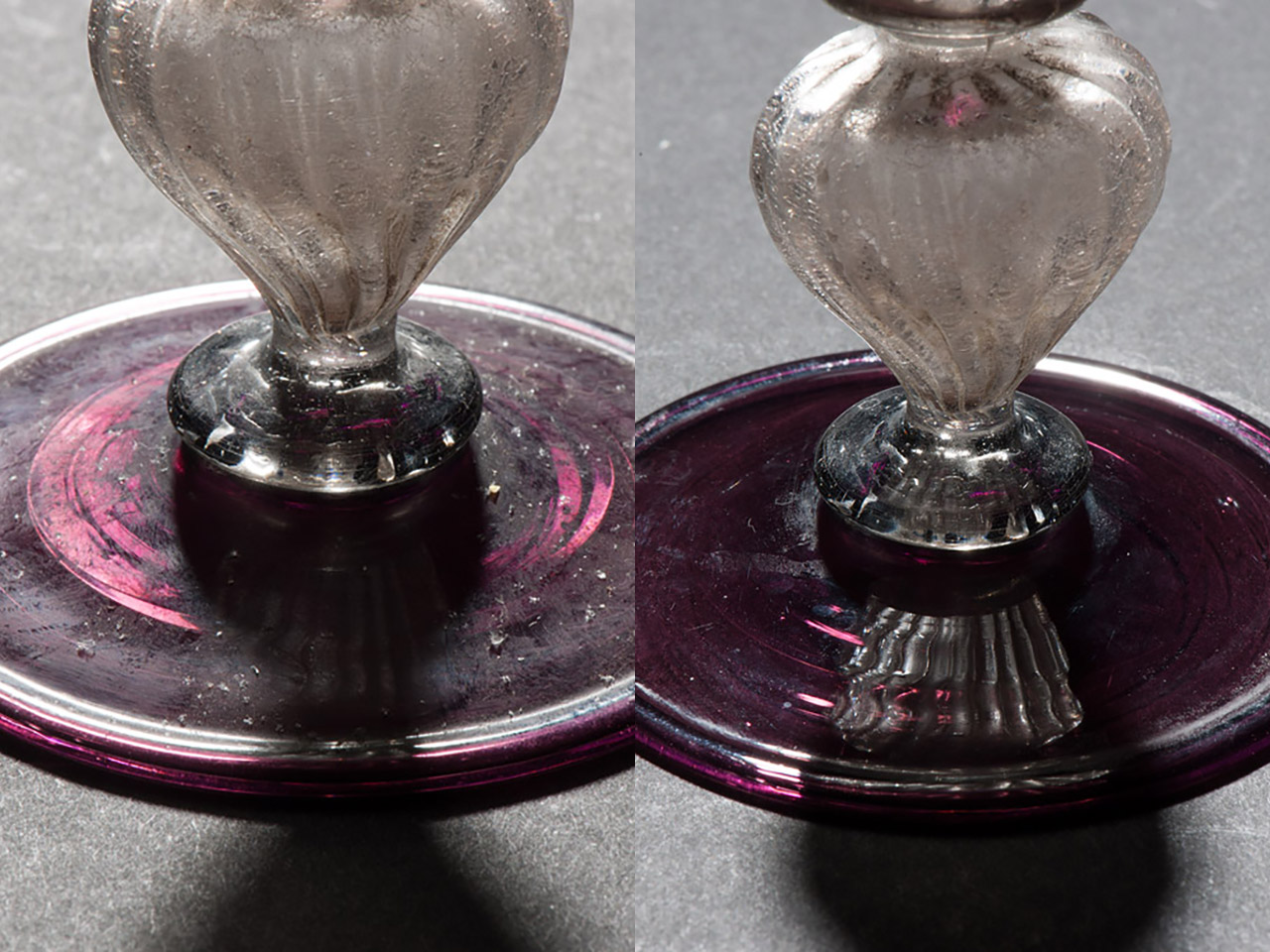
Research shows that the object’s condition is deteriorating. Following a past cleaning treatment, ion concentrations on the glass surface have begun to rise again. This deterioration is currently being studied to devise specific cleaning strategies.
Cleaning the object is advisable because droplets on the surface (observed on the inside of the chalice during the last condition check) contribute to further degradation.
Only a glass conservator can determine whether cleaning is desirable and feasible, which cleaning method to use and how to closely monitor the condition.
If undertaken, only a glass conservator should clean the glass.
Suggestions for further research
Further research into glass instability, particularly in relation to cleaning, and into the storage of unstable glass is urgently needed.
×
Streak
Hollow knop
Hollow knop
Knop surface, inside
Knop surface, outside
Spiral on the back of the bowl relative to the reference point
Stains
Before and after cleaning
Before and after cleaning (detail)