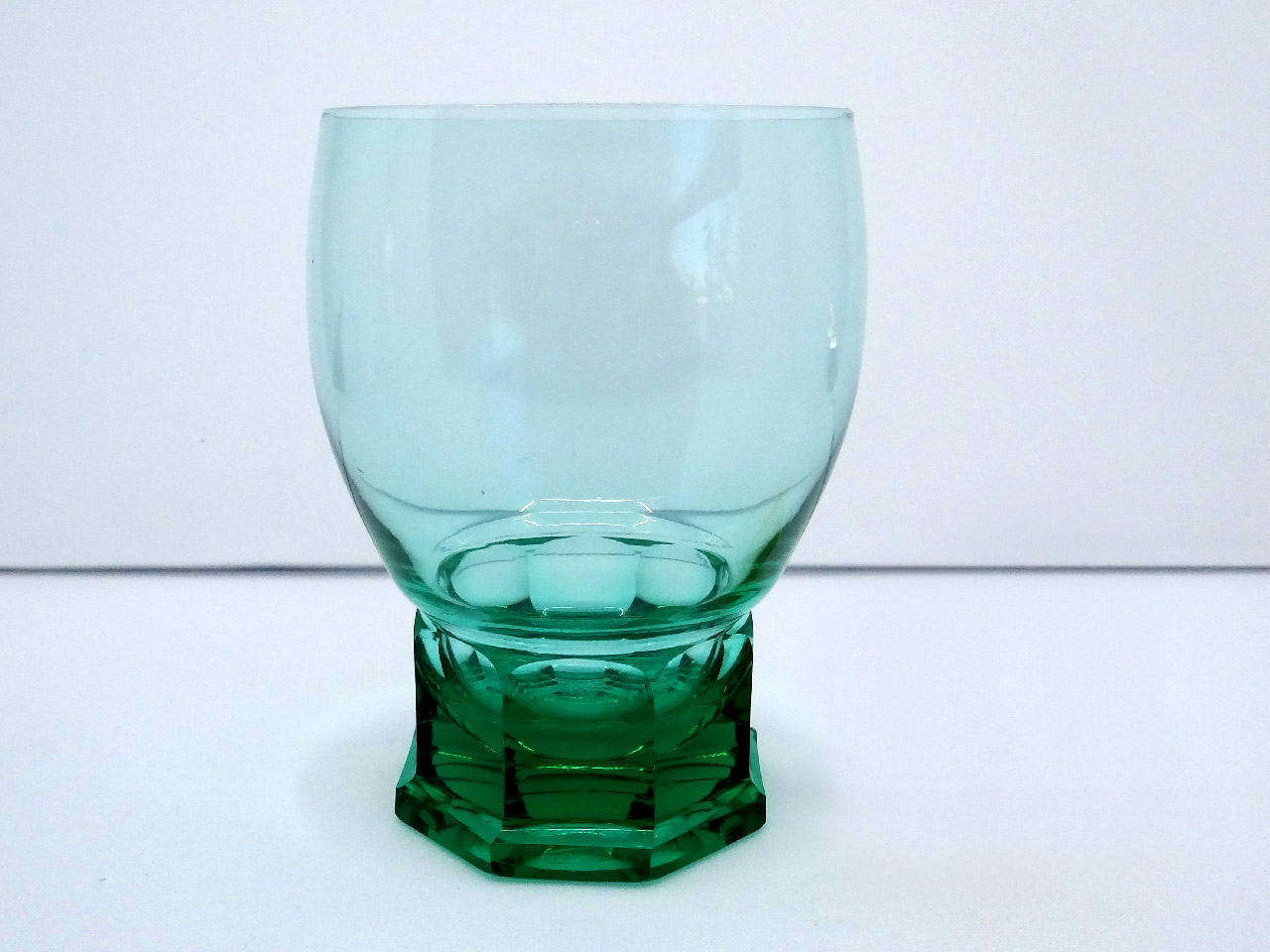
Andries Copier, servies Wijnrank (tableware Wijnrank - Whisky glass, 1928
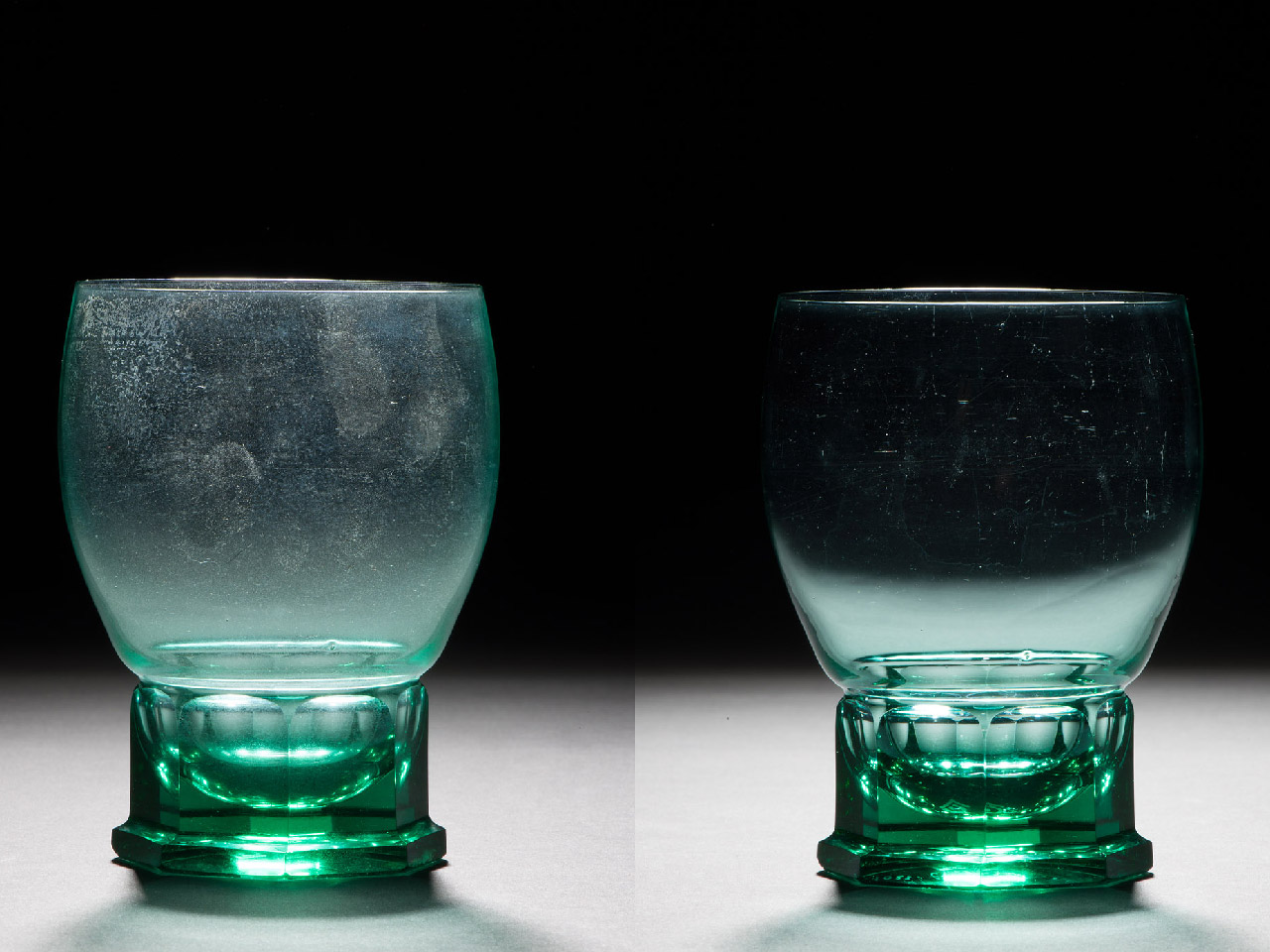
12.4 × 8.8 cm, V 149 b 1 (KN&V)
COLLECTION Museum Boijmans Van Beuningen
creation
making process
Material coloured clear glass, green / lake-blue crystal
Technique mould-blown, solid base
Hot working Cap Cap cracked off;
rim ground and polished. Solid base ground and
polished
Whisky tumbler from
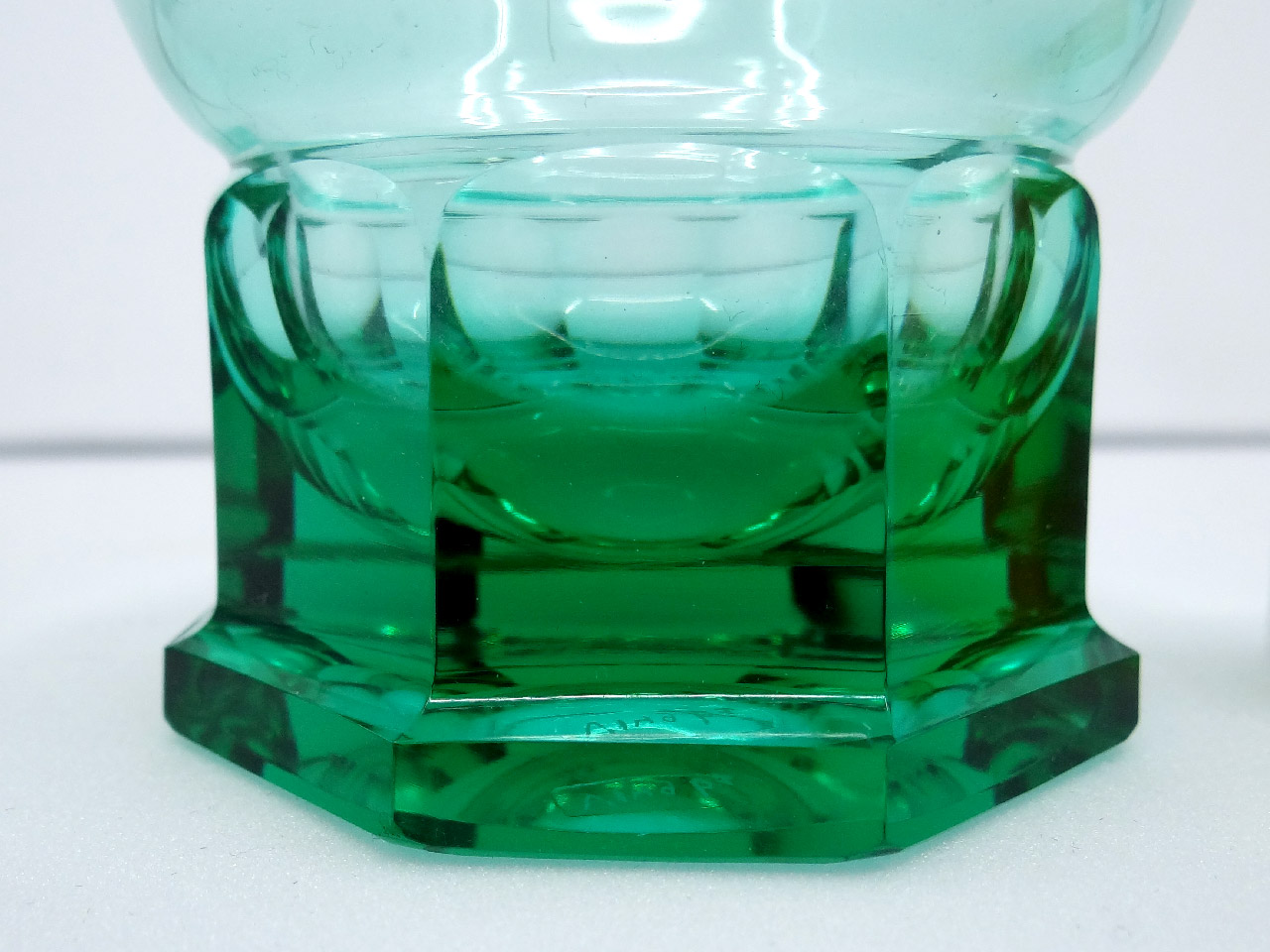
Copier’s Wijnrank (Lit: vine shoot) glassware service, 1928. As with the Annagrün glasses of the early 1920s, it was still difficult to keep the low chemical durability of the glass under control. After being blown in the factory, the glass was cooled and cracked off cold, then cut and polished. The thick bases were cut and polished in the cutting workshop, as were the neck and stopper of the carafe. They were first cut on a carborundum stone and then pre-polished on sandstone. Finally, they were polished to a high gloss using a cork wheel with pumice and a felt wheel with tin oxide. The labour-intensive technique made these tumblers luxury items.
(art) history
The cut decoration adorning the 1927 whisky set shows that Copier succeeded in adapting this technique, which had been so neglected in the 19th century, to 20th-century design principles. The body of the carafe and the sturdy beakers of the glasses are spherical, whilst the base, neck and stopper are cut octagonally. Here too, Copier was undoubtedly inspired by the polygonal pressed glass of De Bazel and Berlage. There is, however, an essential difference. In the pressed services, the polygonal form reveals the pressed-glass technique, whereas the whisky set shows that the object was blown and then cut. (source: Kunstmuseum Den Haag)
Copier’s ‘lake blue’ glass mostly dates from 1927–28 and 1934. Nieuwe Instituut states that
Leerdam Glass Factory (Glasfabriek Leerdam) developed the lake blue colour in 1927.
The Nationaal Glasmuseum explains that De Bazel’s vases were also produced in a lake blue version in 1929.
conservation
research & diagnosis
technical analysis
visual examination
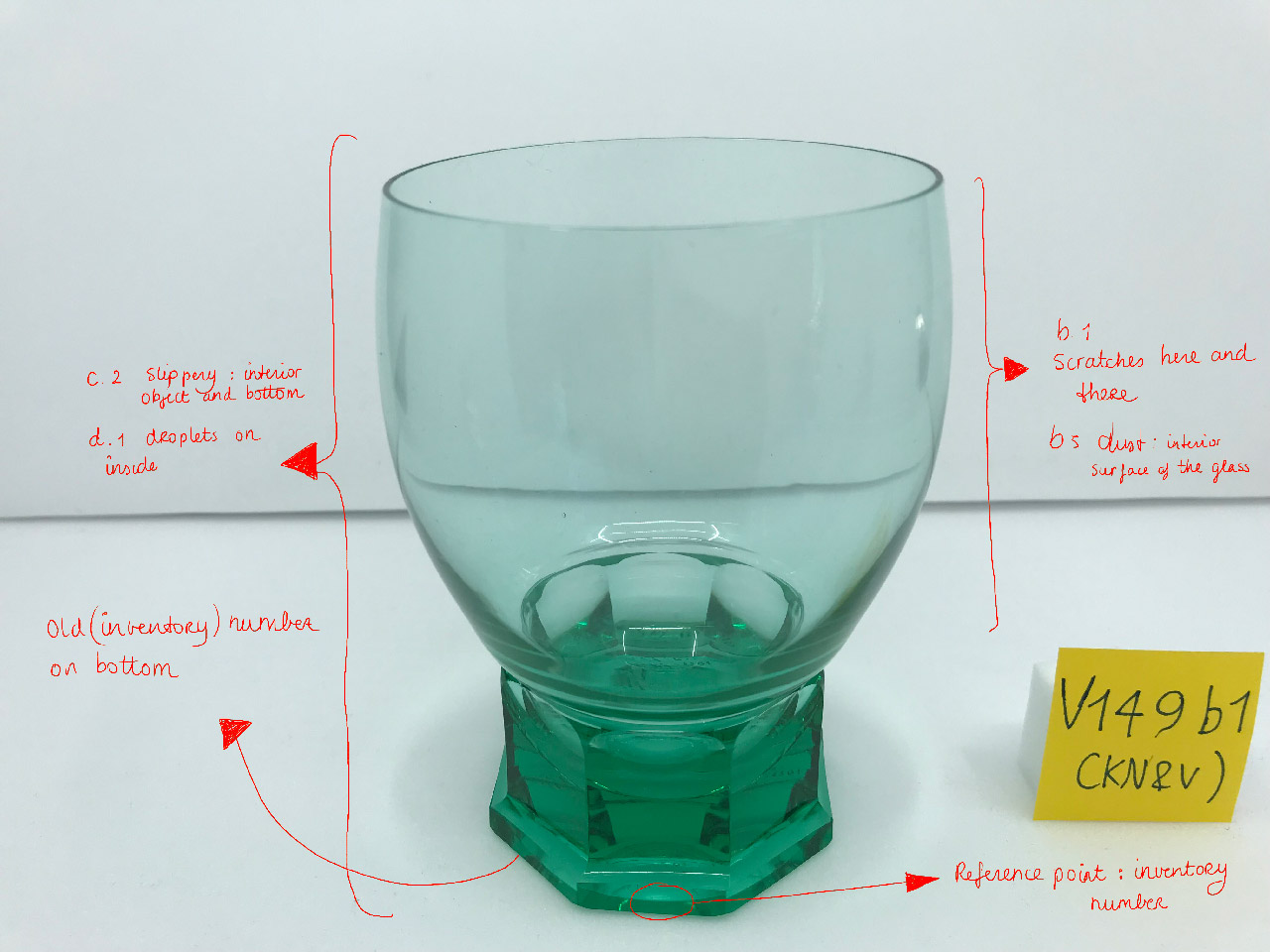
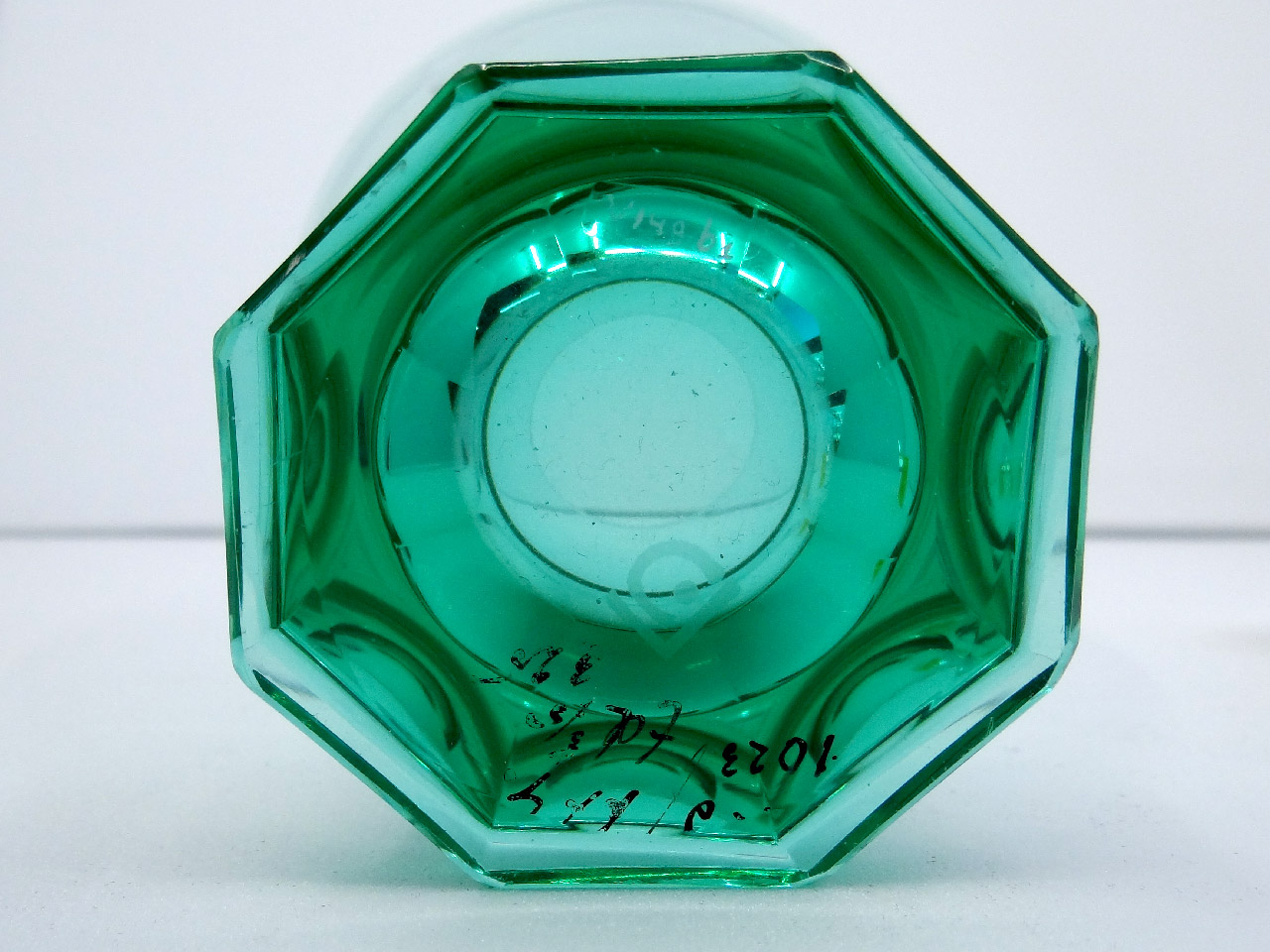
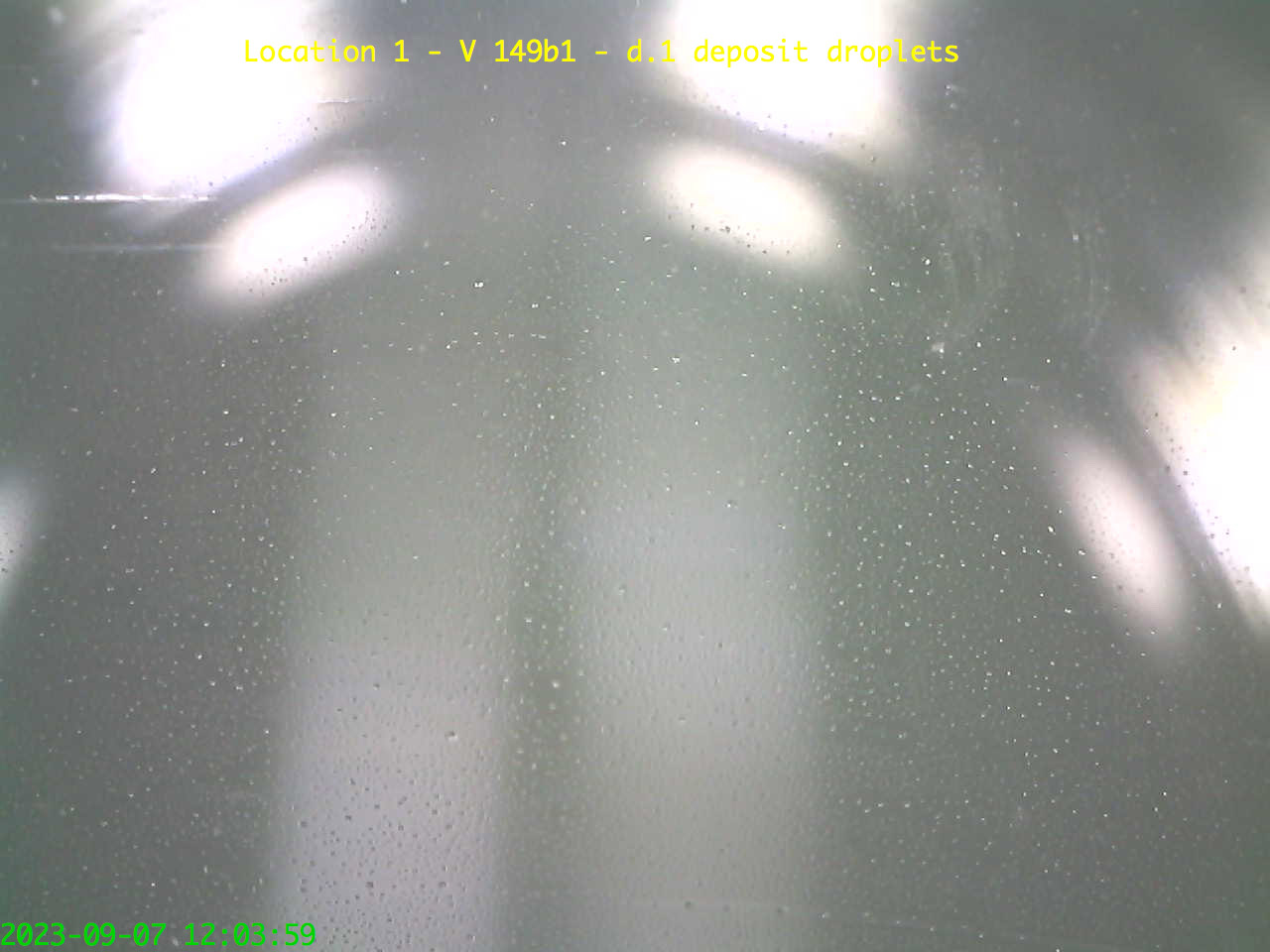
b.1 scratch(es) or abrasion; b.5 dust, dirt or stain(s); c.1 cloudy appearance; c.2 slippery surface; c.3.2 dust deposit(s); d.1.1 droplet(s)
IC analysis of ion concentrations on the surface
Relatively slightly elevated ion concentrations on the surface (sodium).
pXRF analysis of the composition
This green soda-lime glass contains no uranium, but it does contain copper and a small amount of chromium to give the glass its green colour. Arsenic has also been detected. Arsenic acts as a fining agent in the glass batch, meaning it ensures fewer or no gas bubbles remain in the glass. The glassware from the Leerdam Glass Factory also contains antimony, which also acts as a fining agent. Besides acting as fining agents, arsenic and antimony can alter the oxidation state of metal ions in glass through redox reactions, thereby changing the colour of the glass.
Previous treatments
The object was cleaned in 2013 with a 4:1 mix of demineralised water and ethanol. In 2023, droplets were again observed on the inside of the beaker.
Condition diagnosis
Condition (visual) very poor
Condition (IC) potentially unstable
A slight discrepancy exists between the visual findings and the results of the IC analysis. Repeating the IC analysis may be advisable.
(Click on photos to enlarge)
advice & treatment
Suggestions for packaging, handling, storage and transport
Advice: record the vulnerabilities of this object in the (museum) documentation system and/or at the relevant location in the (museum) storage facility. Note that it is slippery and must be handled with care.
Droplets have been observed (see object diagnosis). The object may therefore be very slippery. Handle it as little as possible and take care when wearing nitrile gloves. Transport the object in a box or on a trolley whenever possible until it is set down at its final location.
If packaging is necessary, care should be taken to minimise contact between the packing materials and the glass. The packing material may absorb the droplets and create a microclimate that is not conducive to the conservation of the unstable glass object.
Keep the object in a separate cabinet with other unstable glass. Ensure the object is positioned so that its condition can be easily monitored and that it is readily accessible for inspection.
Suggestions for monitoring the environment and climate
Keep the object in a stable environment with minimal fluctuations in humidity and temperature. It is highly advisable to monitor both the condition of the object and the climatic conditions regularly to detect changes at an early stage and to analyse any links with the environmental conditions.
Suggestions for treatment
Research indicates that the condition of the object is deteriorating. The concentration of ions on the glass surface has begun to rise again following a previous cleaning treatment. This deterioration is currently being investigated to devise specific cleaning strategies. Cleaning the object is advisable because droplets on the surface contribute to further degradation.
Only a glass conservator can determine whether cleaning is desirable and feasible, which cleaning method to use and how to closely monitor the condition. If undertaken, only a glass conservator should clean the glass.
Suggestions for further research
Further research into glass instability, particularly in relation to cleaning, and into the storage of unstable glass is urgently needed.