Sybren Valkema, carafe, ca. 1953
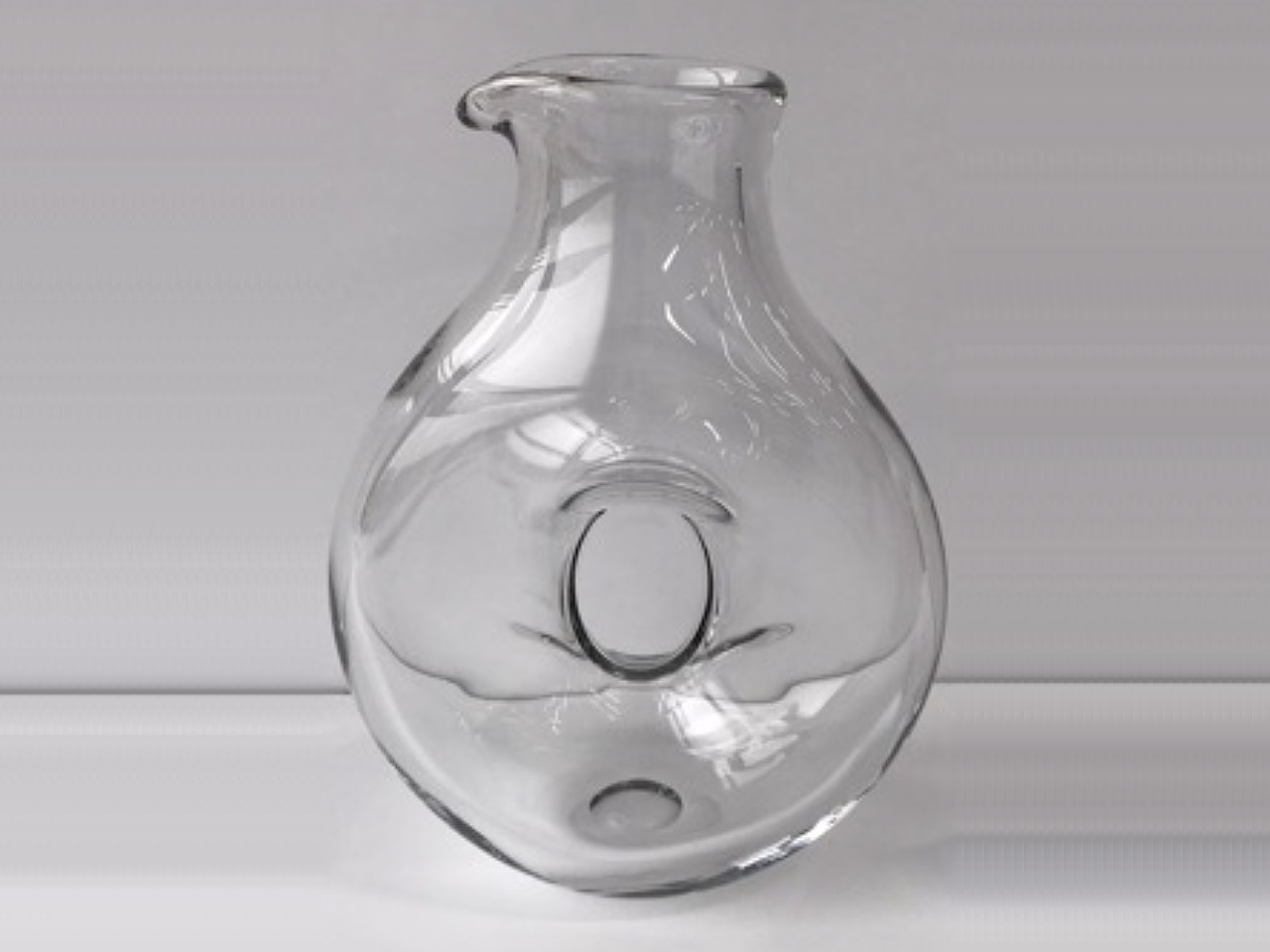
18.5 × 25 × 18.5 cm, V 2143 (KN&V)
COLLECTION Museum Boijmans Van Beuningen. Acquired with support from the Mondriaan Fonds.
creation
making process
Material colourless clear glass
Technique free blown, opened on a
pontilHot working forming an opening in the bubble
Cold working grinding and
polishing the base surface pontil mark
(art) history
Dutch glass artist
Sybren Valkema (1916–1996) taught general aesthetic design from 1943 to 1948 at the Glass School in Leerdam, which Andries Copier founded in 1940. In the following years, Valkema produced numerous designs for unique pieces (‘Unica’), series pieces (‘Serica’) and glassware for the Leerdam Glass Factory (Glasfabriek Leerdam). In 1969, he established the glass department at the Gerrit Rietveld Academie, where he remained a lecturer and executive board member until 1980.
This carafe is a teardrop-shaped jug with a pouring lip and a constricted section in the middle. This prototype is an example of the factory’s efforts to develop an international style that could compete with Scandinavian glassware manufacturers.
conservation
research & diagnosis
technical analysis
visual examination
b.1 scratch(es) or abrasion, b.5 dust, dirt or stain(s)
No detail photographs of this object are available.
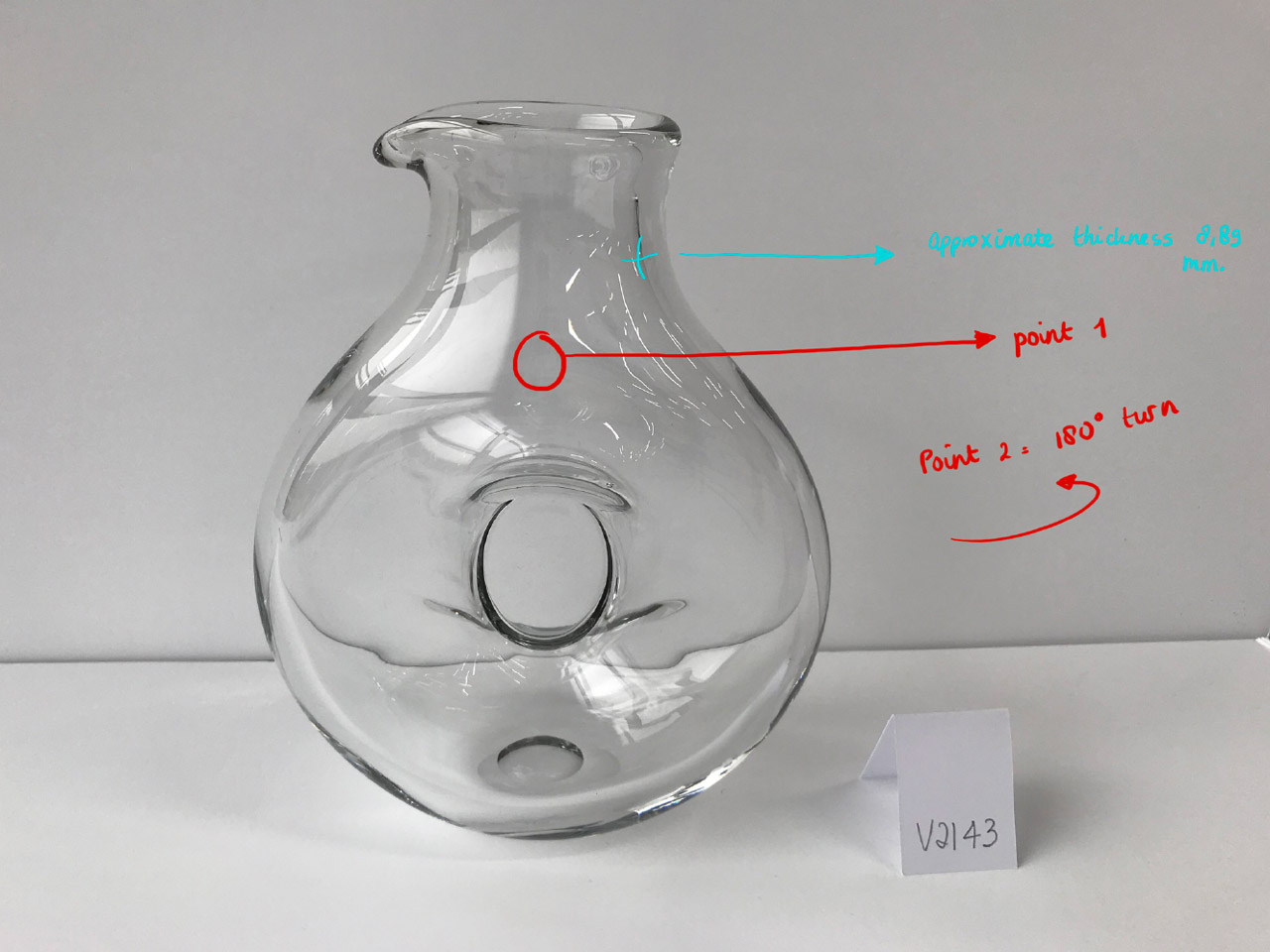
pXRF analysis of the composition
The glass is a potash-lime glass containing barium and antimony. It contains little iron and virtually no manganese. The zirconium content is relatively high, possibly originating from the sand used.
Previous treatments
Nothing is known about any previous treatments. It is not known whether the object was ever used. The object was acquired in 2001 and has been kept in museum conditions ever since.
Condition diagnosis
Condition (visual) good
advice & treatment
Suggestions for packaging, handling, storage and transport
The object is in good condition and stands stably. No special advice regarding packaging, handling and transport. Always wear nitrile gloves and ensure the object is well supported during handling.