conservation
advice & treatment
cleaning glass
Few people have never cleaned a glass object. However, the approach to cleaning objects of cultural and historical value is different. The primary difference lies in the diagnostics carried out beforehand. An understanding of the object’s making processes, knowledge of degradation phenomena, expertise in the field of instability, and the ability to visually identify the smallest cracks or old restorations mean that every glass object is unique and can therefore undergo a specific cleaning process. A conservator can identify the vulnerabilities, the type of soiling and any possible cleaning strategies.
A conservator will always first seek to contextualise the ‘dirt’ and ask the following questions:
– Why is the object soiled or why does it have certain stains?
– How might the dirt have accumulated?
– Does the dirt contribute to our understanding of the object (for example by telling us something about the making process, the conditions in which the glass has been kept, the context of any degradation or how the object was used)?
– What negative effects does the dirt have on the condition of the glass object?
– What cleaning treatments can be considered, what results might the various options produce and are there any risks involved?
It is possible that some 'stains' are related to the making process or have even been deliberately applied by the artist. The following factors must be weighed: dirt as a source of information, dirt as a source of degradation, and the possibilities and limitations of cleaning.
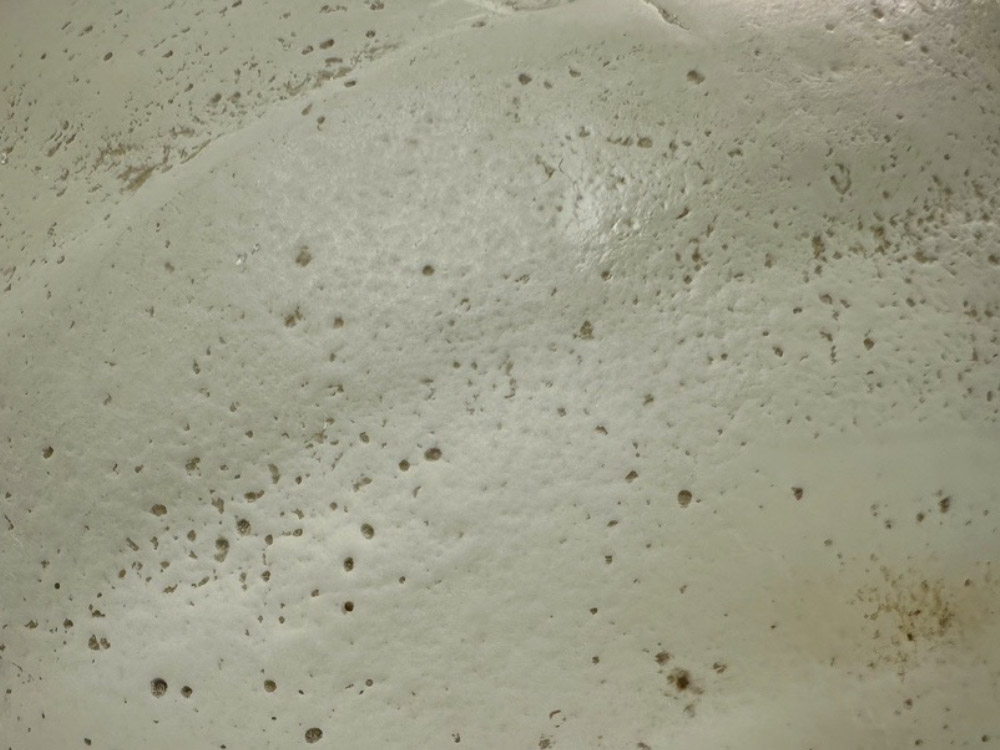 Particulate soiling in the deeper cavities of a glass surface. PHOTO M. Slager
In addition, a conservator is familiar with conservation cleaning techniques. In many cases, the conservator will use dry or minimally wet methods. Wet cleaning is often carried out using (demineralised) water, although other solvents such as acetone or ethanol may sometimes be added. The choice of solvent and concentration depends on the object’s characteristics. Common techniques range from the careful dry removal of surface dirt with a paintbrush or soft bristle brush to immersing the object in water. Commercial glass-cleaning products are never used. During the cleaning process, a conservator will monitor progress and effectiveness using a loupe or microscope.
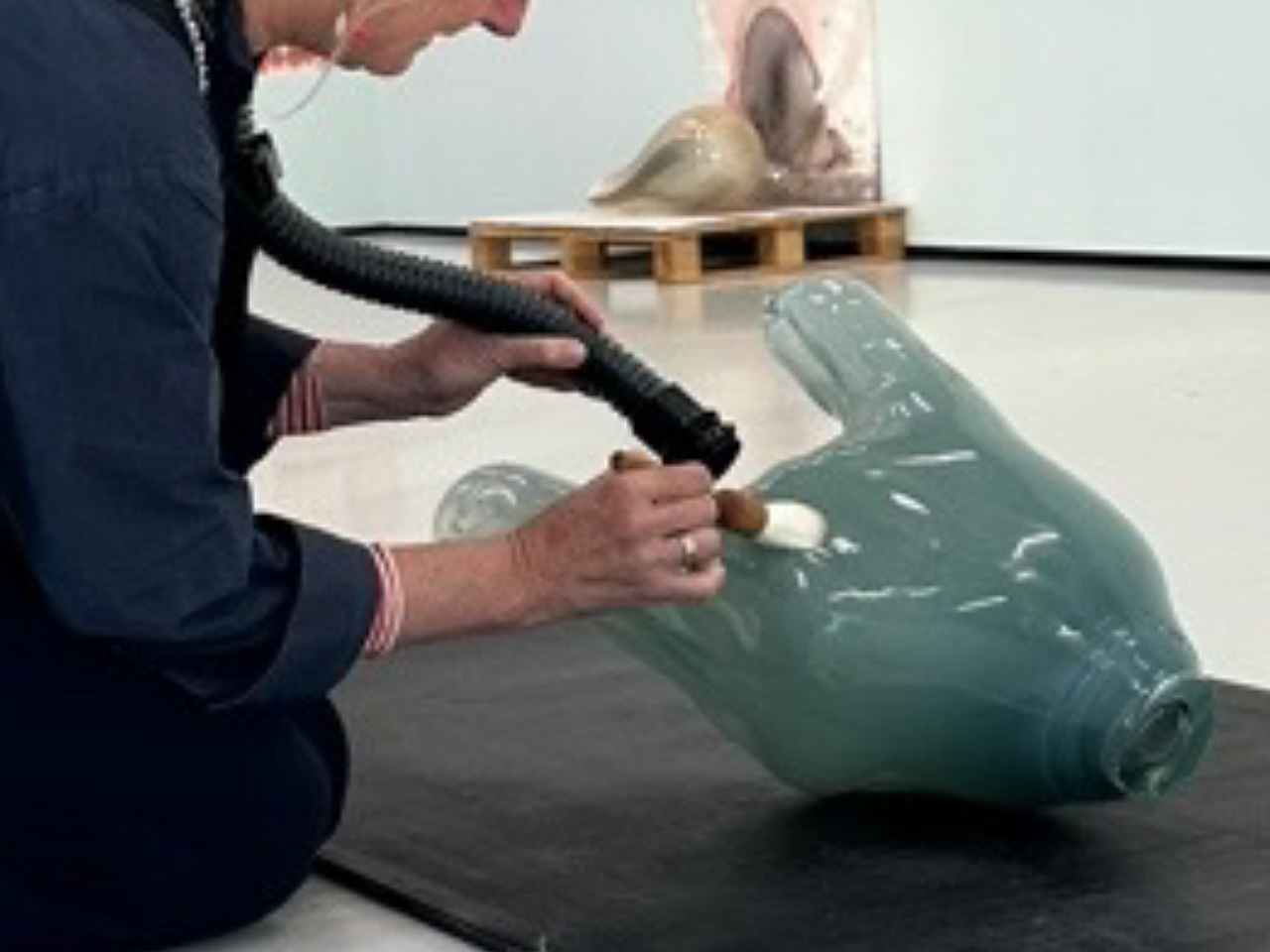
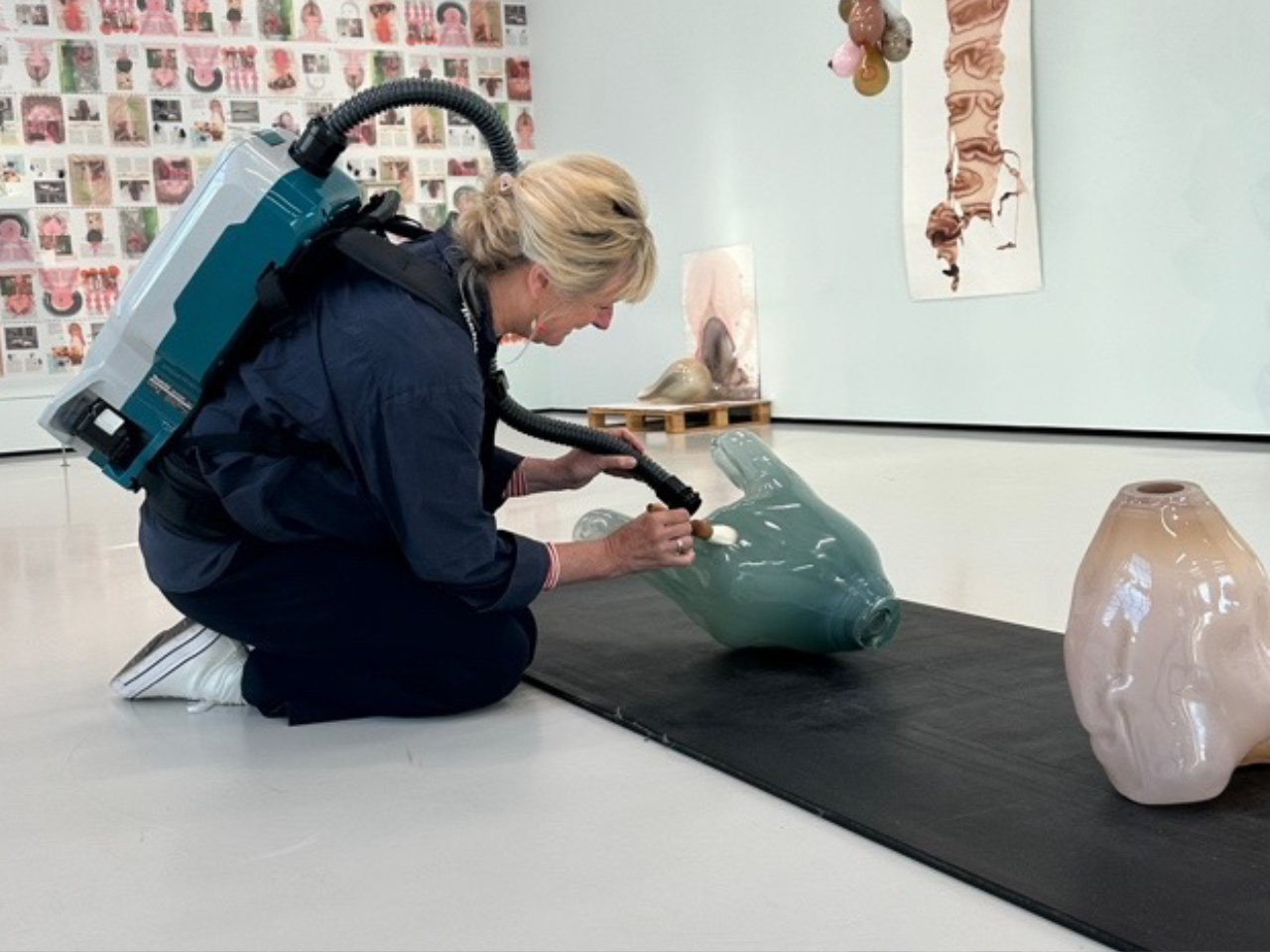 Sometimes it is necessary to remove dust immediately using a vacuum cleaner. It is safer if the vacuum cleaner can be worn on the back.
Cleaning is always preceded by a careful assessment of the type of glass and its vulnerabilities. Lead glass, for example, can be scratched when a brush or cotton swab is used to remove dust. It is also important to determine what type of dirt is present.
Special materials and techniques are used to clean enamelled glass, mirrors, chandeliers, archaeological glass, cold-painted glass, reverse glass paintings, architectural glass, glass mosaics, glass featuring special intermediate cooling techniques, glass in public spaces, glass with old restorations, glass with particularly fragile or almost sealed forms, gilded glass and glass combined with other materials.
Cleaning is important for the preservation of glass objects, but how often an object needs cleaning depends on its specific context. Many museum objects are cleaned at least once during their ‘museum life’, usually when they first arrive as new acquisitions.
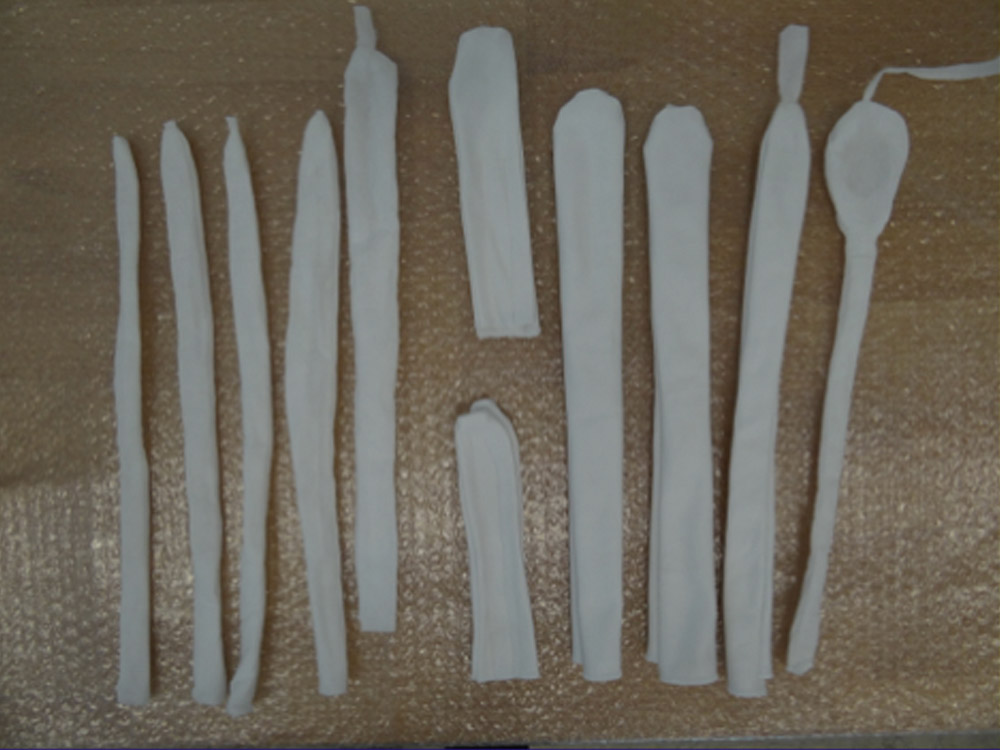
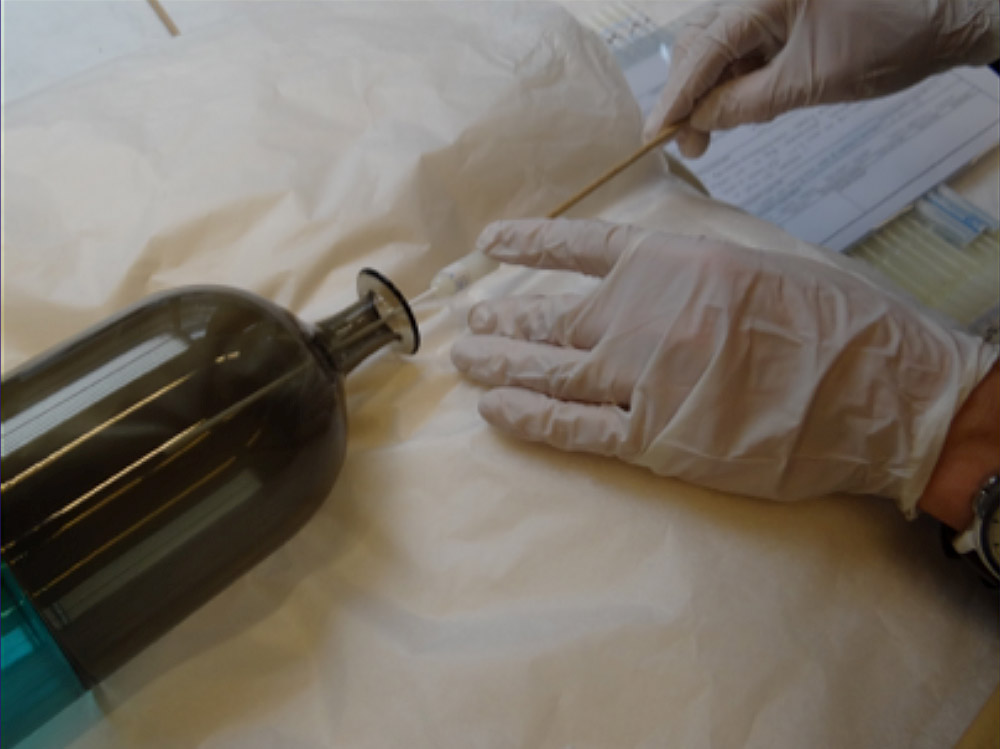
Shown below are special homemade ‘sleeves’ made from various materials and in various shapes that can be slipped over a long cotton swab or a flexible brush. Some have a long thin ‘tongue’ for removing dirt from bottles or a pocket into which cotton wool or other soft material can be inserted for absorption or to provide extra protection for delicate surfaces.
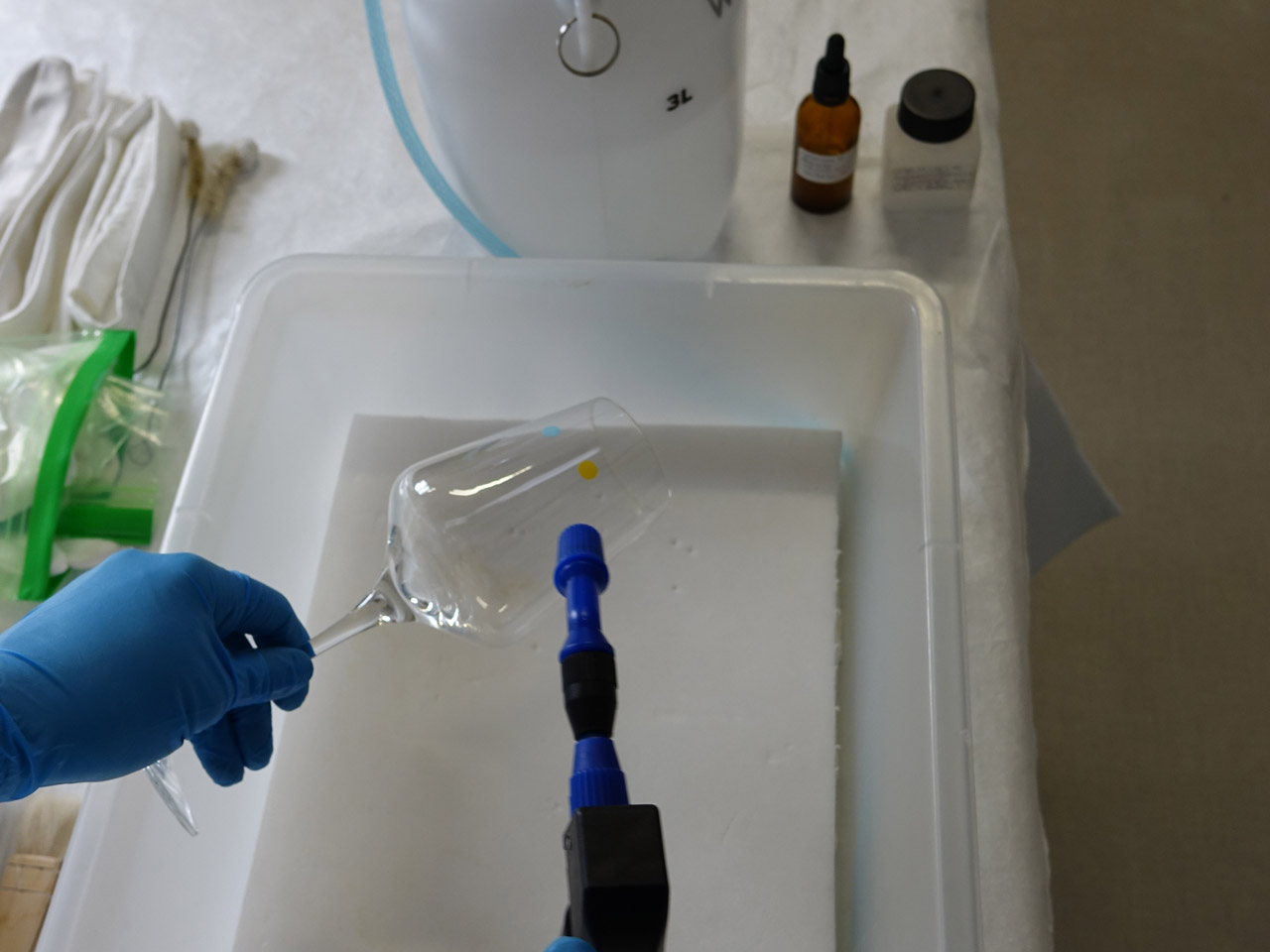 The direction and intensity of the water jet can be adjusted depending on the condition and vulnerabilities of the glass. PHOTO M. Slager
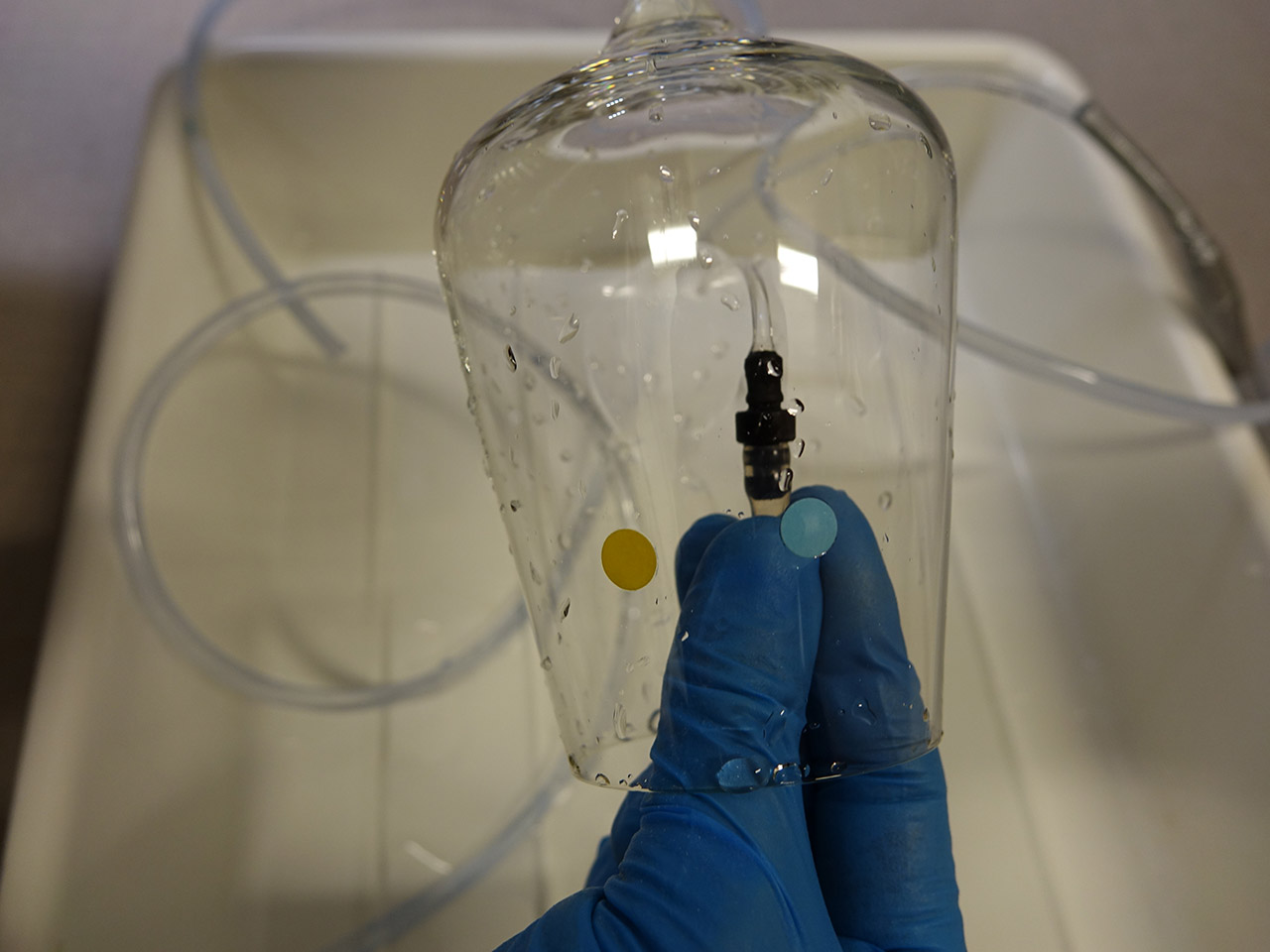 A highly flexible hose with a small nozzle allows a particularly fine water jet to be applied precisely to specific areas. PHOTO M. Slager
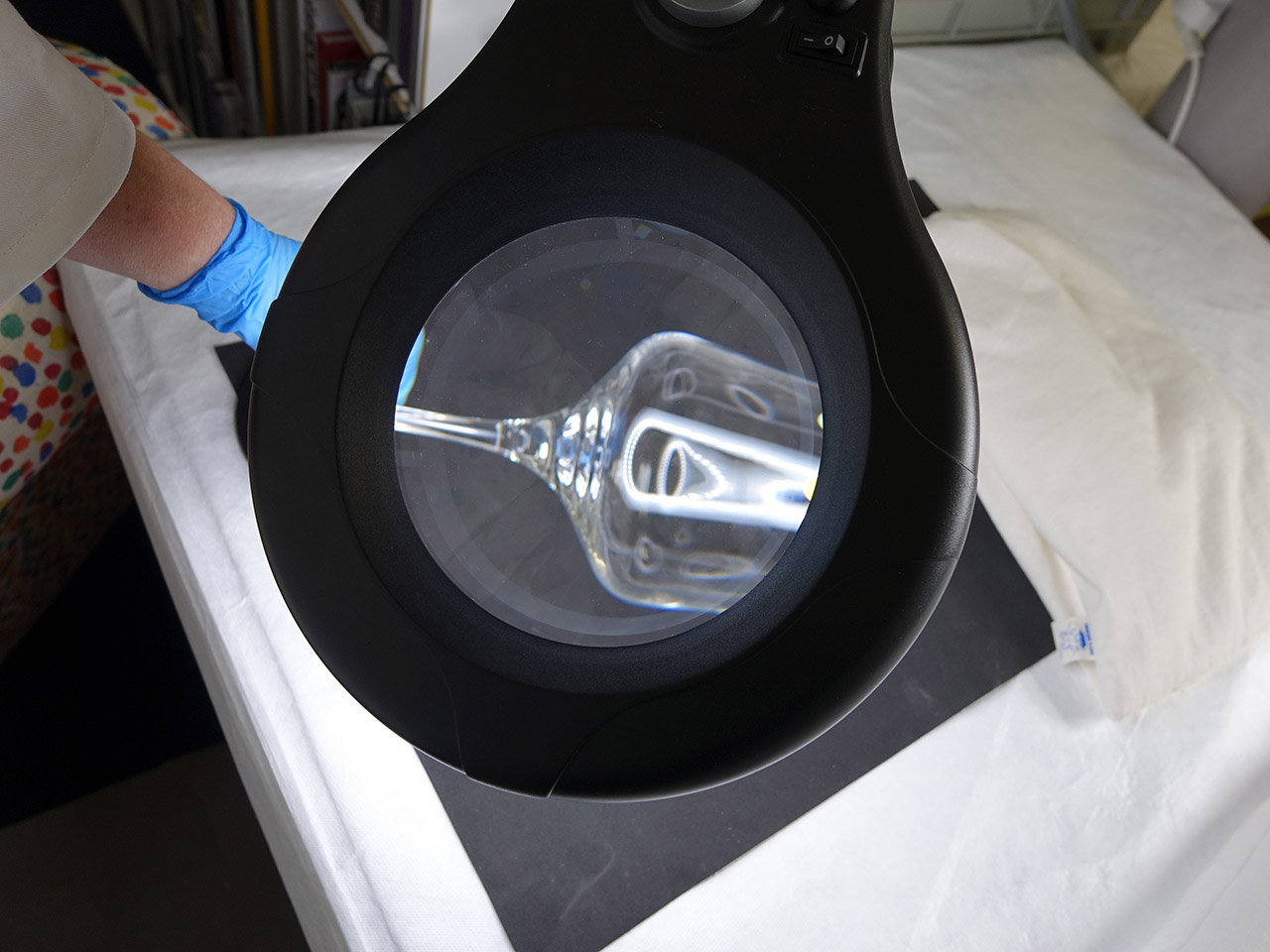 It is important to monitor the cleaning process carefully. PHOTO M. Slager
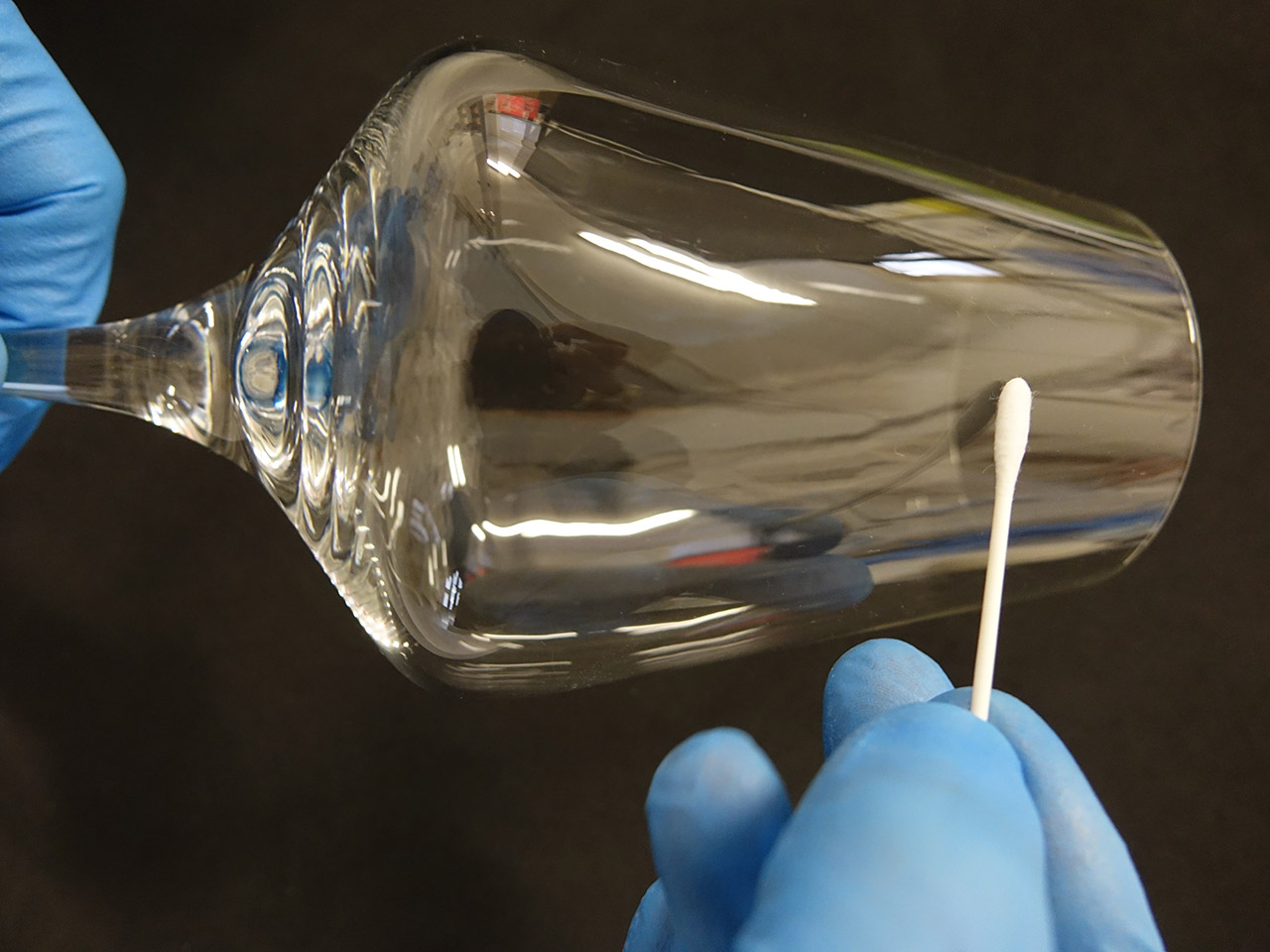 In some cases, glass can be cleaned with a cotton swab. However, scratches can also be made on the glass with cotton wool or a cotton swab through the displacement of sharp particles in the dust. A conservator can assess whether this method is suitable. PHOTO M. Slager
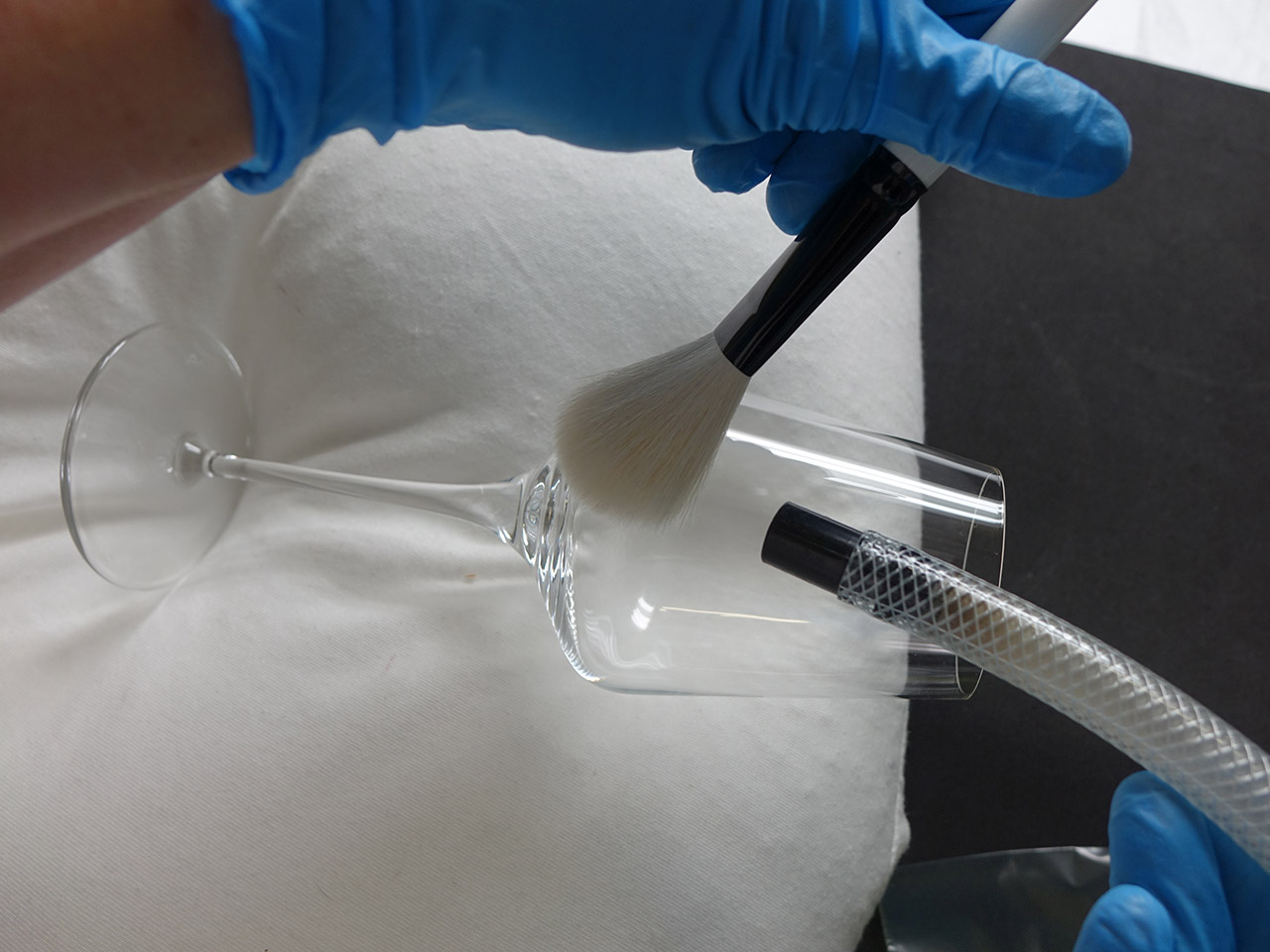 Sometimes dust can be removed from the glass with a soft brush. A vacuum cleaner with a soft flexible nozzle can remove the dust instantly. PHOTO M. Slager
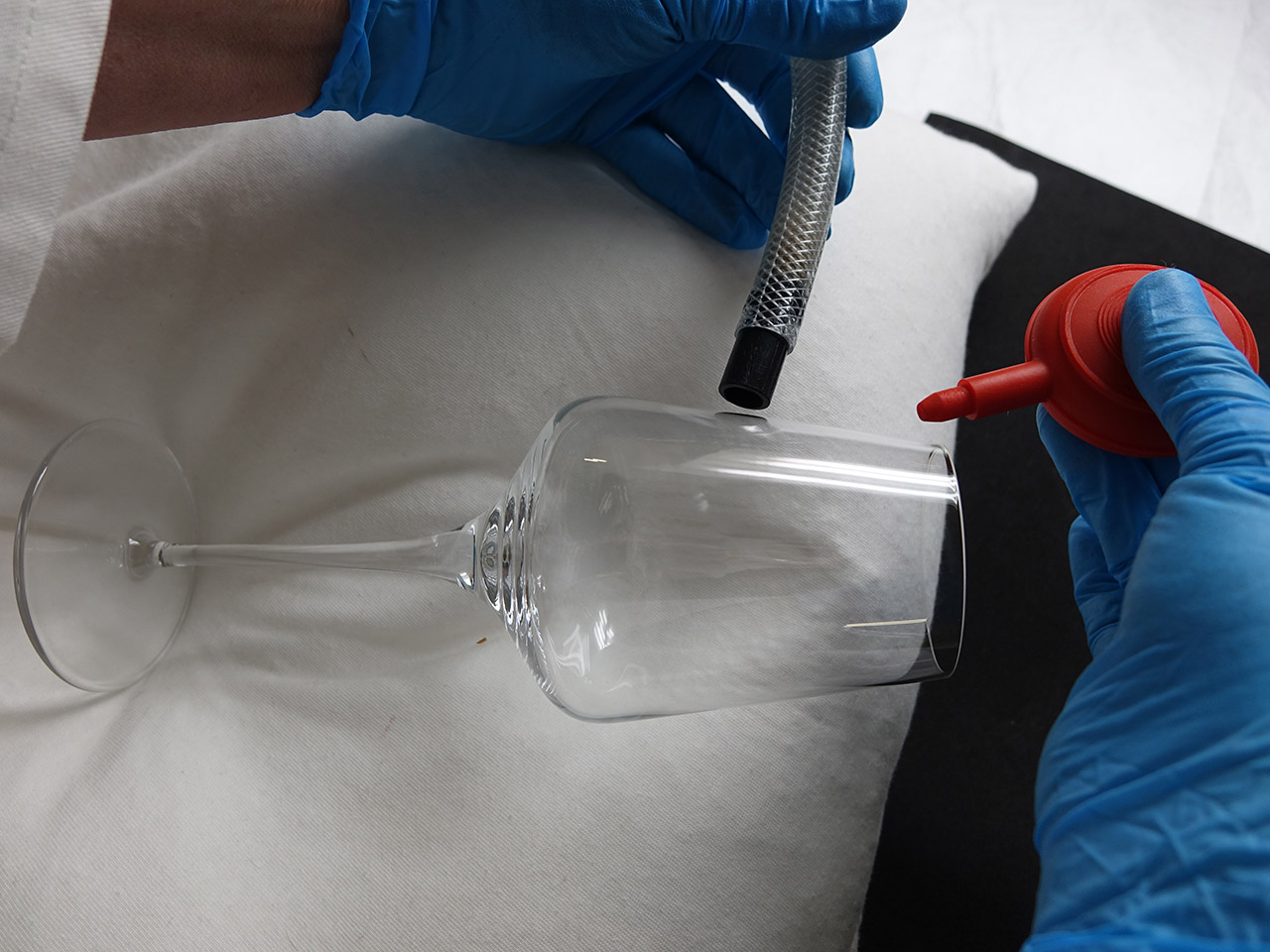 If the condition of the glass means it cannot come into contact with tools, a bulb blower can be used to remove dust or dirt. PHOTO M. Slager
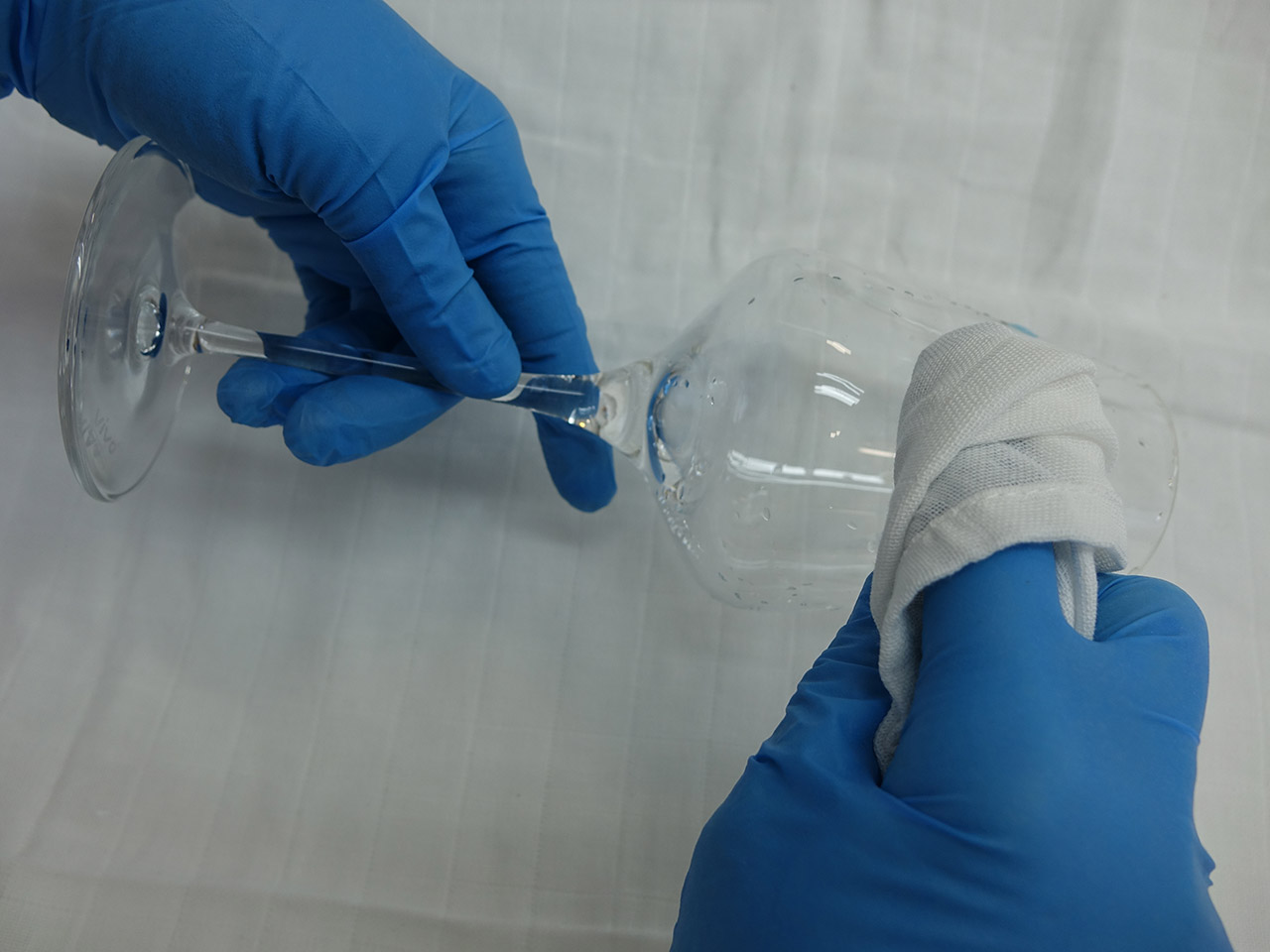 Any remaining drops of water can be removed by dabbing with a soft cloth. PHOTO M. Slager
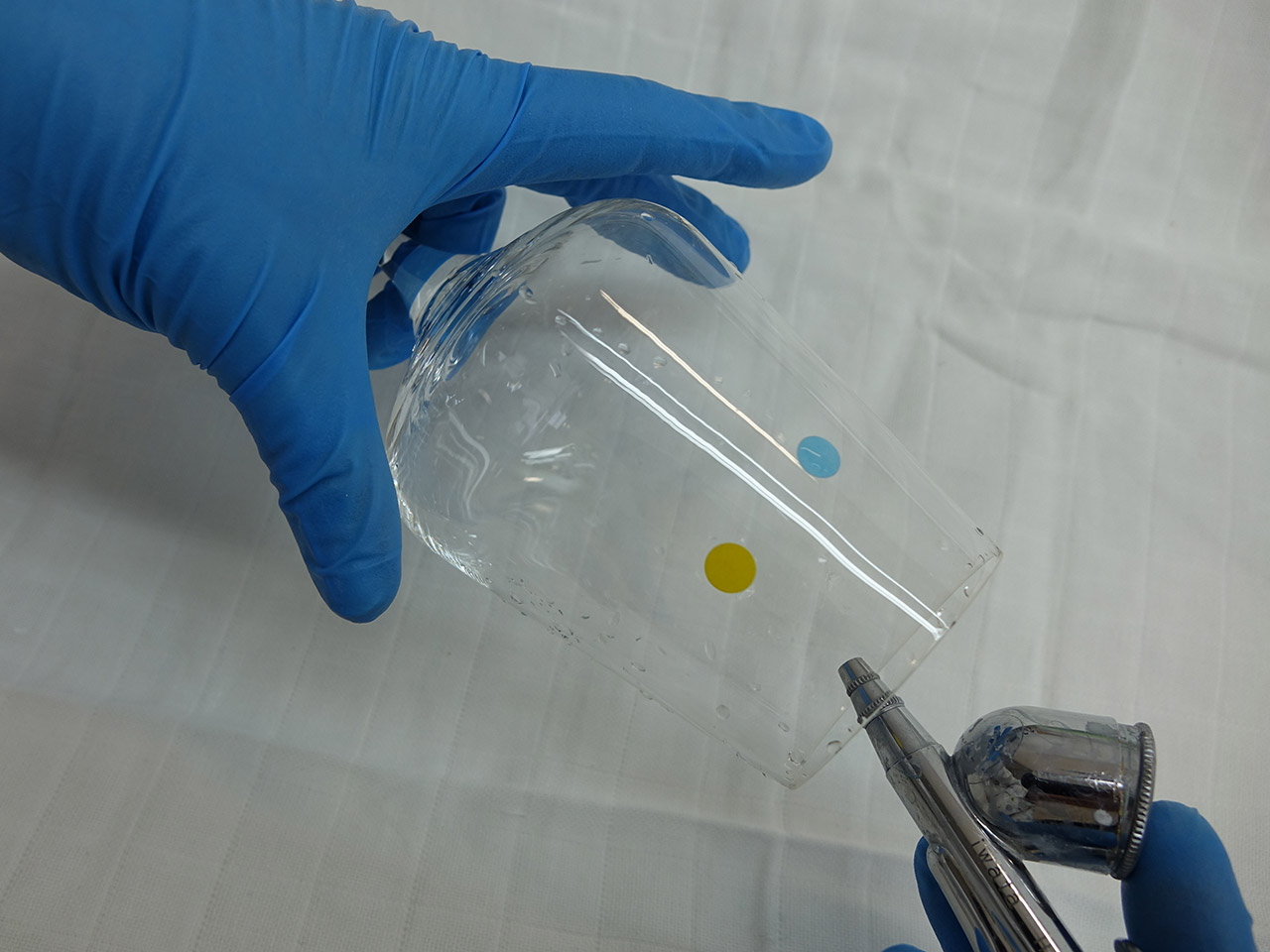 In some cases, an airbrush can help with the drying process. Care must be taken when using metal tools near glass. PHOTO M. Slager
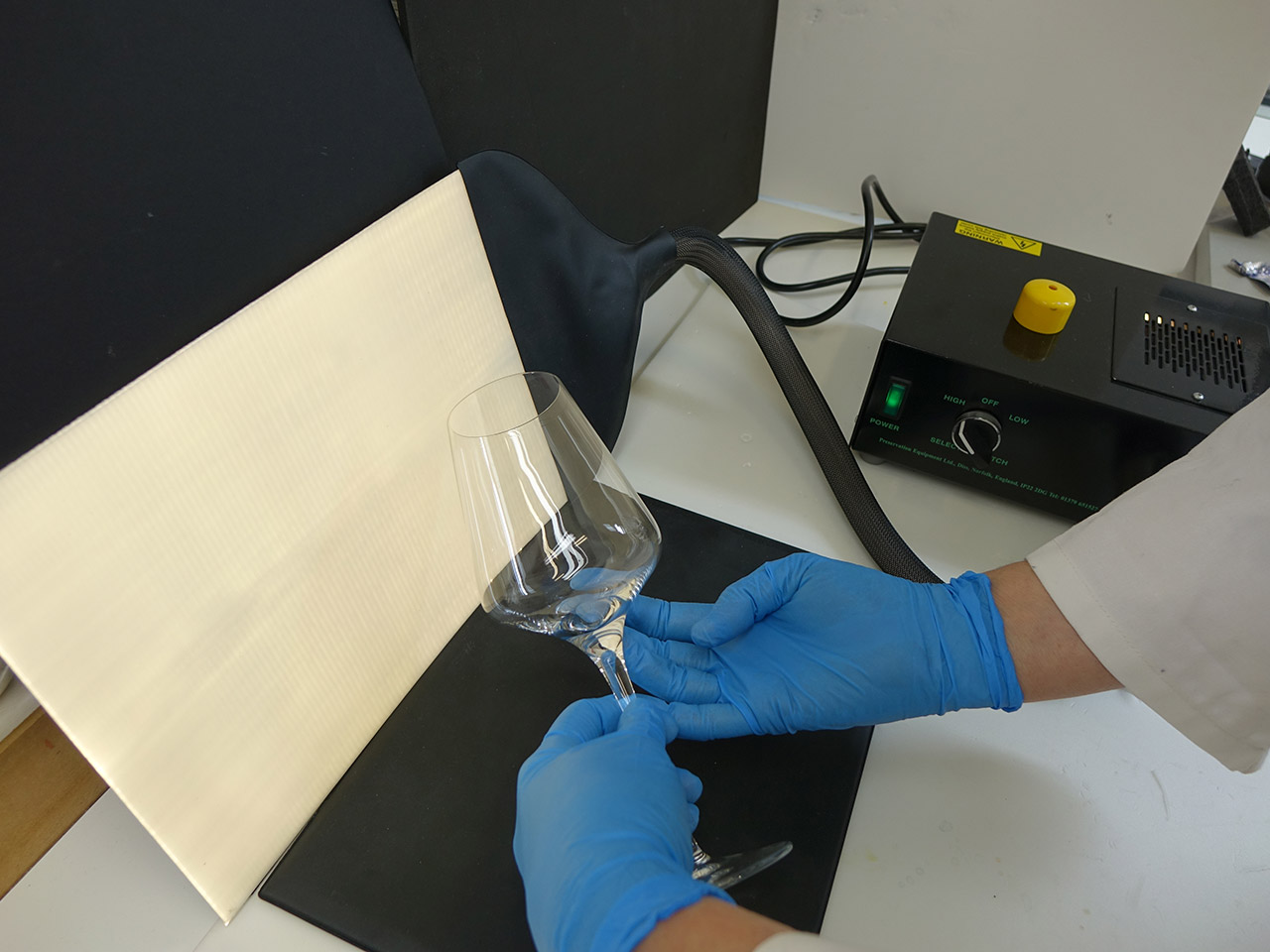 Inspection after cleaning against both a dark and a light background. PHOTO M. Slager
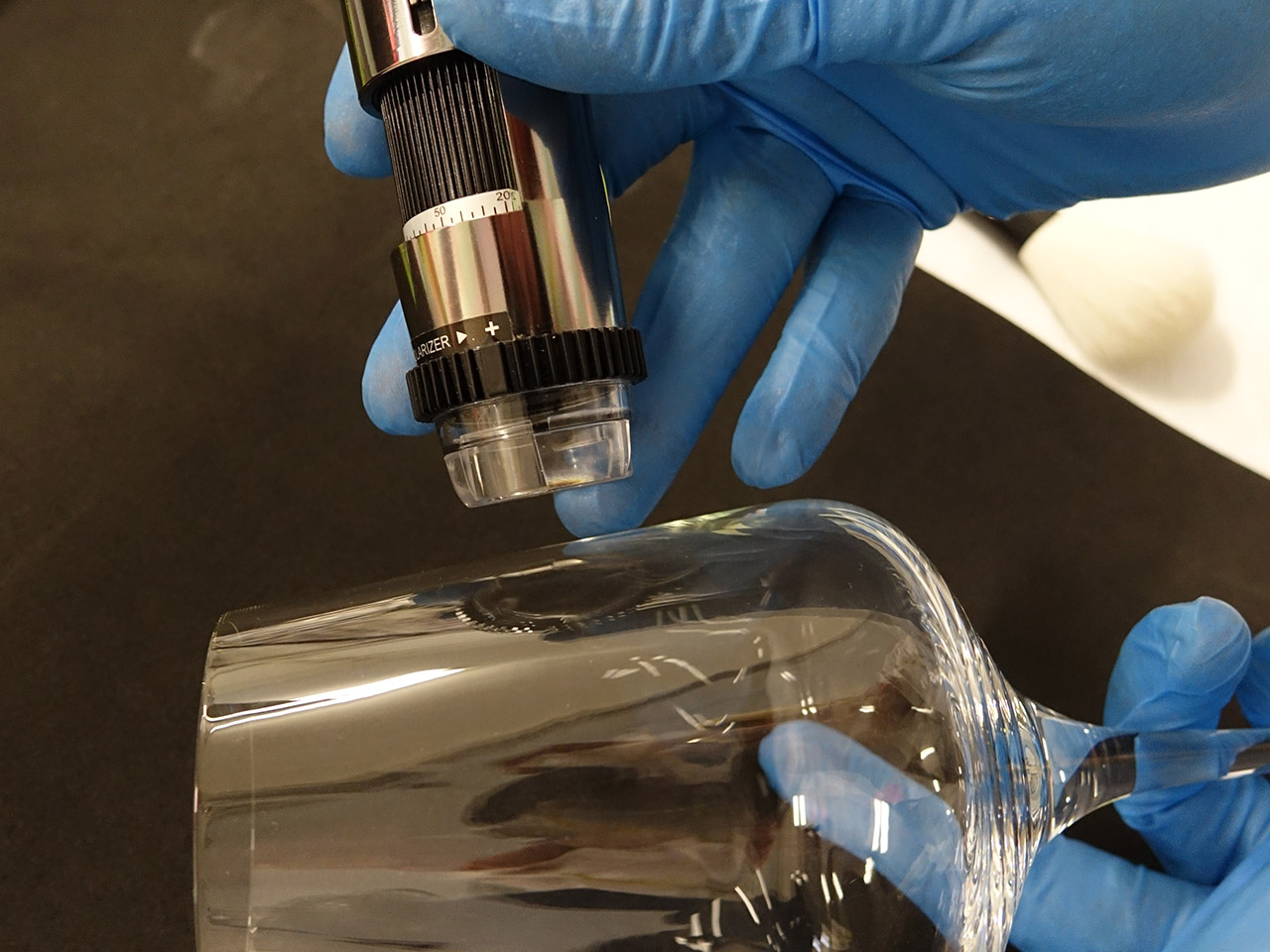 Inspection after cleaning using a microscope. PHOTO M. Slager