appliques
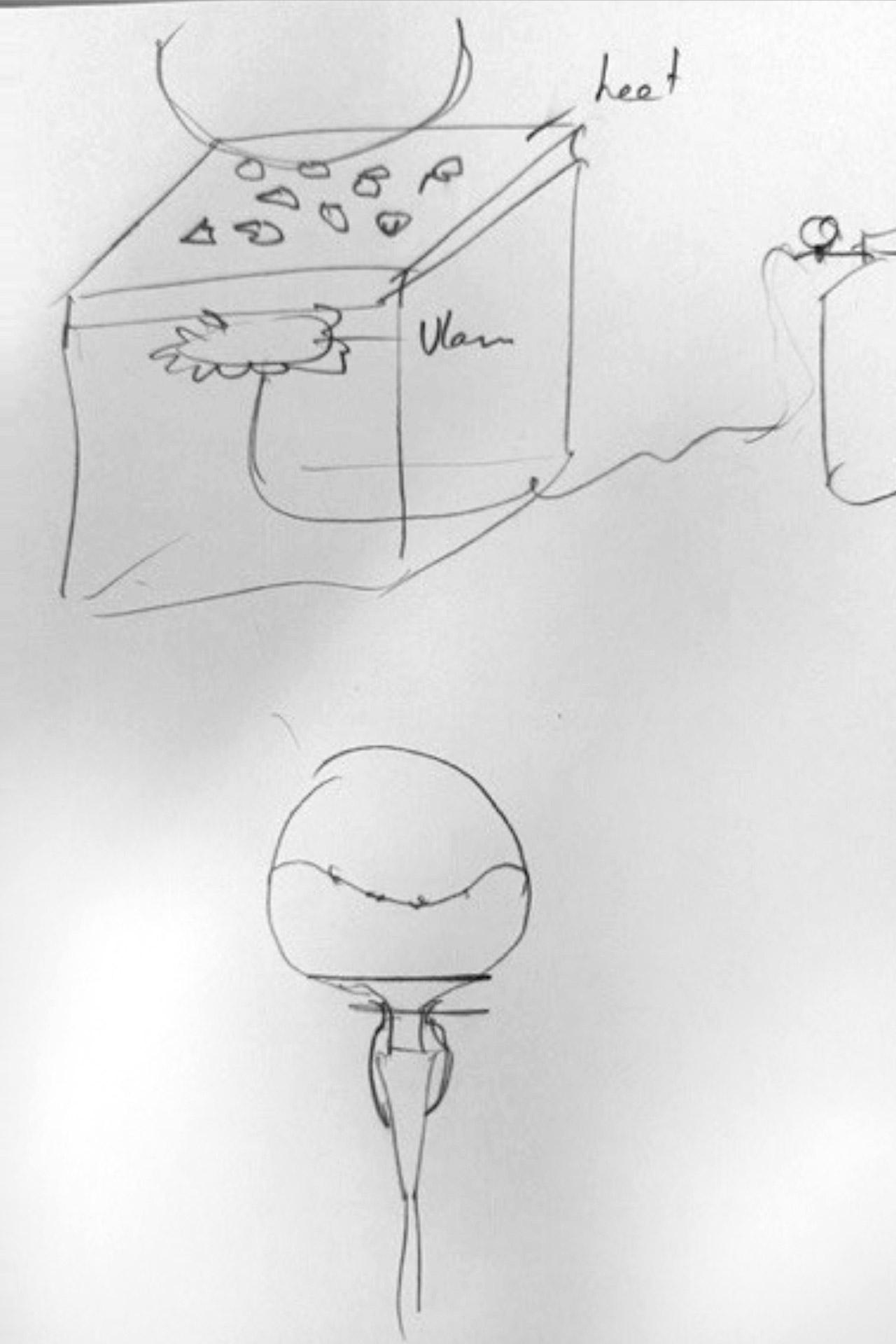
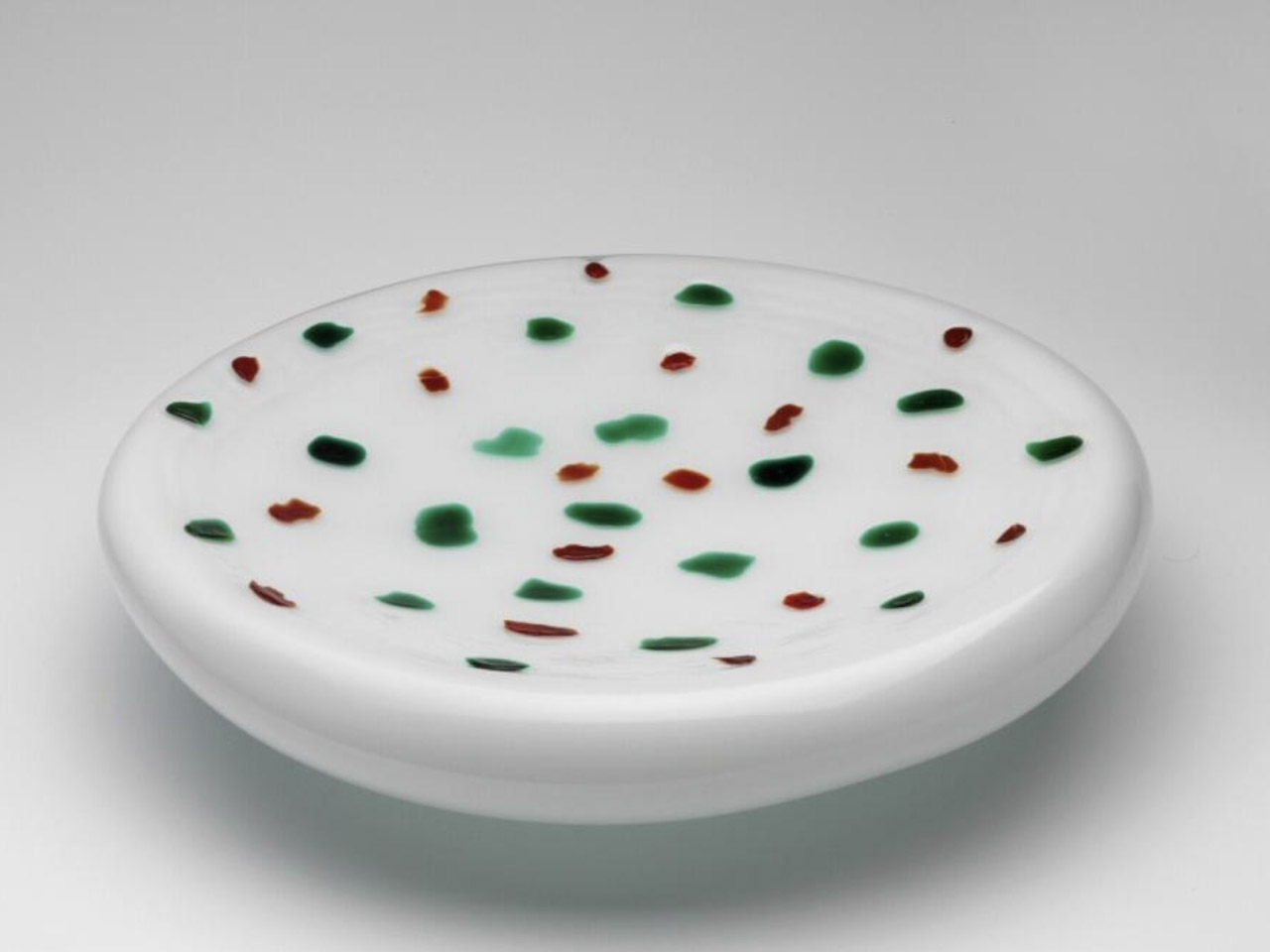
Durk Valkema: ‘Sottsass’s bowl is essentially a kind of inverted bubble. Fragments of coloured glass would have been placed on a hot
marver and heated from above with a propane torch.
Meanwhile, the glassmaker would blow an enormous bubble of opaque white glass, probably overlaid with transparent glass, so that the inner layer was opaque white and the outer was transparent. The outside of the balloon-shaped bubble would then have been reheated in a glory hole again and pressed upside down onto coloured glass fragments circularly arranged on the hot plate, fusing them to the glass bubble while slightly flattening it.
This would have been reheated again in the glory hole, melting the fragments deeper into the glass body to form a single mass. The flattened bubble would then have been shaped with paper into a hollow concave form after which the bubble was broken off the blowpipe and cooled. Once cool, the side that was attached to the blowpipe would have been ground down to create a fairly large opening that allows the hollow bowl to stand upright. ’