Bernard Heesen, Encyclopedisch gewrocht, 1998
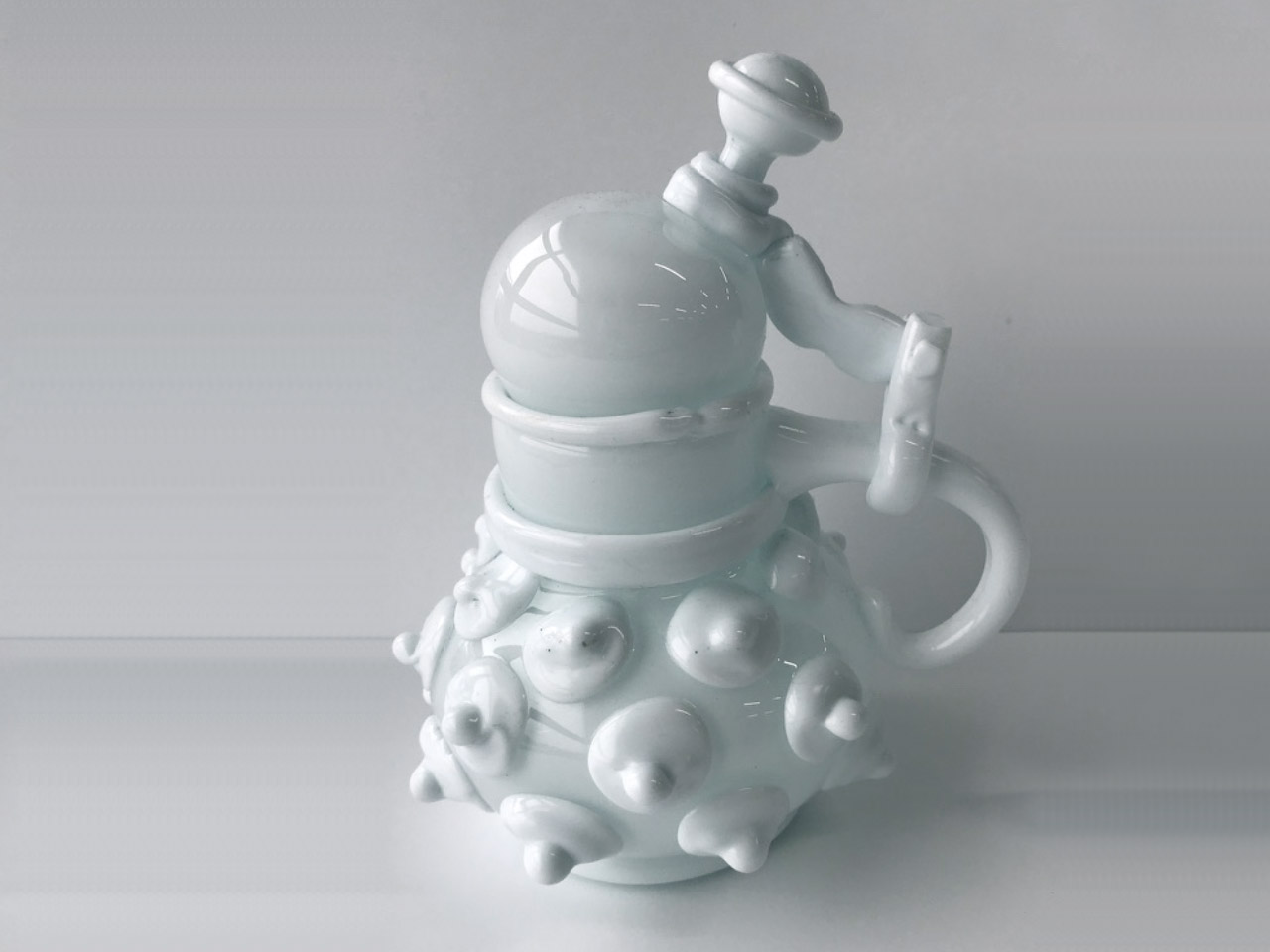
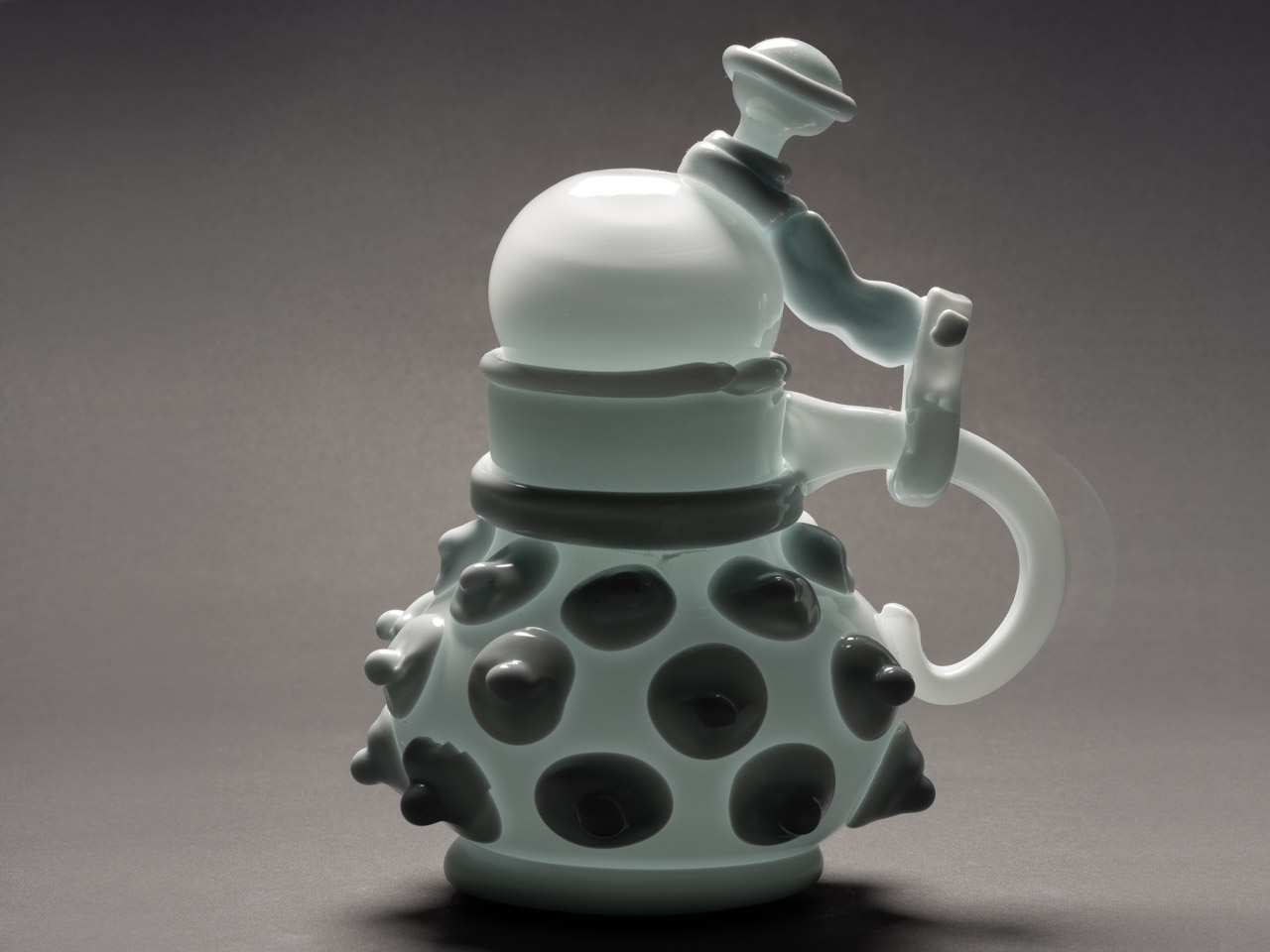
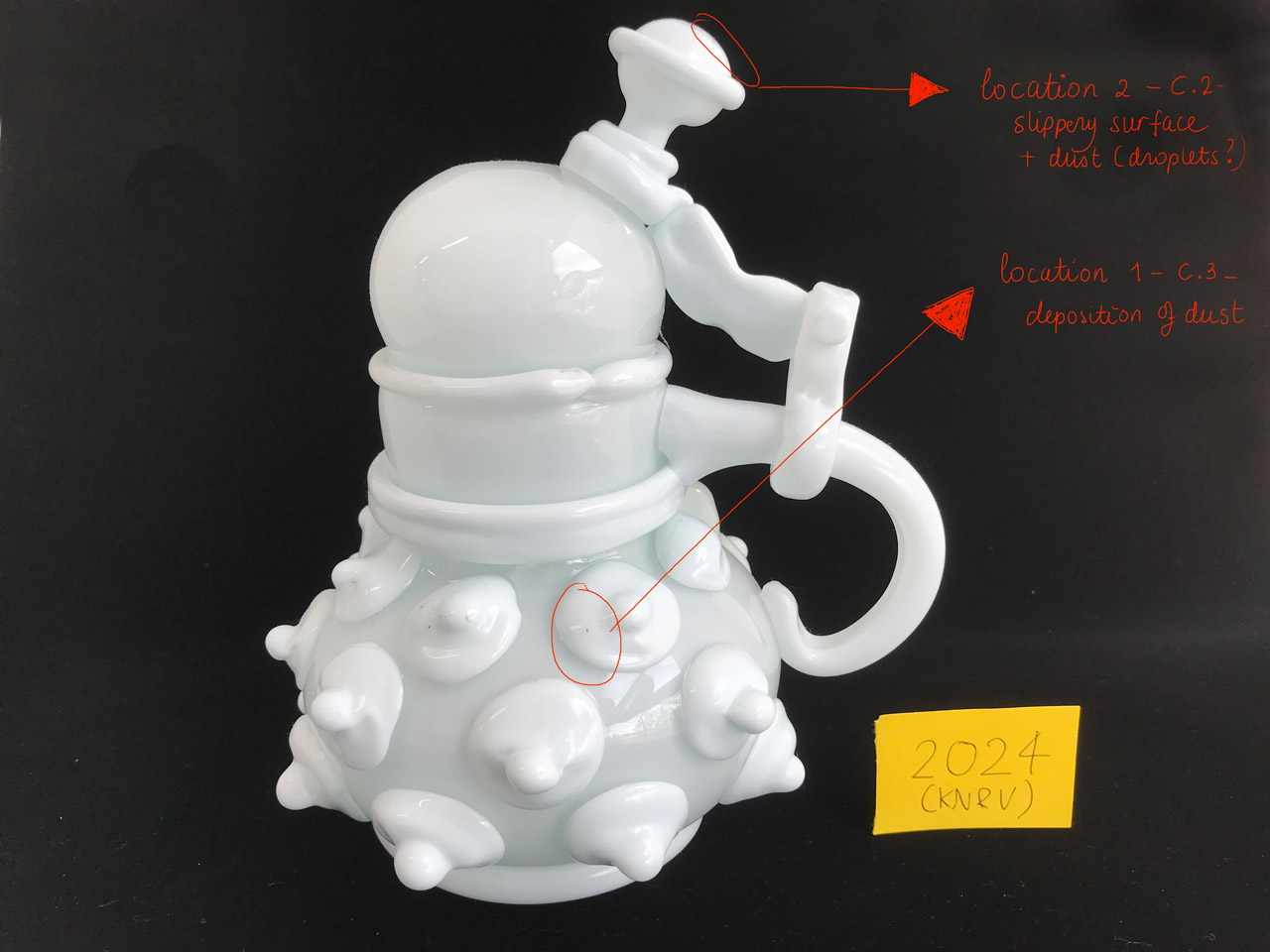
sculpture, 22 × 18,5 × 15 cm, 2024 (KN&V)
COLLECTION Museum Boijmans Van Beuningen
creation
making process
Material opal glass, white glassTechnique hot working:
free-blown application of various parts and components. ‘flupje tot drupje’ (‘
from blob to drop’)
(art) history
Bernard Heesen strives for innovation, expression and creative freedom in his work. In 1997 he became fascinated by old encyclopaedias and began his Encyclopaedic Works series, drawing inspiration from the illustrations in these books and giving them his own interpretation.
Together with Arjen Duinker, he wrote an encyclopaedic dictionary consisting of several volumes. Volume 1 introduces the staff at the Ajeto glassworks in Lindava, Czechia, where the white ‘Encyclopaedic Works’ Creations’ series were made. Heesen also specifies the different amounts of individual components. For example, snotje (booger), dropje (drip), drupje (droplet) are among the terms described in ‘van flupje tot drupje’ (
from blob to drop) and shown in photographs.
conservation
research & diagnosis
technical analysis
visual examination
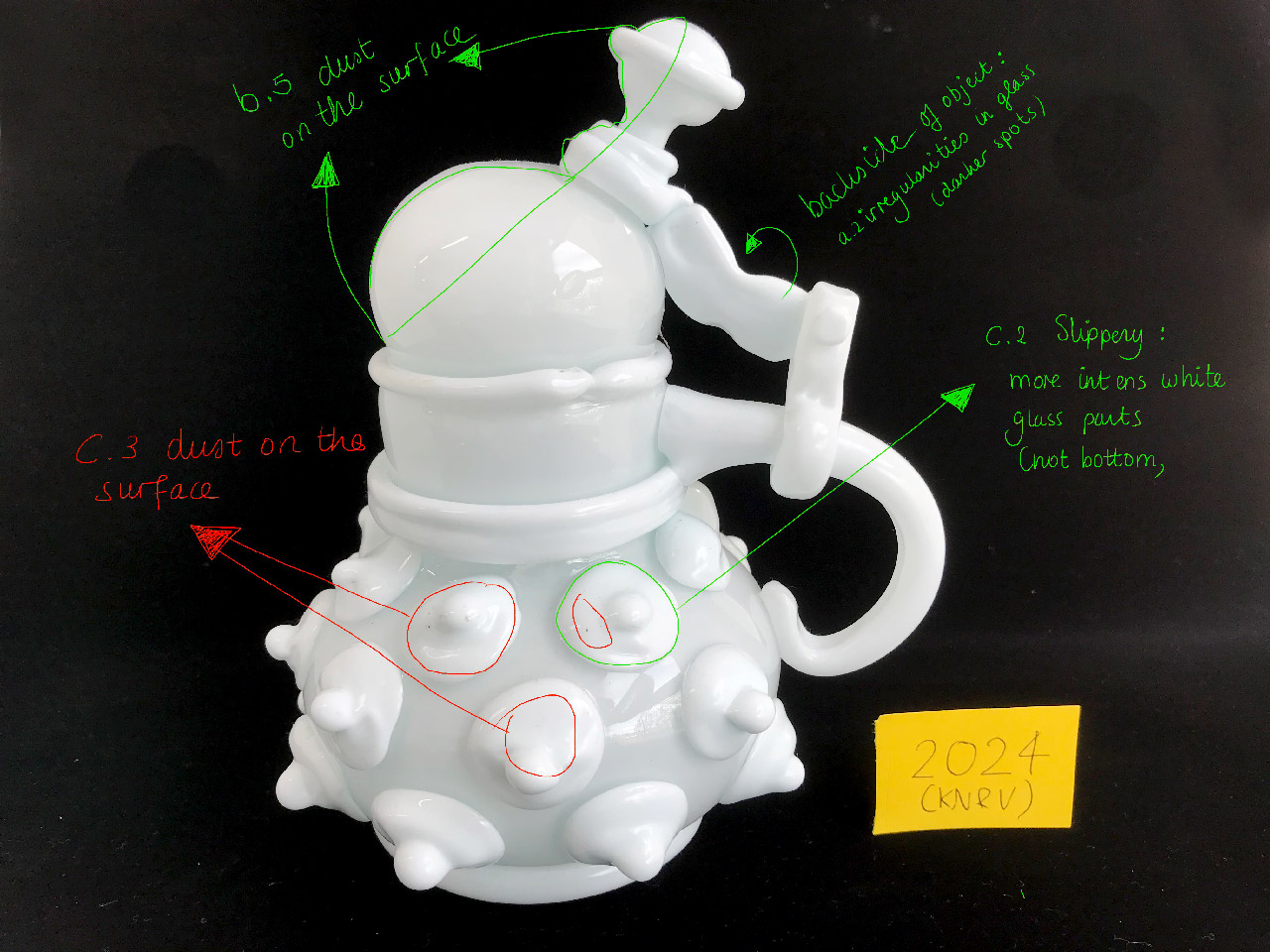
b.5 dust/dirt/stain(s), c.2 slippery surface, c3.2. deposit dust
The object’s condition has been assessed at various points throughout its museum history. Since as early as 2013, reports have noted a slippery surface where the white glass is not covered by a transparent glass layer.
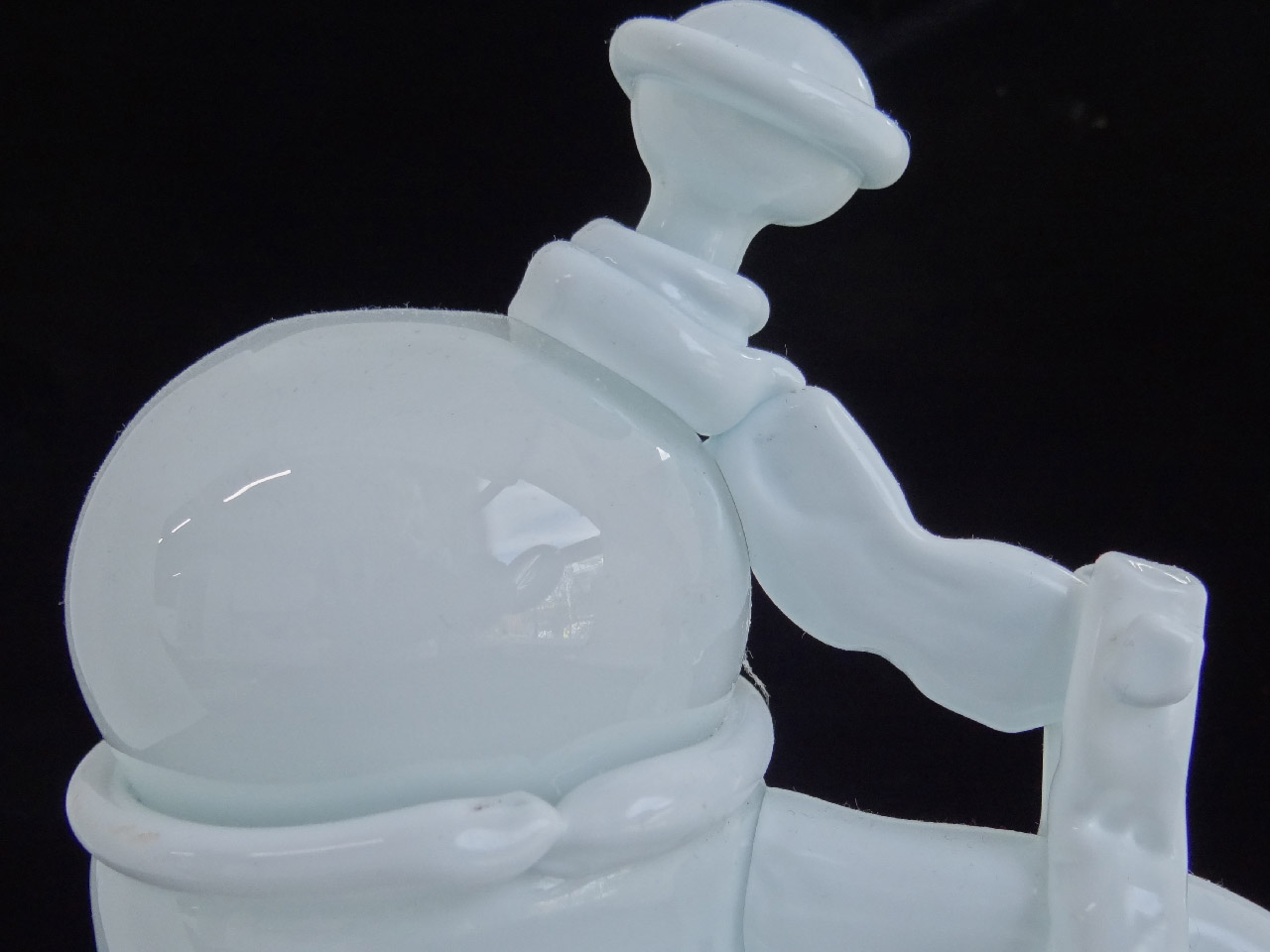
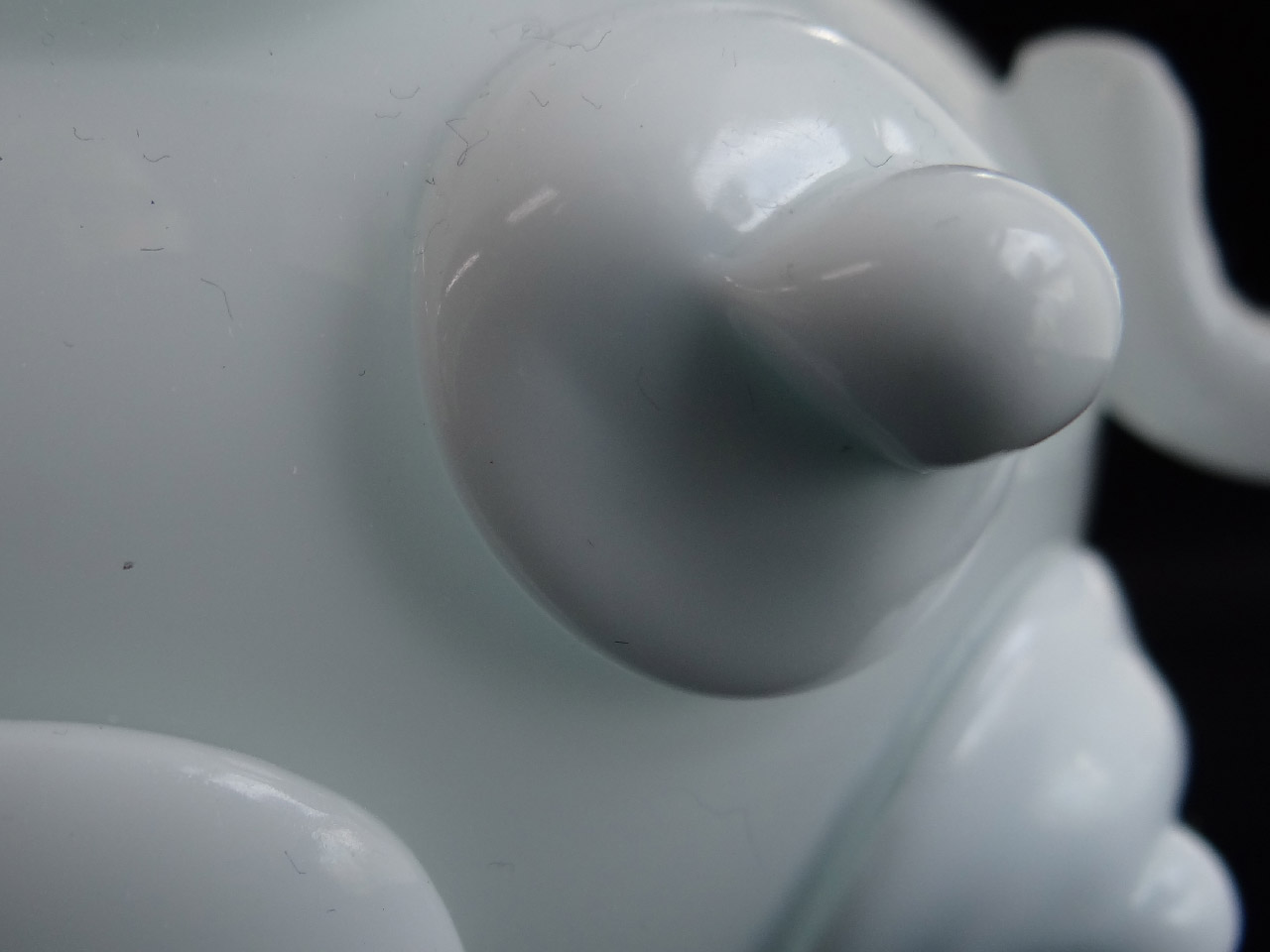
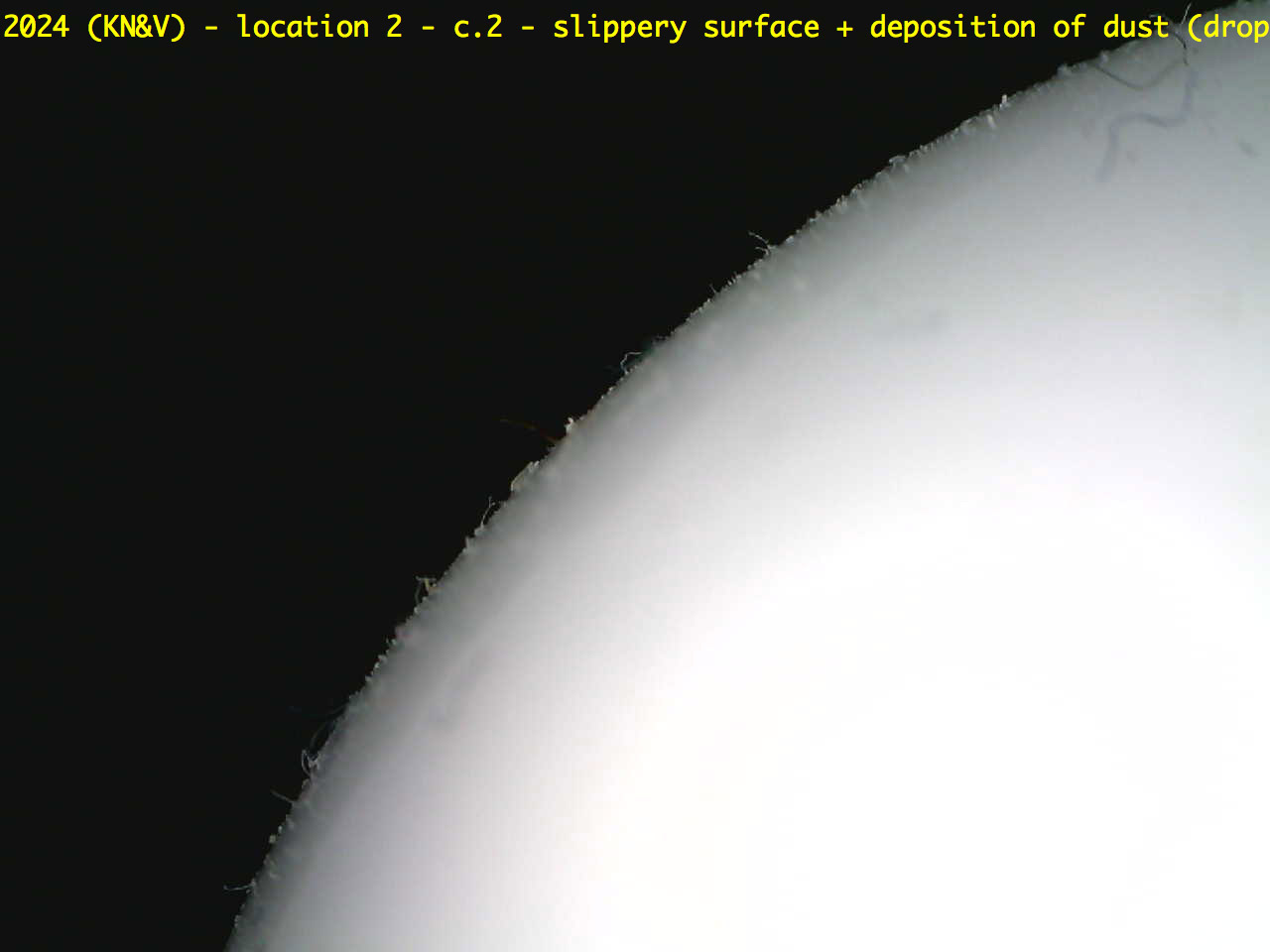
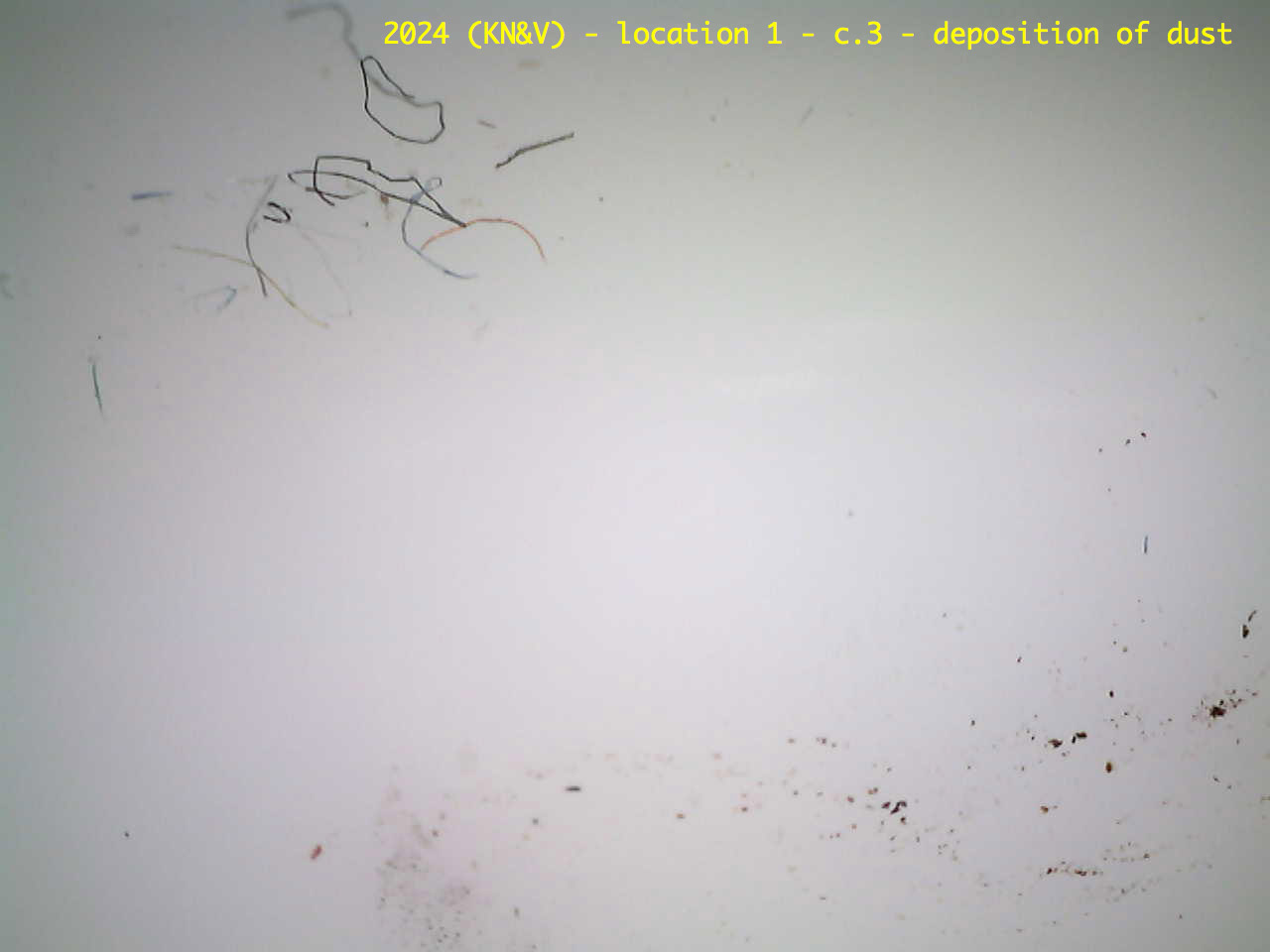
Droplets are present on the surface, and dust clings to it (fibres on the glass surface), but only on the matt-white (more opaque) raised areas. The glass between these areas does not show this. Either a different type of glass has been used here or the white glass has been covered with a transparent colourless layer.
IC analysis of ion concentrations on the surface
Measured using IC in 2020: cations and anions detected: Formate was the most abundant anion measured. The results of the IC analysis show relatively high concentrations of sodium.
pXRF analysis of the composition
This Encyclopaedic Work by Bernard Heesen is made from at least two types of glass. The spherical element is made from a glass that is probably a mixed alkali-lime glass. Although the non-invasive analysis reported a certain amount of sodium, this result is not considered reliable. The possibility that it is a potash-lime glass therefore cannot be excluded. The glass contains antimony and very small amounts of iron, zinc and other trace elements. No manganese was detected.
The handle and the finial on top of the sphere are made from a mixed alkali-lime glass with a high zinc content, a relatively high aluminium content and considerably less antimony than the glass of the sphere. This glass also contains slightly more iron than that of the sphere and has a manganese content just above the detection limit.
Previous treatments
The object was cleaned in 2013 with a 4:1 mixture of demineralised water and ethanol. At that time, a greasy and slippery glass surface was noted. In 2023, the object was diagnosed with the same symptoms.
Condition diagnosis
Condition (visual) very poor
Condition (IC) likely unstable
The object was cleaned in 2013 with a 4:1 mix of demineralised water and ethanol. Condition already deemed poor due to slippery feel. Cleaned, but slippery again by 2023.
(Click on photos to enlarge)
advice & treatment
Suggestions for packaging, handling, storage and transport
Advice: record the vulnerabilities of this object in the (museum) documentation system and/or at the relevant location in the (museum) storage facility. Note that it is slippery and must be handled with care.
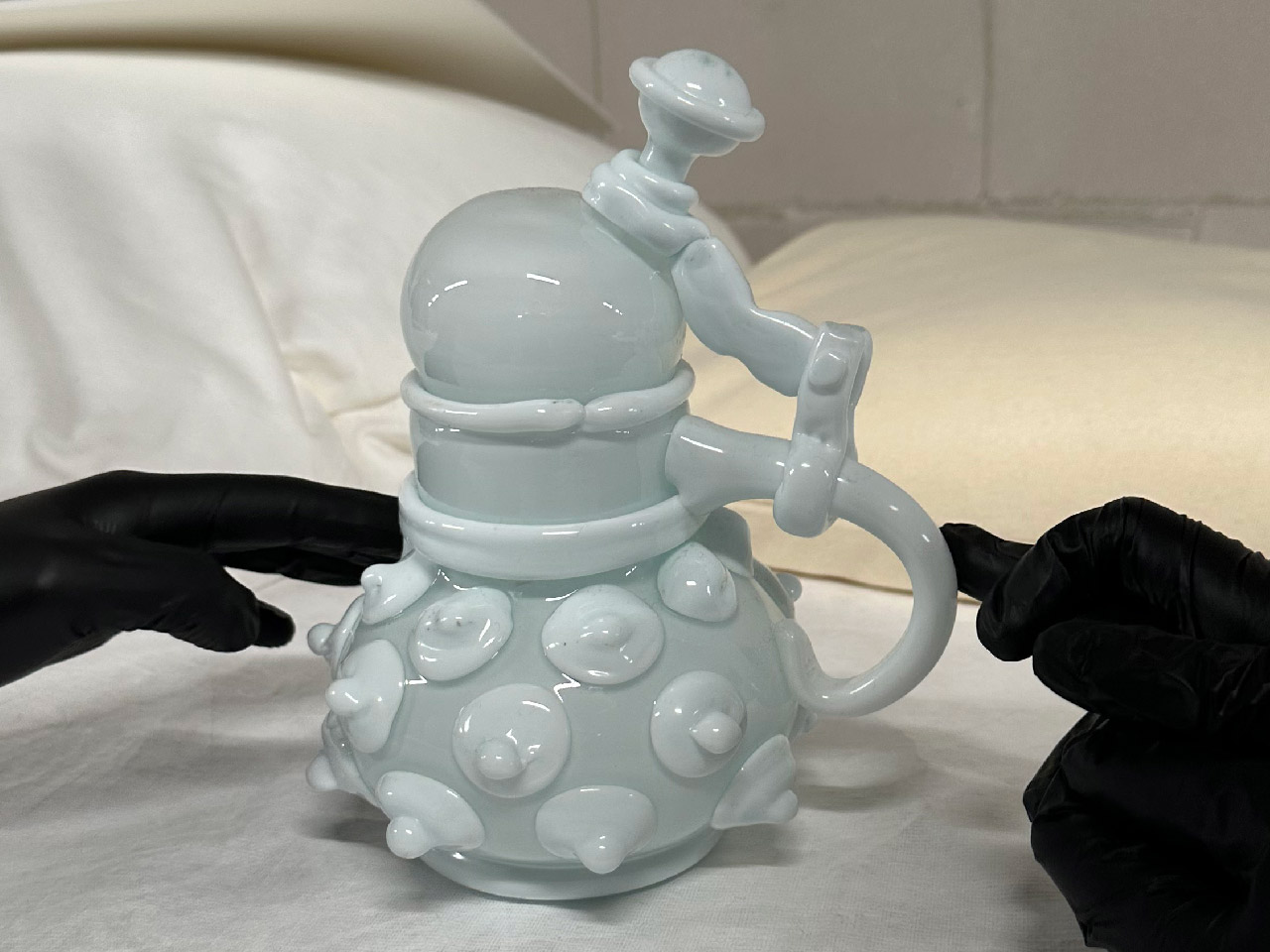
If you need to touch the object, remember it is slippery owing to ions on the glass surface. Take care when using nitrile gloves! Keep the object in a separate cabinet with other unstable glass. Ensure the object is positioned so that its condition can be easily monitored and that it is readily accessible for inspection.
Suggestions for monitoring the environment and climate
Keep the object in a stable environment with minimal fluctuations in humidity and temperature. It is highly advisable to monitor both the condition of the object and the climatic conditions regularly to detect changes at an early stage and to analyse any links with the environmental conditions.
Suggestions for treatment
Research indicates that the condition of the object is deteriorating. The concentration of ions on the glass surface has begun to rise again following a previous cleaning treatment. This deterioration is currently being investigated to devise specific cleaning strategies. Cleaning the object is advisable because droplets on the surface contribute to further degradation.
Only a glass conservator can determine whether cleaning is desirable and feasible, which cleaning method to use and how to closely monitor the condition. If undertaken, only a glass conservator should clean the glass.
Suggestions for further research
Further research into glass instability, particularly in relation to cleaning, and into the storage of unstable glass is urgently needed.
×
Slippery surface, perceptible to the touch (while wearing nitrile gloves) PHOTO M. Slager, 2025
Dust on the surface; fibres and other contaminants cling particularly to the slippery parts) PHOTO M. Slager, 2024.
Dust on the surface; fibres and other contaminants cling particularly to the slippery parts) PHOTO M. Slager, 2024.
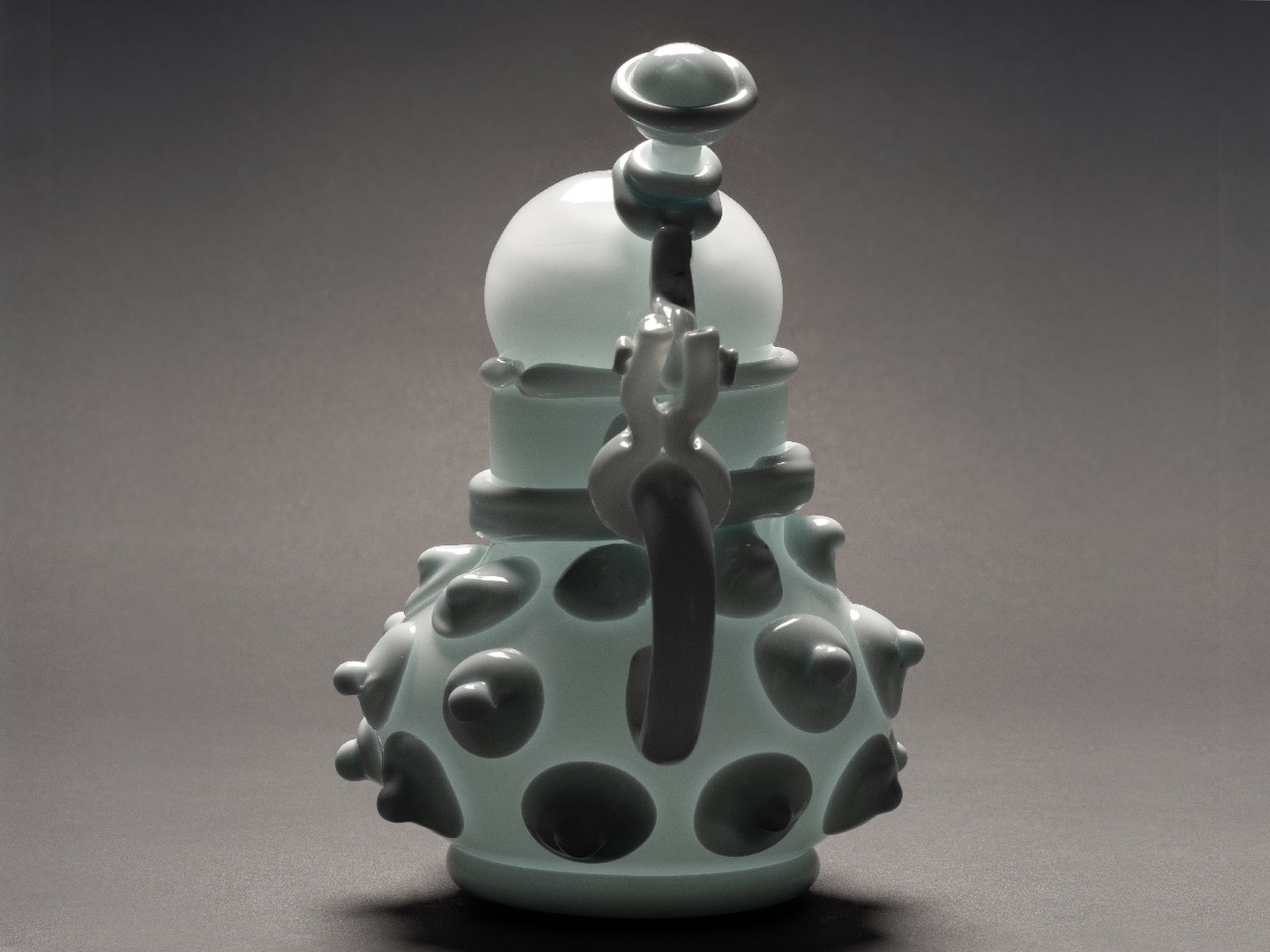
Slippery parts are the dark areas in the photograph. PHOTO The Visual Art Box, 2025.
Slippery parts are the dark areas in the photograph. PHOTO The Visual Art Box, 2025.
DinoLite locations
c.2 – slippery surface + dust deposit (droplets?)
c.3 – dust deposits