conservation
advice & treatment
storing unstable glass with care
Moisture in the air damages unstable glass. It causes the glass to adsorb water and alkali components to leach out. Relative humidity fluctuations can create a network of hairline cracks in the glass or lead to droplets or crystals forming on the surface.
Scientists have studied the storage of unstable glass for many years. Low relative humidity (RH) slows ion migration, but excessively low RH can cause crizzling. The unique characteristics of each glass object make it difficult to determine the optimal RH level and find a universal solution.
Until current research provides new insights, the most widely accepted recommendations for storing unstable glass are:
– Relative humidity of 40–42% (fluctuations no greater than 2%)
– A clean environment and keeping objects clean; prevent the build-up of dust and dirt
– An inert environment (no wooden cabinets or wooden shelving)
– Monitor the condition of unstable objects and environmental conditions
– Keep objects visible and within safe reach
– Ensure air circulation in display cases and storage cabinets; prevent microclimates
– No exposure to ultraviolet radiation
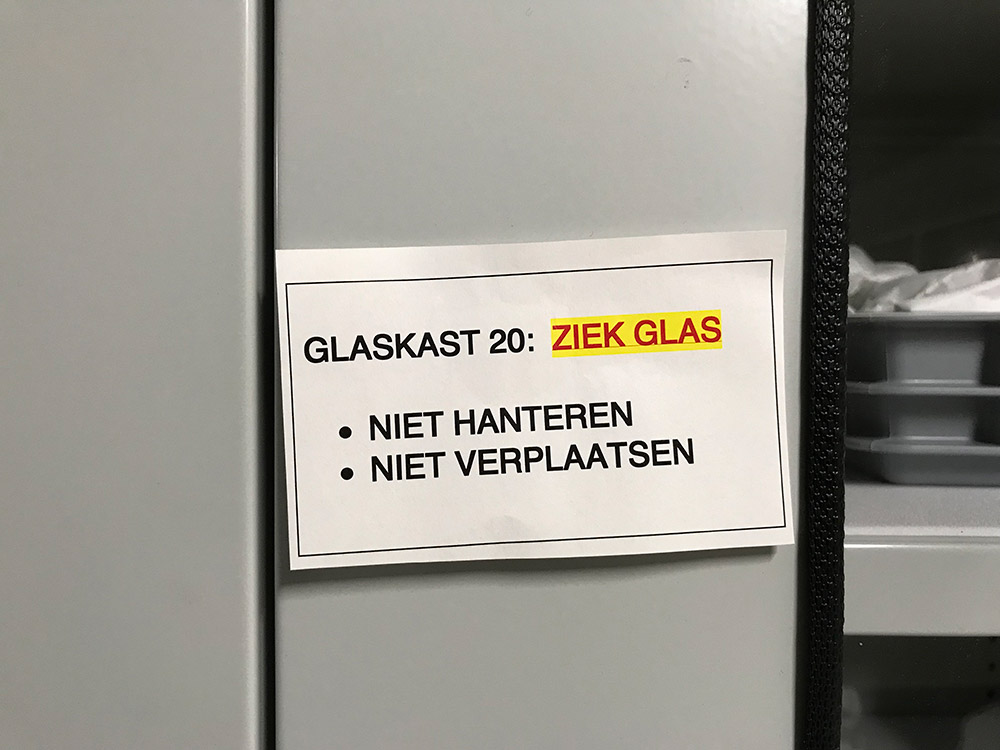 Strict requirements are posted on the storage cabinets in the Museum Boijmans Van Beuningen depot. Unstable glass can become slippery and requires special handling. PHOTO M. Slager
Research using
Ion Chromatography (IC) has shown that a range of salts can form on the surface of glass. The type of salt varies from object to object. Sodium salts are the most common; potassium salts also occur.
Knowledge of the salts that form provides insights that help in designing suitable storage conditions. Each salt has a Deliquescence Relative Humidity (DRH), a specific relative humidity value at which its crystals dissolve into solution (see
atmospheric degradation – environmental factors). Assuming an average temperature of 25 °C and pure salts, sodium formate forms droplets at 56% RH, while potassium formate does so at as low as 19% RH. Alkali components begin to leach from the glass at these relative humidity levels. This knowledge makes it possible to recommend a more precise RH level for specific objects.
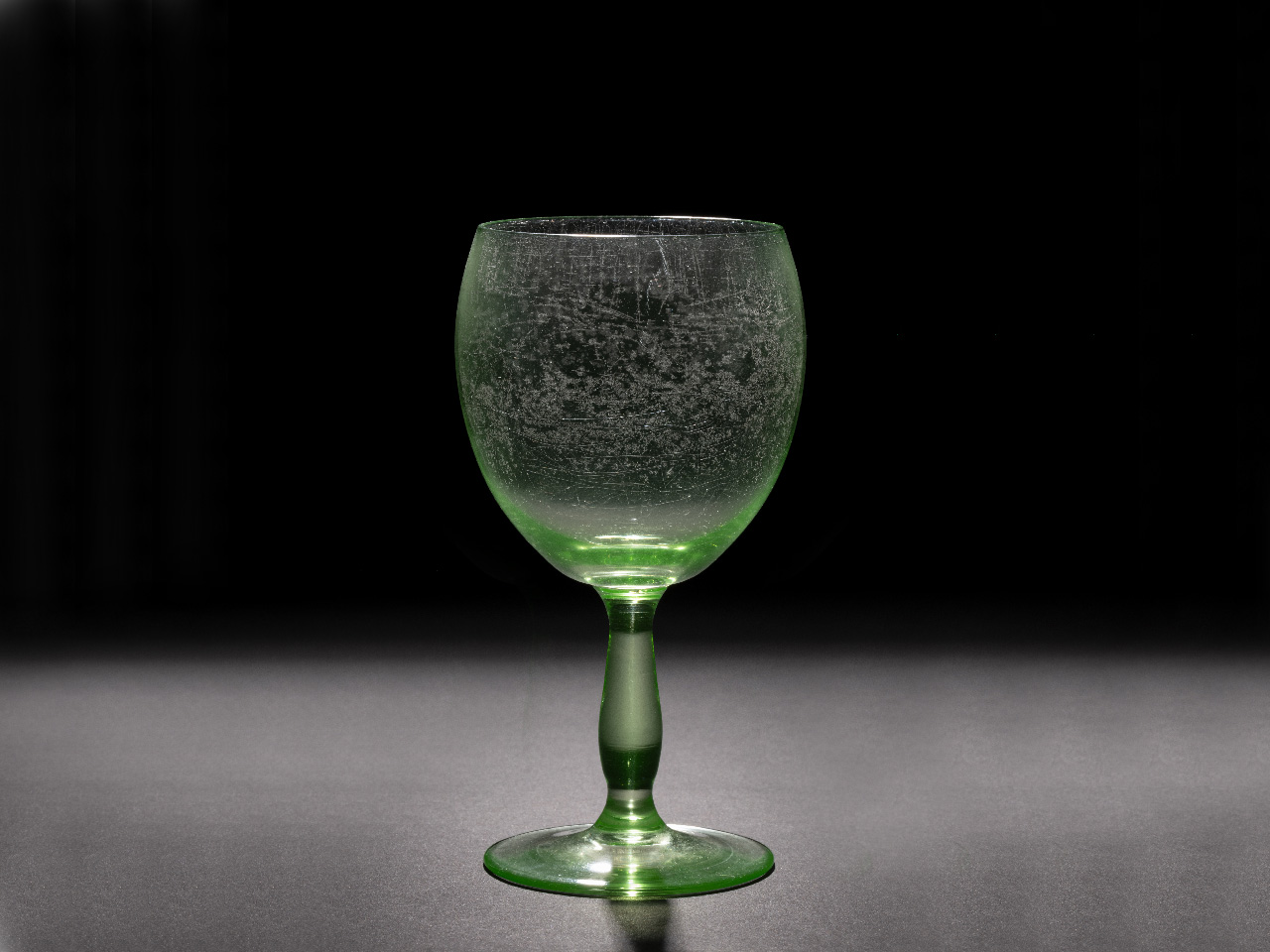
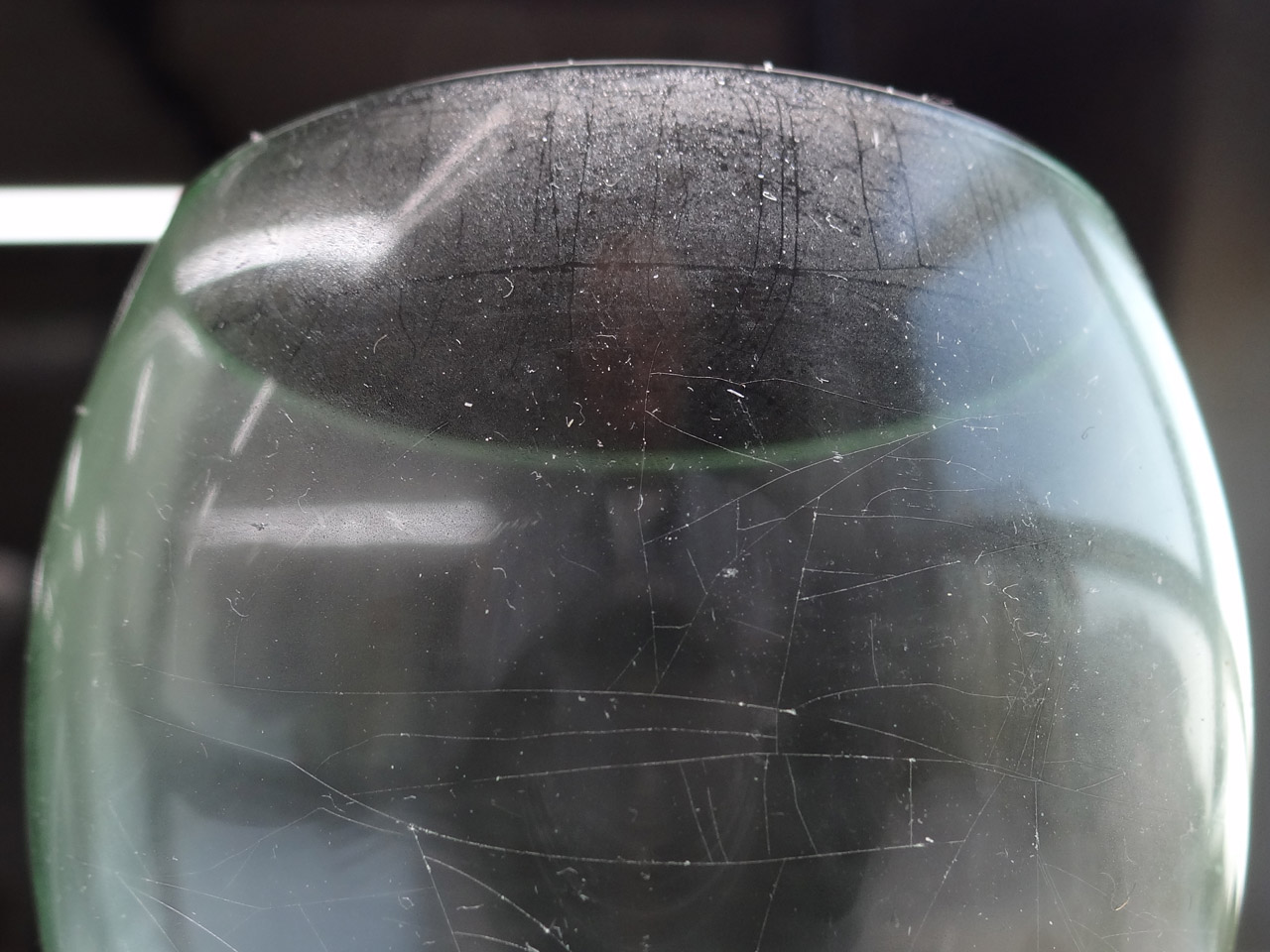
K. P. C. de Bazel, servies F - Wine glass, 1921 - 1923
COLLECTION Museum Boijmans Van Beuningen. The principal salts present on the surface are sodium formates, (in pure form with a DRH of 56%). PHOTO M. Slager.The variables that influence the degradation processes caused by chemical instability include the presence of multiple salt types, pH, glass composition, environmental factors other than RH, and the glass’s stage of degradation.
Researchers from the GoGreen conservation project, funded by Horizon Europe, have placed glass samples at various locations within heritage institutions. Over several years, they will monitor environmental factors, such as RH, airborne contaminants and temperature, to follow their effect on glass degradation. The findings will support current recommendations for storing glass, including unstable glass.
Droplets
see
atmospheric degradation.
Glass instability can cause severe droplet formation, and moisture may even run off the object. In the following photograph, an attempt had been made to protect a storage cabinet with a layer of inert plastic, but the plastic eventually stuck to the glass, demonstrating just how severe droplet formation can be.
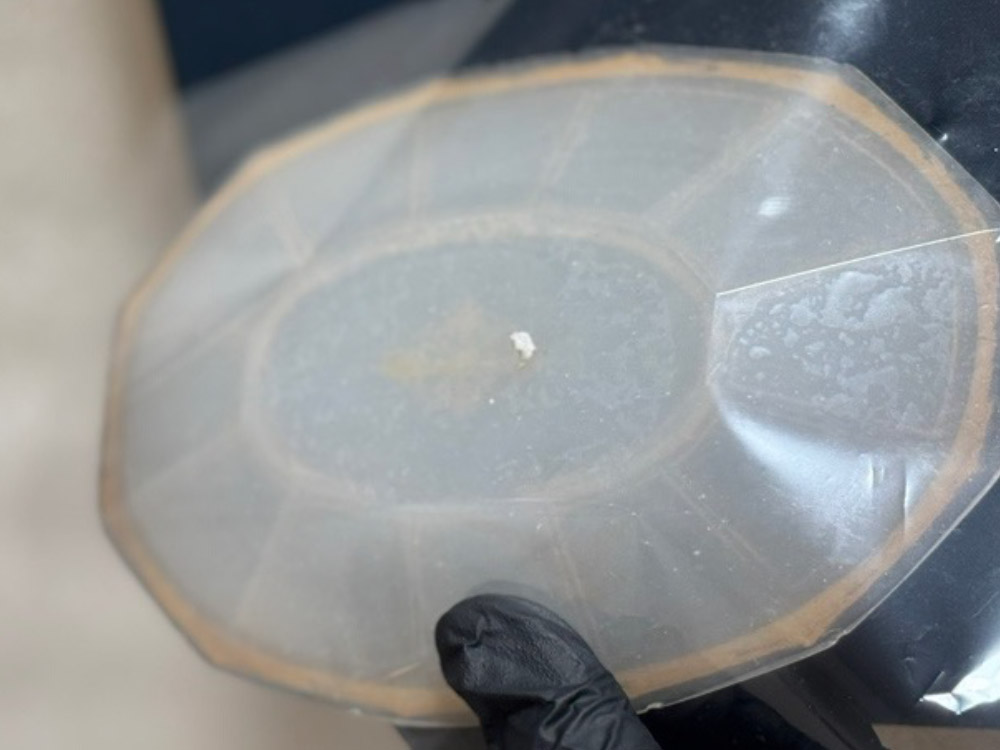 Y. Xu, Kunstmuseum Den Haag
Crizzling (advanced and full-blown)
see
atmospheric degradation.
In the case of severely cracked glass, particularly where the base has also been affected, the object should not be stored upright. It should be supported at critical points. The packaging method must also take into account the vulnerability of the glass surface and prevent a microclimate forming, as shown in the next image
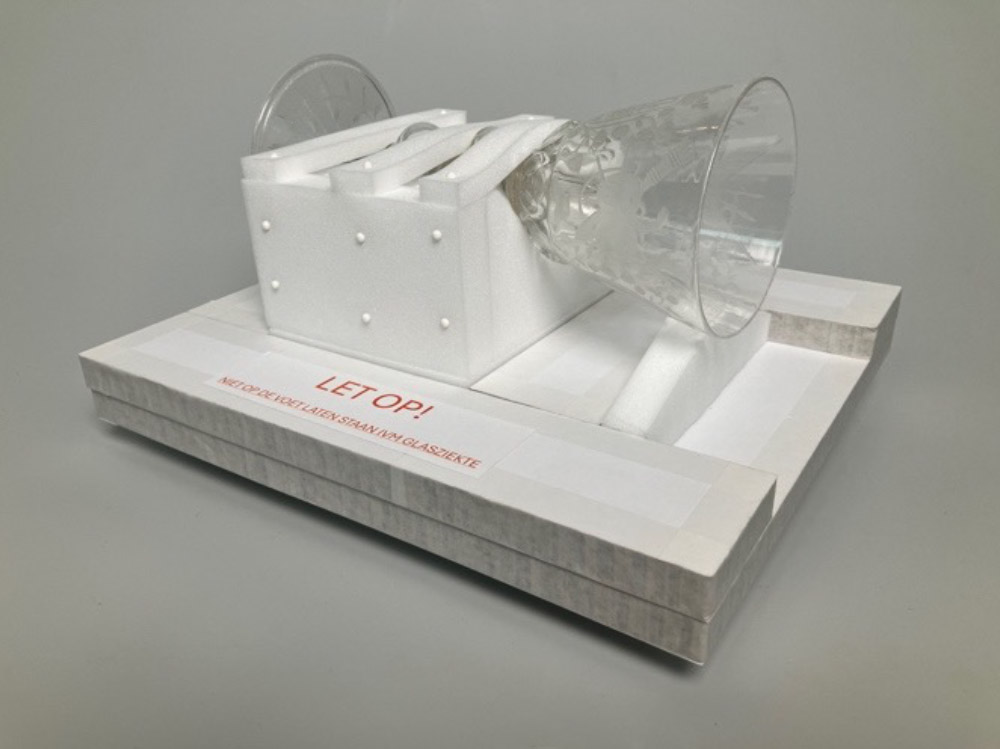 GOBLET RL41098, COLLECTION Museum Paleis ’t Loo PHOTO & PACKAGING DESIGN Steven Visser, Rijksdienst voor het Cultureel Erfgoed
This object is particularly vulnerable due to crizzling. The base is also severely cracked. Storage conditions and the condition of unstable glass should be monitored so that any changes can be understood in the context they occur in.