unknown, goblet, 1675 - 1700
.jpg)
Glass/goblet: 24.2 × 12 cm; lid: 7.6 × 11 cm, 204 a & b (KN&V)
COLLECTION Museum Boijmans Van Beuningen
PHOTOS Cees de Jonge, The Visual Art Box
creation
making process
Material colourless clear glass (crystal glass)
Technique free blown, snipped blown stem and foot
Hot working cut,
engraving: wheel engraving,
polishedBlown on the blowpipe then transferred to a
pontil, the bowl was subsequently opened and shaped.
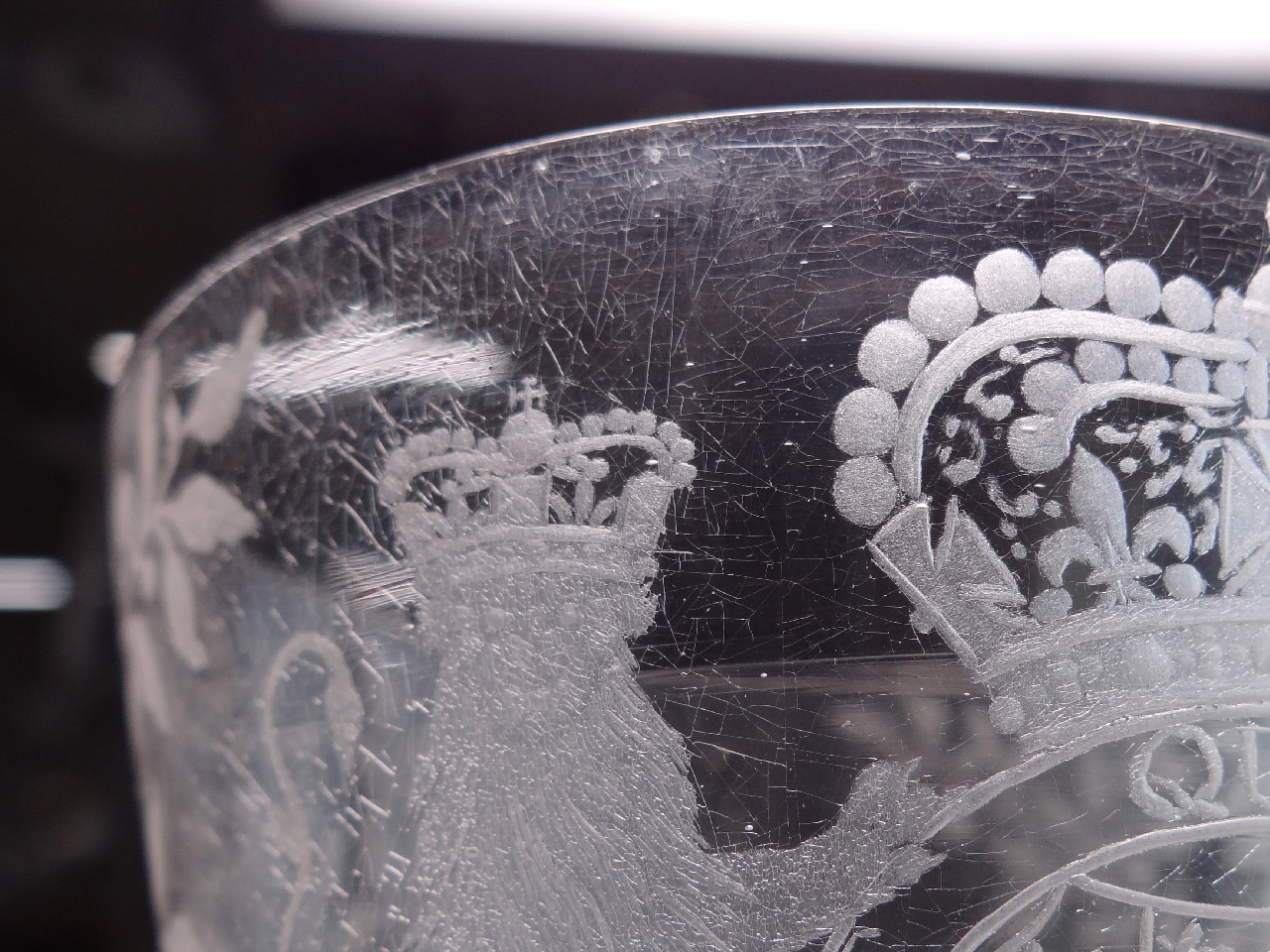
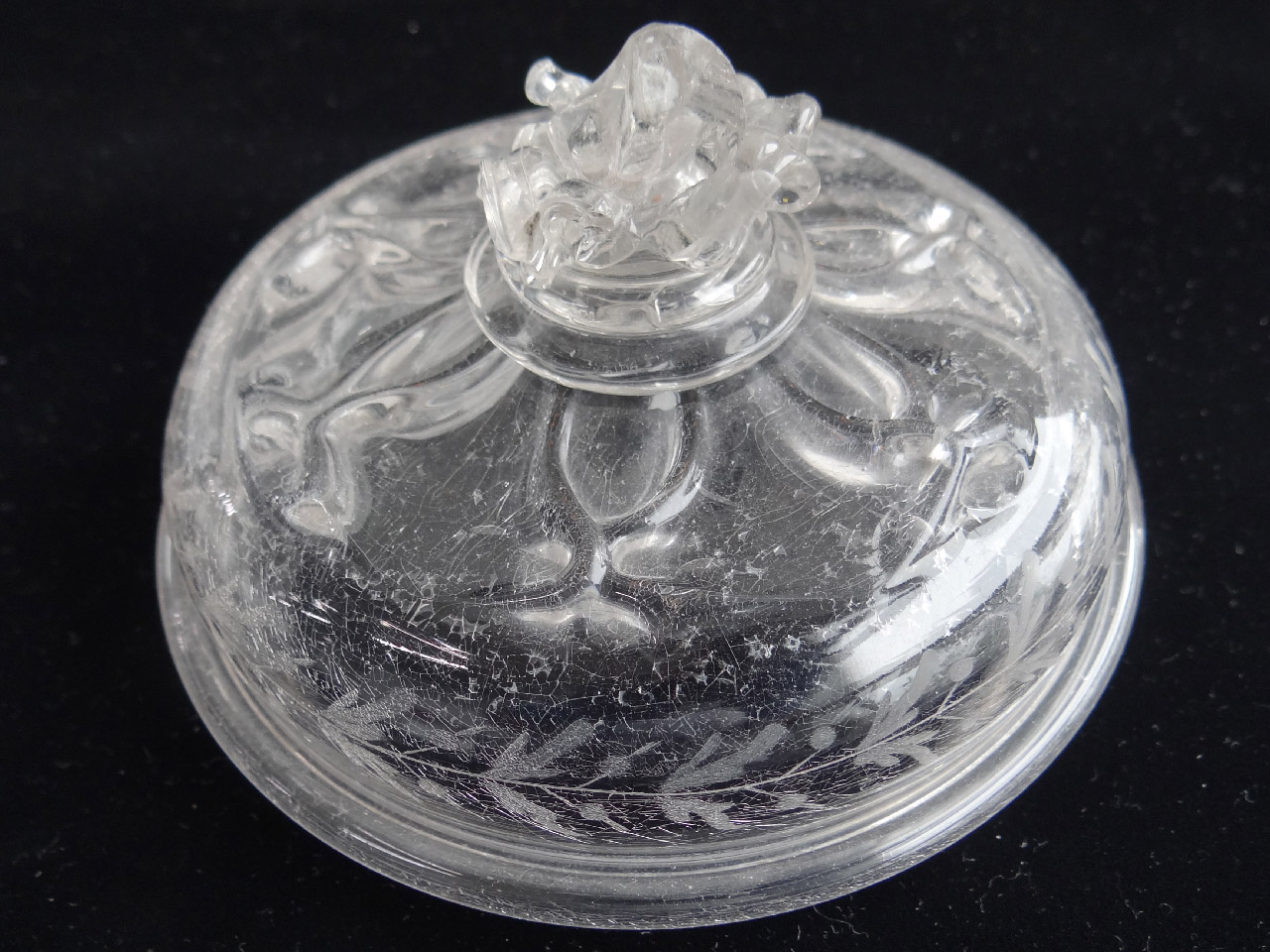
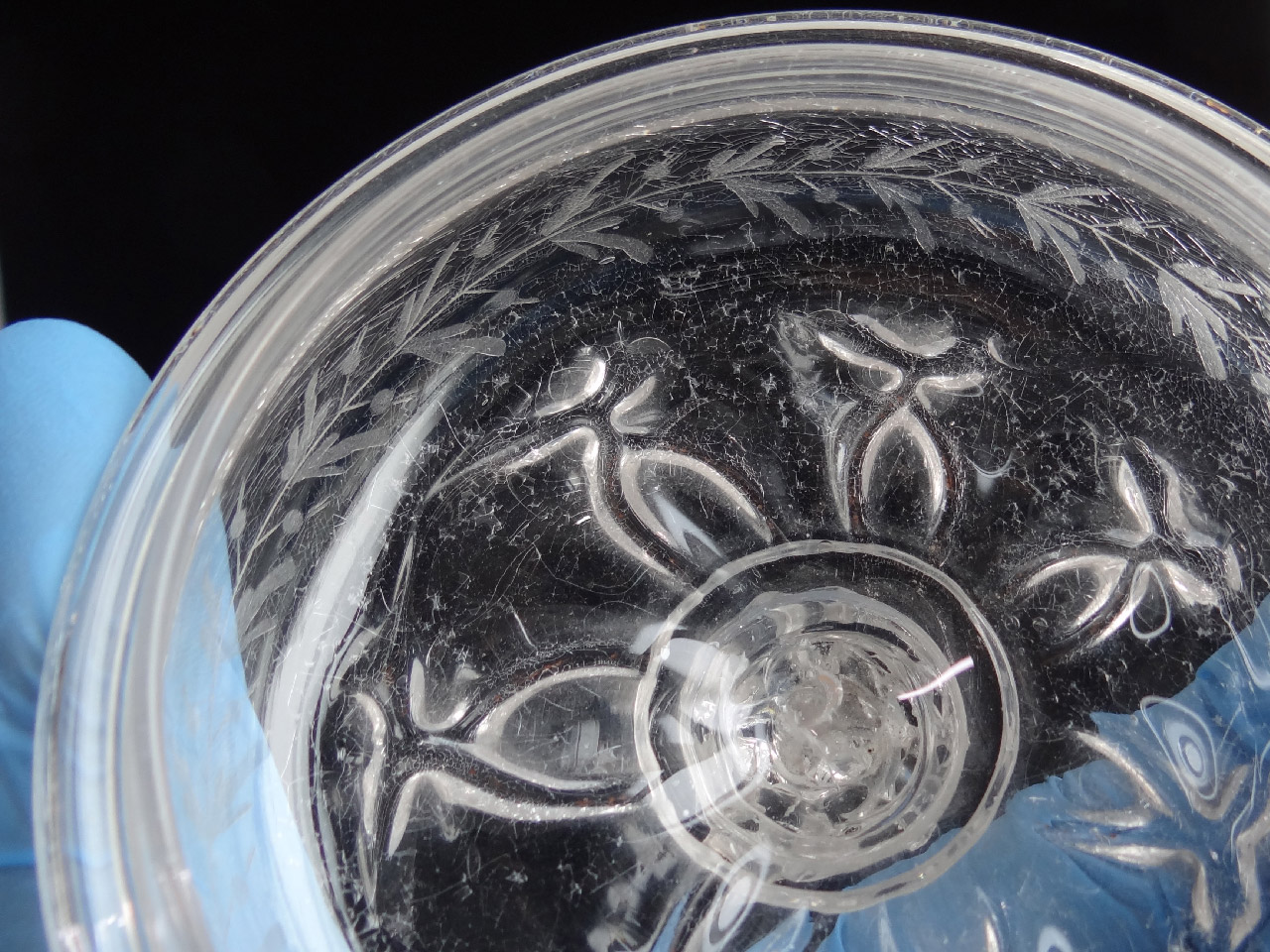
The lidded goblet is decorated using wheel engraving. Wheel engraving is a decorative technique for glass surfaces that uses a rotating wheel fitted with grinding discs of various materials and sizes. The technique is similar to cut decoration but requires greater skill. It was used in ancient Egypt, Syria, Persia and the Roman Empire, and later in Germany and Bohemia.
conservation
research & diagnosis
technical analysis
visual examination
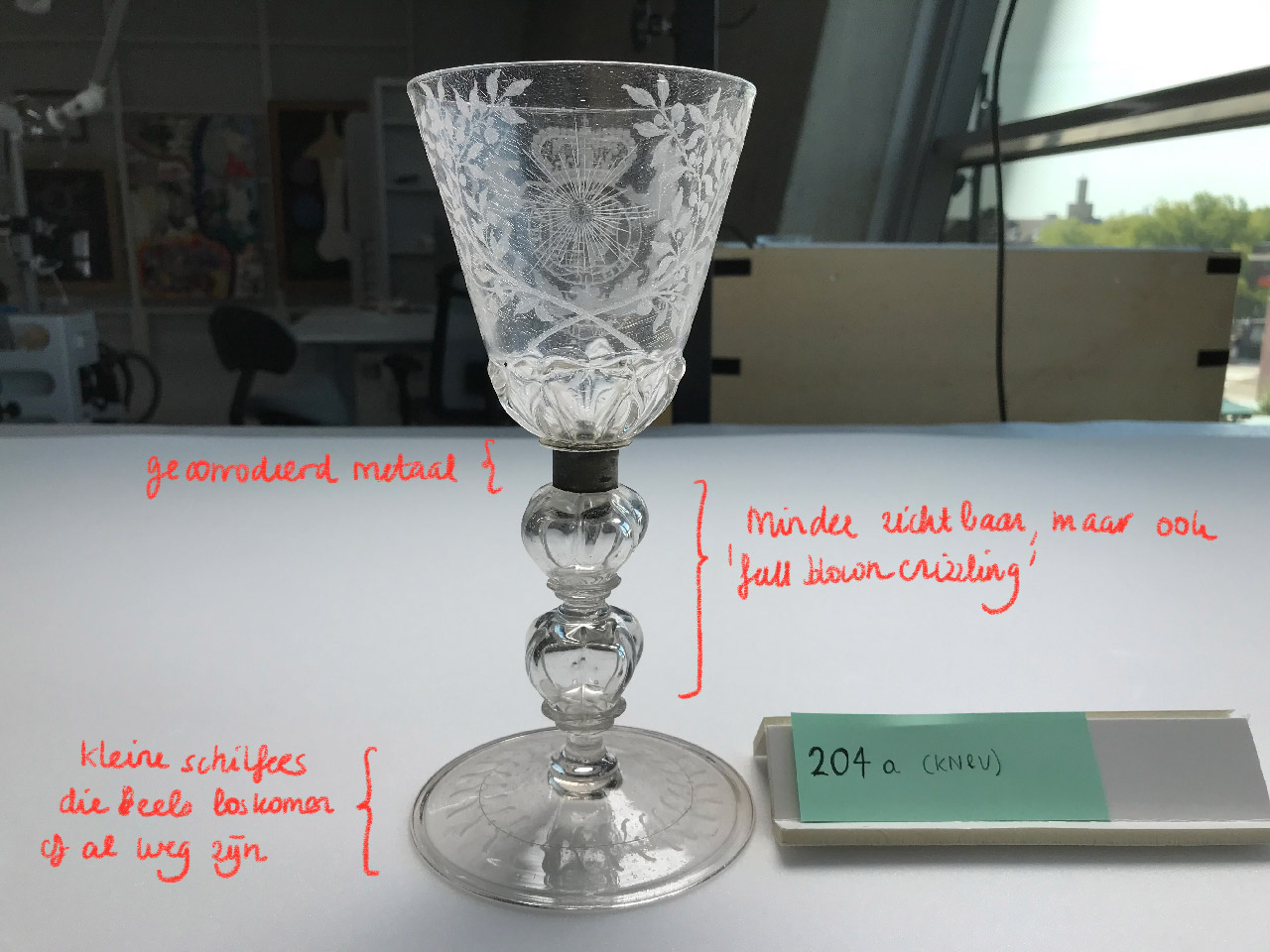
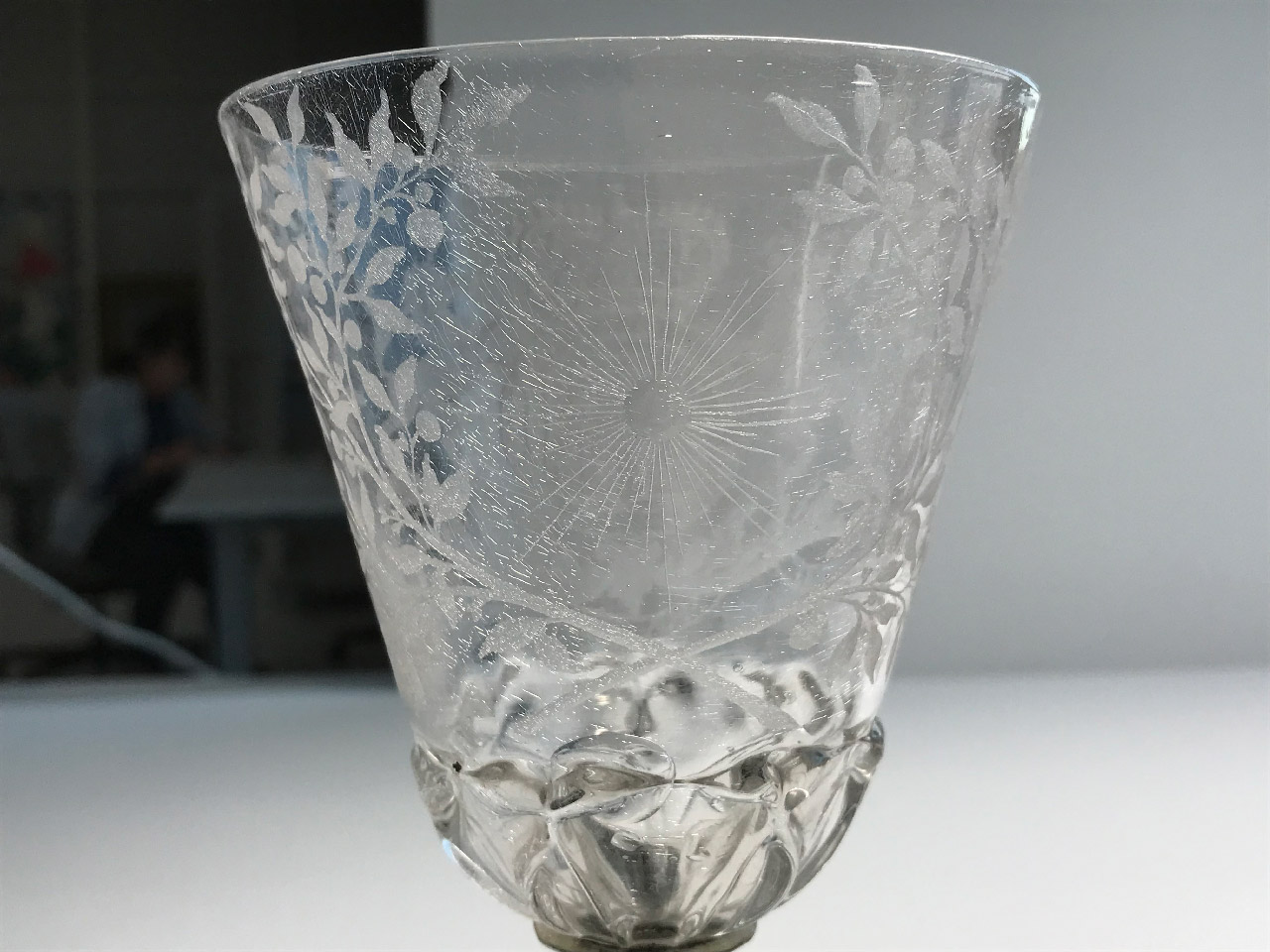
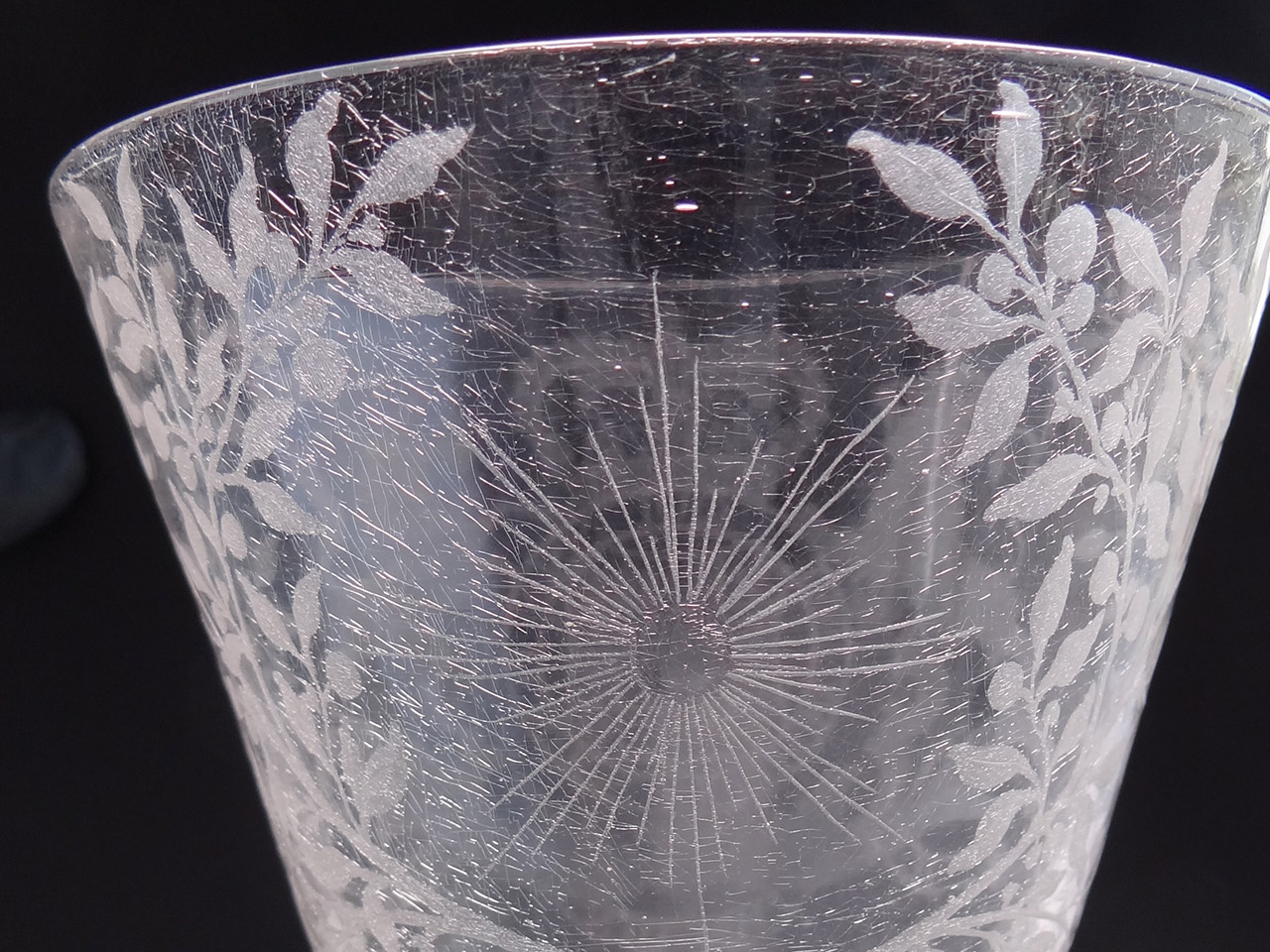
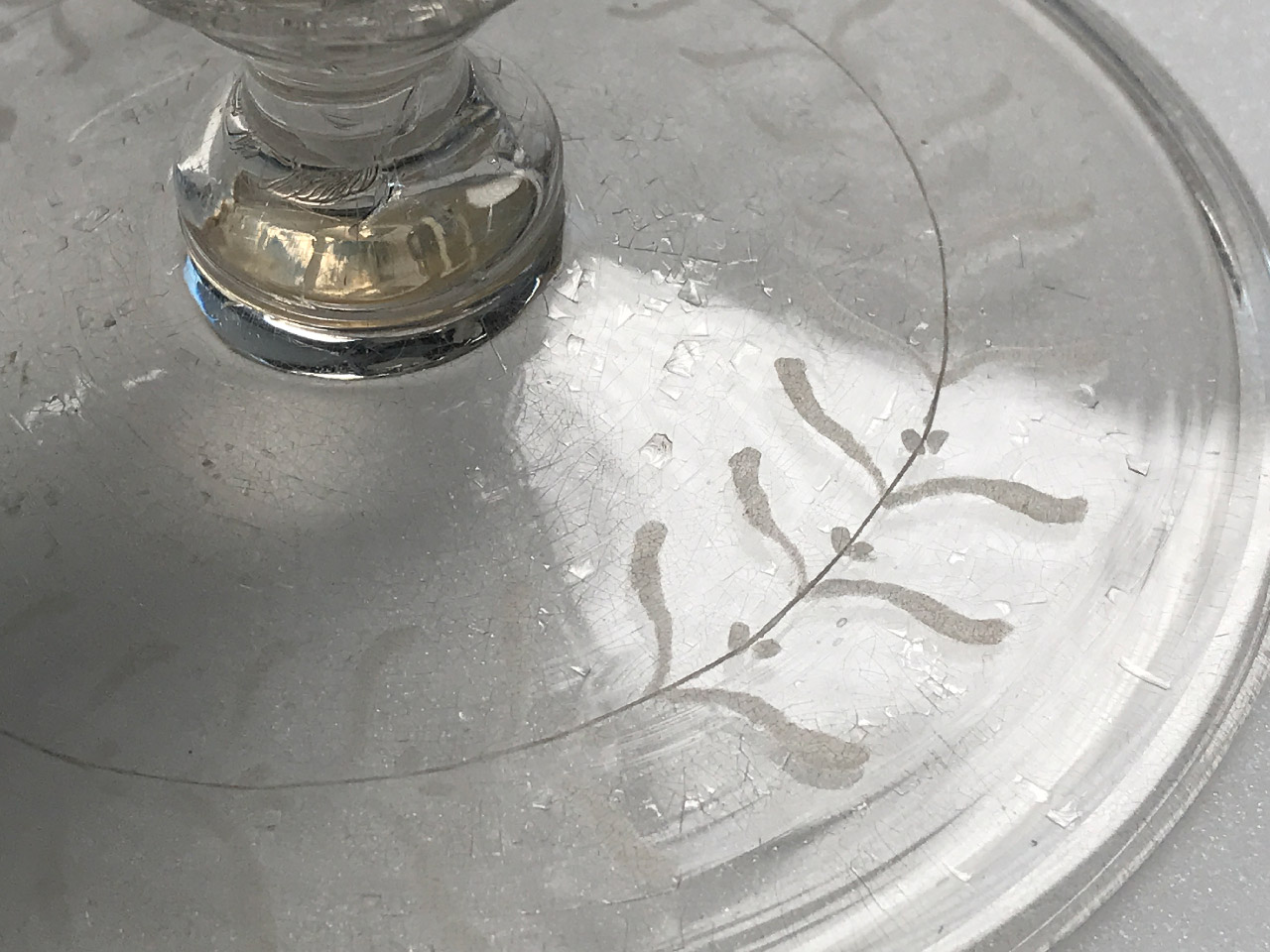
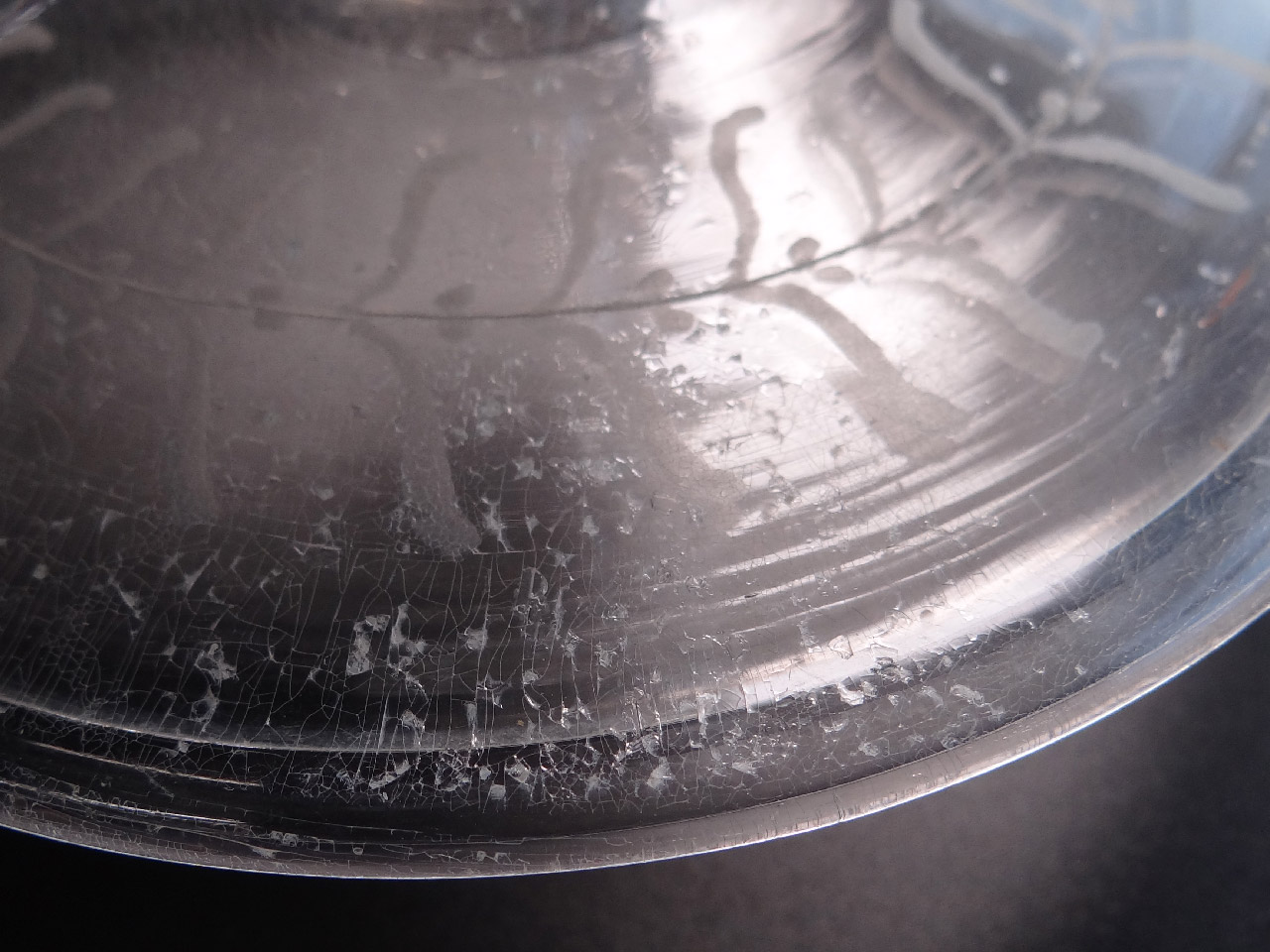
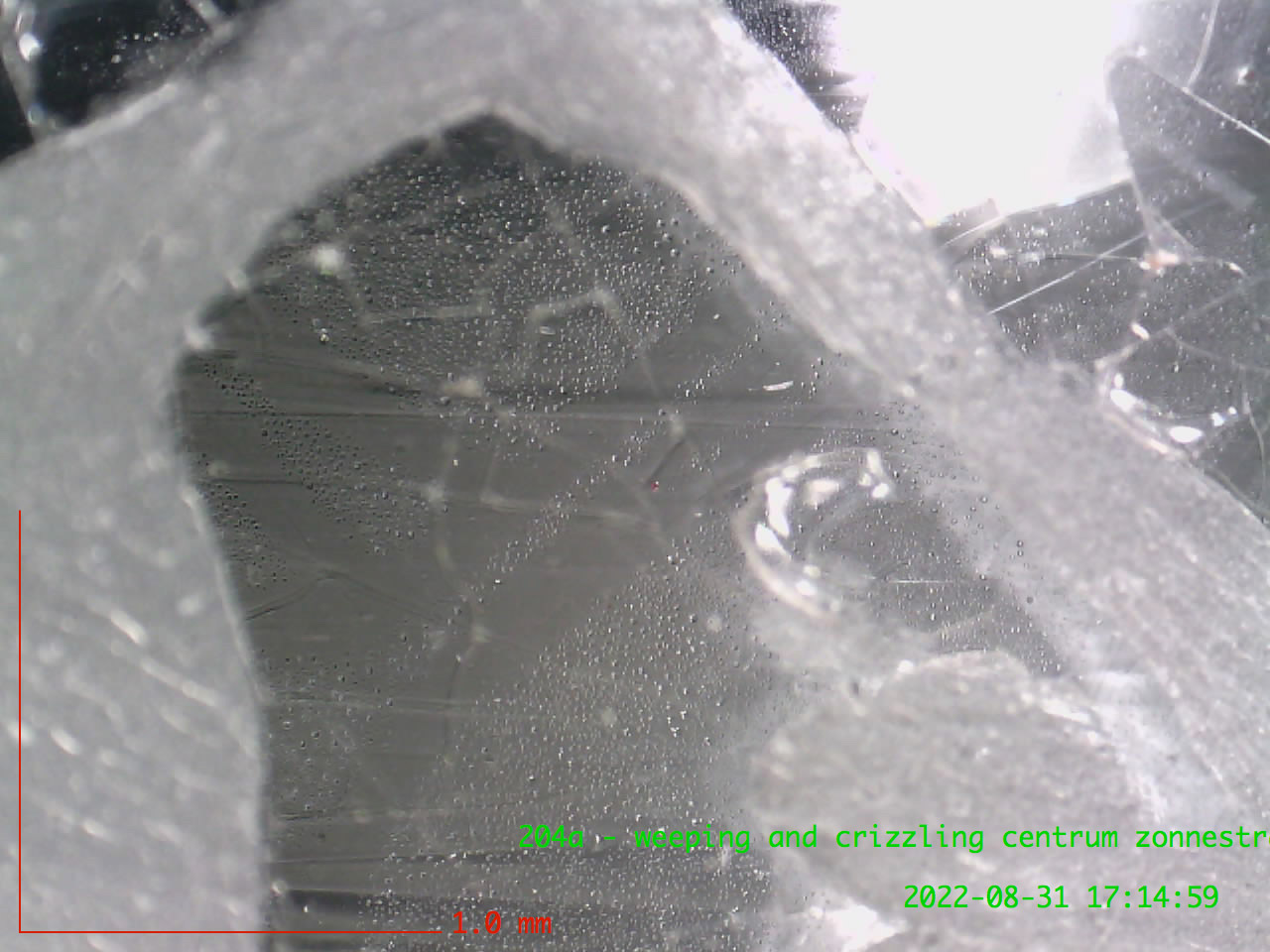
Goblet b.1 scratch(es), b.3 fractures, c2. slippery surface, d.1 deposit, d.1.1 droplets, d.2 crizzling, d.2.3 advanced crizzling
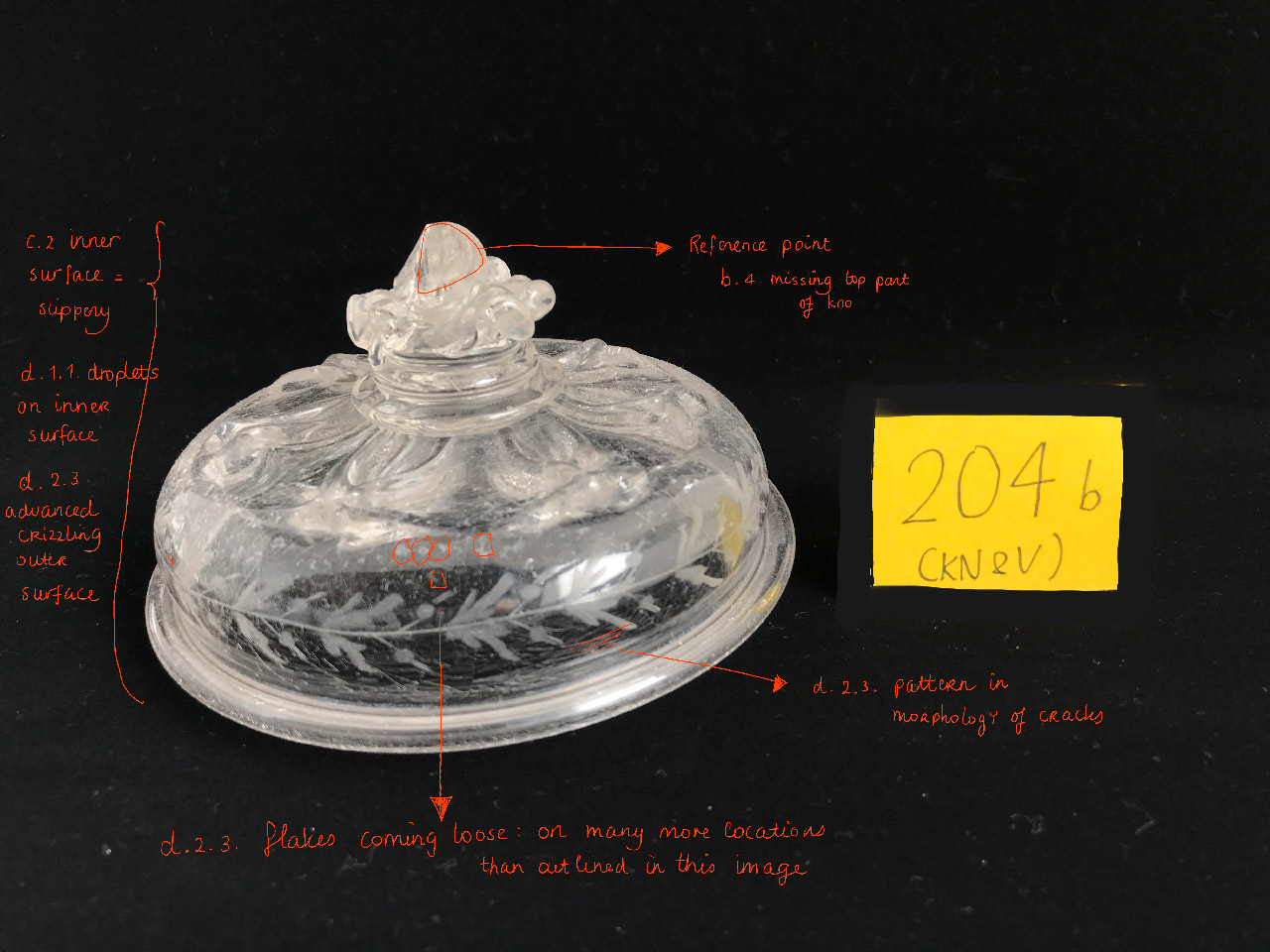
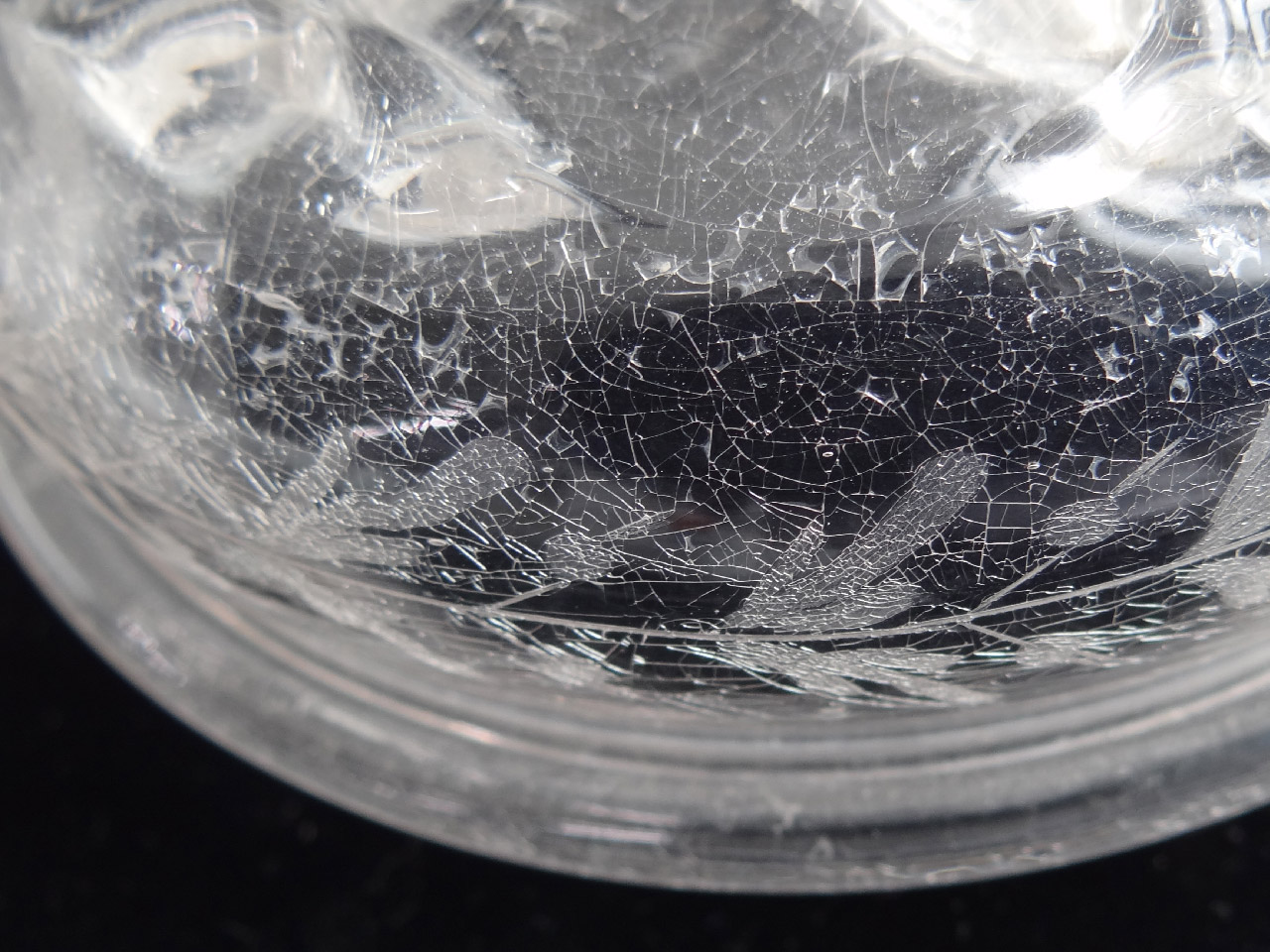
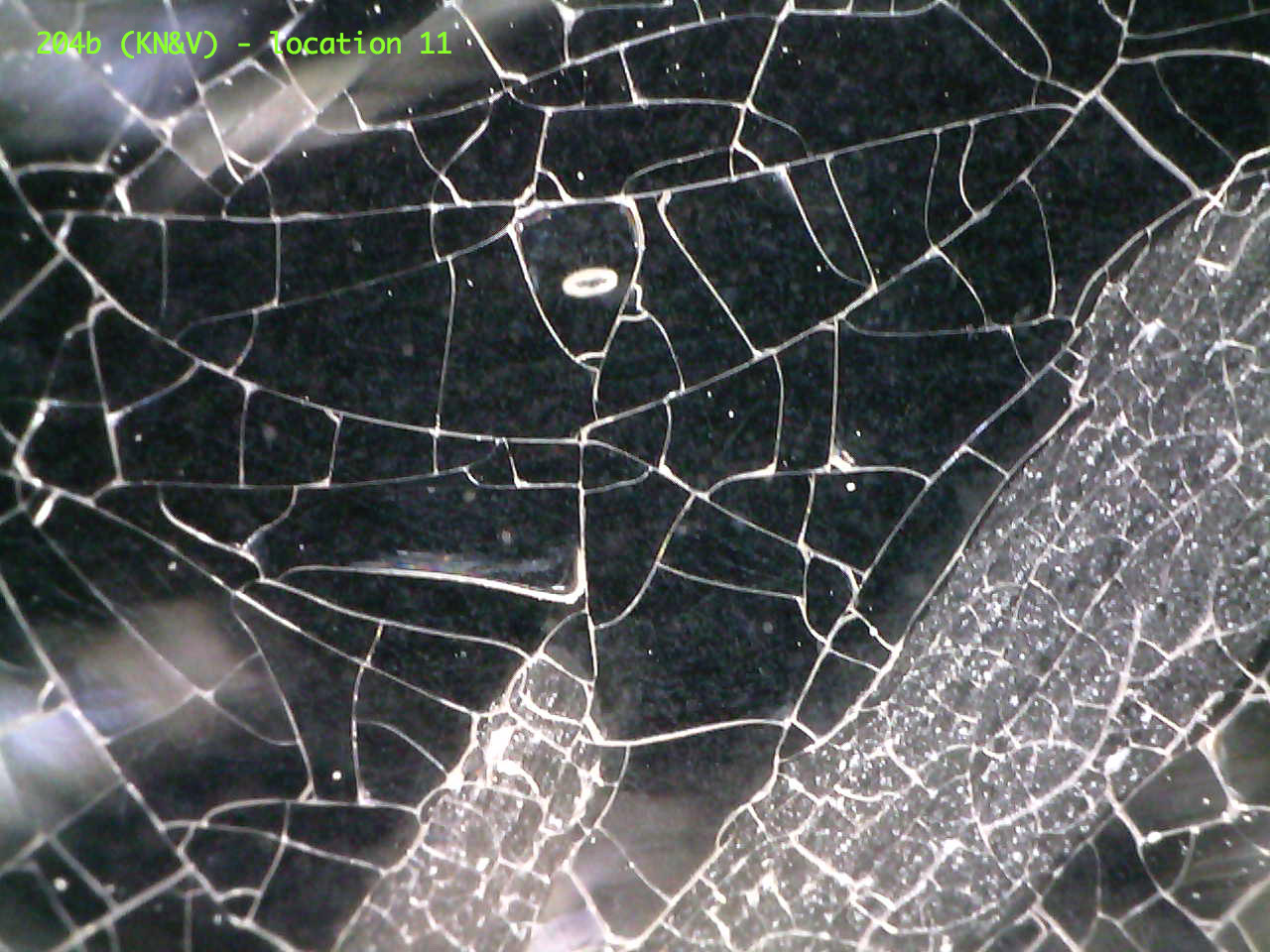
Lid b.4 lacuna(e), c.2 slippery surface, d.1 deposit , d.1.1 droplets, d.2 crizzling, d.2.3 advanced crizzling
Noteworthy: The outside of the object is slippery, but the inside is crizzled and flaking
IC analysis of ion concentrations on the surface
The lid of the stemmed glass, 1675–1700, has never been studied using ion chromatography. The goblet was analysed in 2017 and 2020 (samples were taken from the outside of the bowl). In both cases relatively high concentrations of the cations sodium and potassium were measured (higher potassium concentration), as well as a formate peak.
A comparison of the measurements from 2017 and 2020 shows an increase in both potassium and sodium ions. Because ion chromatography cannot detect transition metal ions or heavier metal ions such as lead, it is not known whether lead has also leached from the glass.
pXRF analysis of the composition
The goblet and lid are made of lead glass that also contains a considerable amount of potassium and calcium. Potassium is common in lead glass, but calcium is often absent from lead glass and crystal. The glass contains a fair amount of iron and roughly half as much manganese to counteract the green colouring effect of iron. A very small amount of antimony was also detected, which can also be used to decolourise glass.
Goblet with lid containing an average of 13 wt% PbO (lead content expressed as weight percent lead oxide, wt% PbO). Above 10% PbO, the glass can be classified as crystal glass (
sonoorglas (NL),
kristallijnglas (BE),
Kristallglas (DE), or
cristallin or
verre sonore (FR)).
Previous treatments
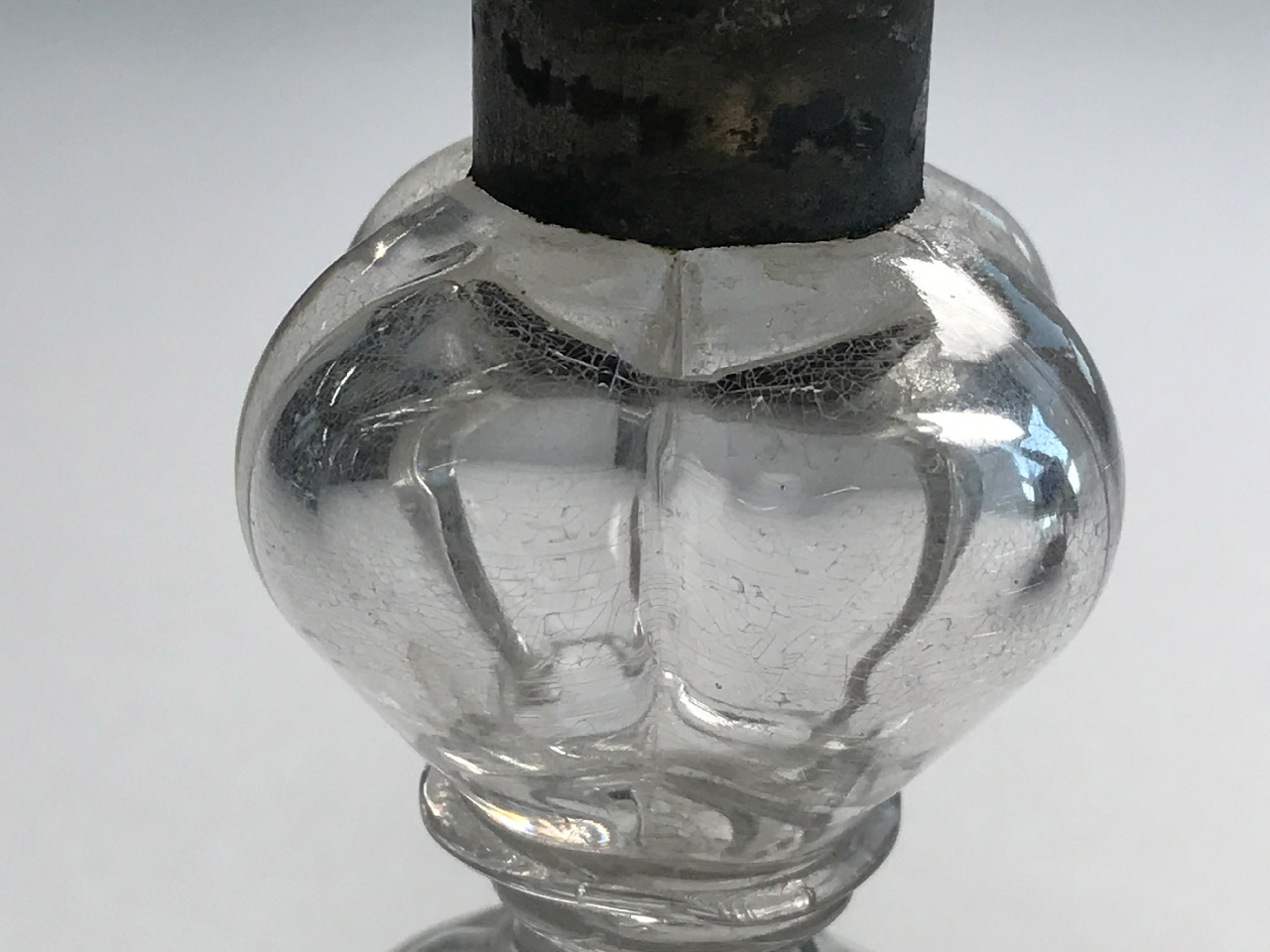
The object has been restored in the past. At some point a break occurred between bowl and stem, which were rejoined using a metal ring. No documentation of this restoration exists. Materials and techniques unknown. To date, this earlier restoration has not been investigated. In 2013, the object was cleaned using demineralised water and ethanol in a 4:1 ratio.
Condition diagnosis
Condition (visual) very poor
Condition (IC) likely unstable
(Click on photos to enlarge)
advice & treatment
Suggestions for packaging, handling, storage and transport
Advice: record the vulnerabilities of this object in the (museum) documentation system and/or at the relevant location in the (museum) storage facility.
Because of its extremely fragile condition (see research & diagnosis: likely unstable – thin-walled – cracks and lacunae), the object must be handled as little as possible and with extreme care. It should therefore be placed in such a way that it can be moved and handled without direct contact with the object.
In such situations, care must be taken to ensure that there is as little contact as possible between packaging materials and the glass (packaging materials may absorb droplets and create a microclimate that is not conducive to the conservation of the unstable glass object).
If the object must be handled, bear in mind that it is slippery because of the droplets on the glass surface. Take particular care when wearing nitrile gloves. Also bear in mind that the object is severely crizzled and that an old restoration holds the bowl and foot together. Lift it with both hands and provide adequate support. Place the object in a portable container and handle it only when absolutely necessary.
Keep the object in a separate cabinet with other unstable glass. Ensure the object is positioned so that its condition can be easily monitored and that it is readily accessible for inspection.
Suggestions for monitoring the environment and climate
Place the object in a stable environment with minimal fluctuations in relative humidity and temperature. It is highly advisable to monitor both the condition of the object and the climatic conditions regularly to detect changes at an early stage and to analyse any links with the environmental conditions. The object cannot be loaned.
Suggestions for treatment
Research shows that the object’s condition is deteriorating. Following a past cleaning treatment, ion concentrations on the glass surface have begun to rise again. This deterioration is currently being studied to devise specific cleaning strategies.
Cleaning the object is advisable because droplets on the surface contribute to further degradation.
Only a glass conservator can determine whether cleaning is desirable and feasible, which cleaning method to use and how to closely monitor the condition.
If undertaken, only a glass conservator should clean the glass.
Suggestions for further research
Further research into glass instability, particularly in relation to cleaning, and into the storage of unstable glass is urgently needed.
×
Goblet
Sun engraving in goblet, cracking
Goblet
Bulbous head in the goblet
Foot of the goblet
Foot of the goblet
Lid
Lid
Goblet - weeping and crizzling centrum, centre sunburst
Lid