unknown, Gloglo, 1600/1700
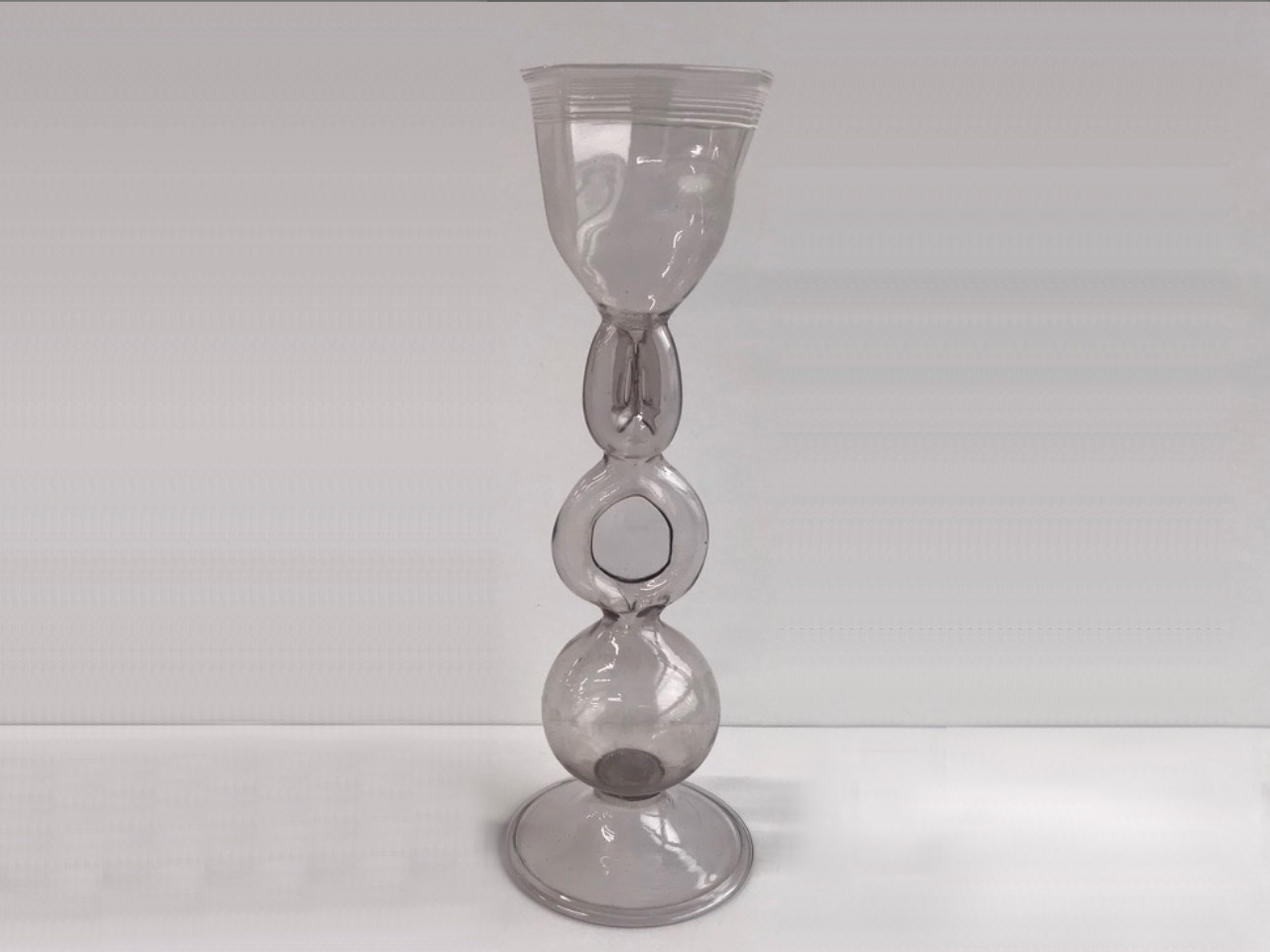
25.5 × 8.6 cm, 2031 (KN&V)
COLLECTION Museum Boijmans Van Beuningen. Bequest of Dr E. van Rijckevorsel.
creation
making process
Material colourless and coloured glass
Technique à la façon de VeniseHot working blown stem and foot
This
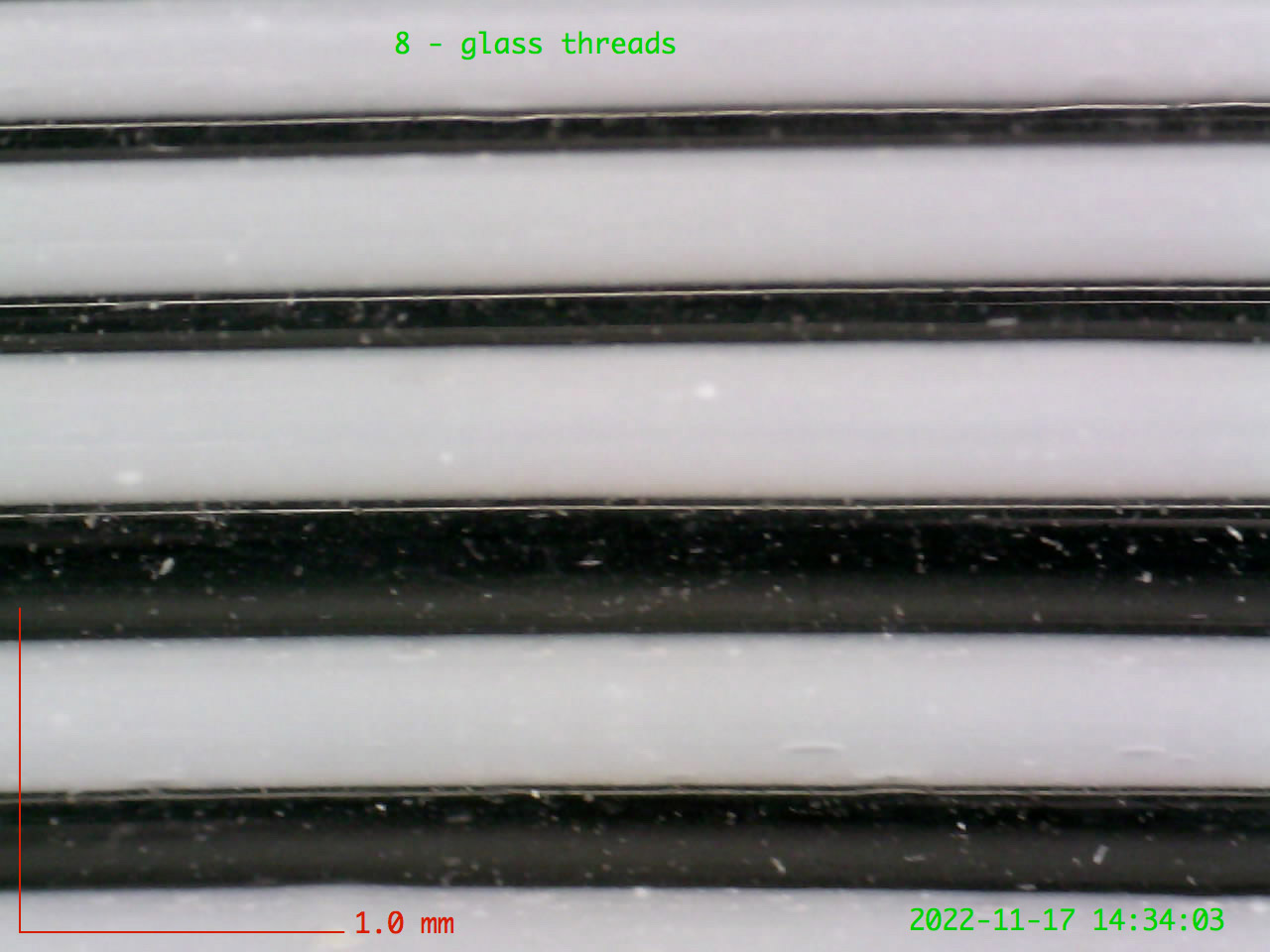
Gloglo is a stemmed glass that has an octagonal bowl wrapped with 13 horizontal colourless glass threads. The hollow stem consists of a trefoil, an enclosed central disc (mirror glass) and a sphere, and it ends open in the folded foot.
‘A glass
à la façon de Venise with a modern, slightly whimsical design. Probably made in a single piece with an applied foot. The middle section was probably flattened using two wooden sticks, creating a sort of circular tube. A thin glass thread is wrapped around the bowl itself, giving the outside a ribbed texture. After the whole piece was opened up, it was also pressed against a small optical mould, resulting in those rectangular panels all round.’
source Durk Valkema
(art) history
A
Gloglo is a joke glass or verre à surprise (surprise glass), consisting of spheres into which wine is poured. Drinking from it produces a pleasant resonance. In his Memorie, Venetian playwright Carlo Goldoni (1707–1793) describes ‘a machine, called the glo-glo’ that, when drunk from, ‘rendered a harmonious sound’ and ‘made a concert of a very new and pleasant sort.’
conservation
research & diagnosis
technical analysis
visual examination
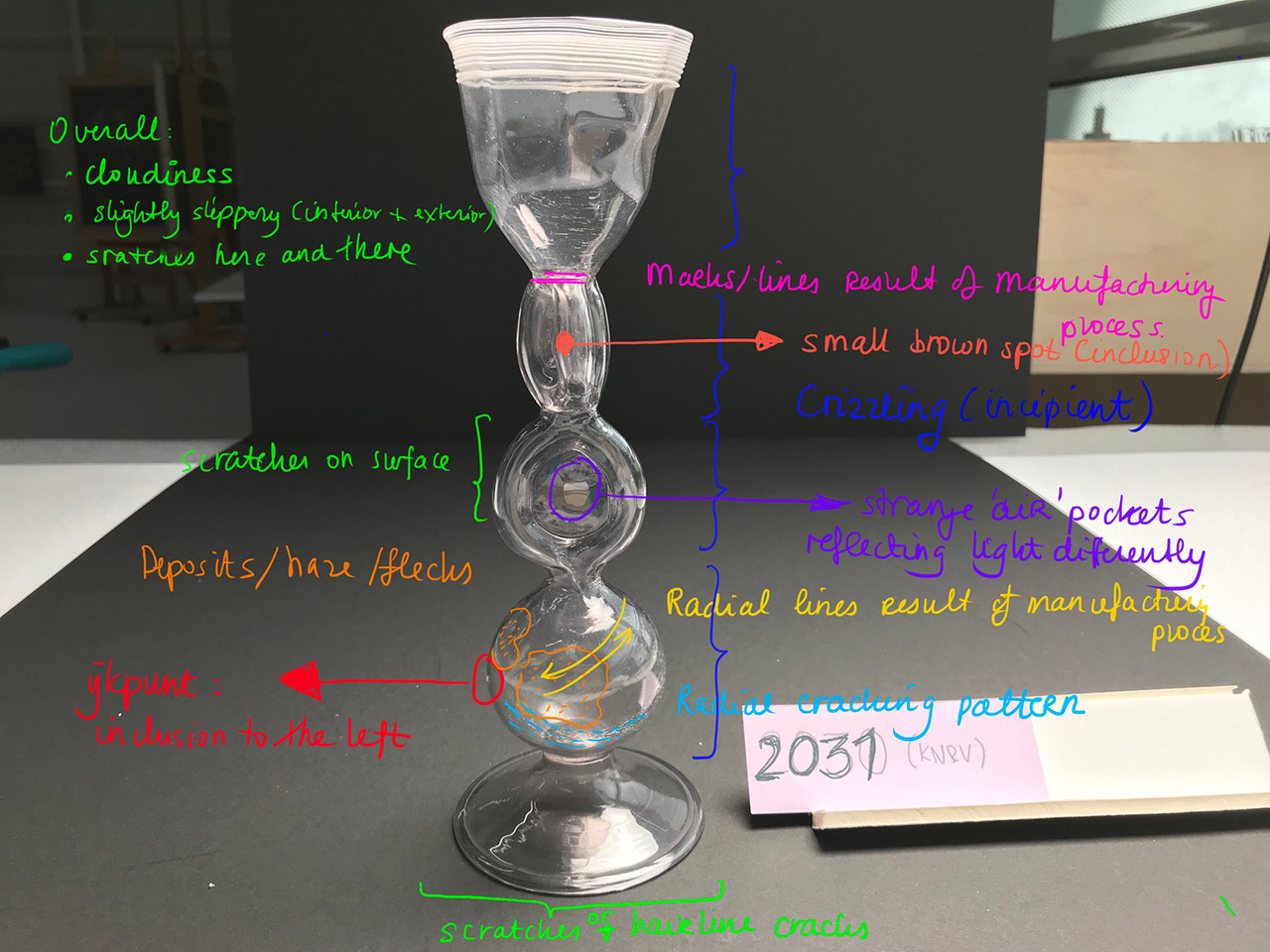
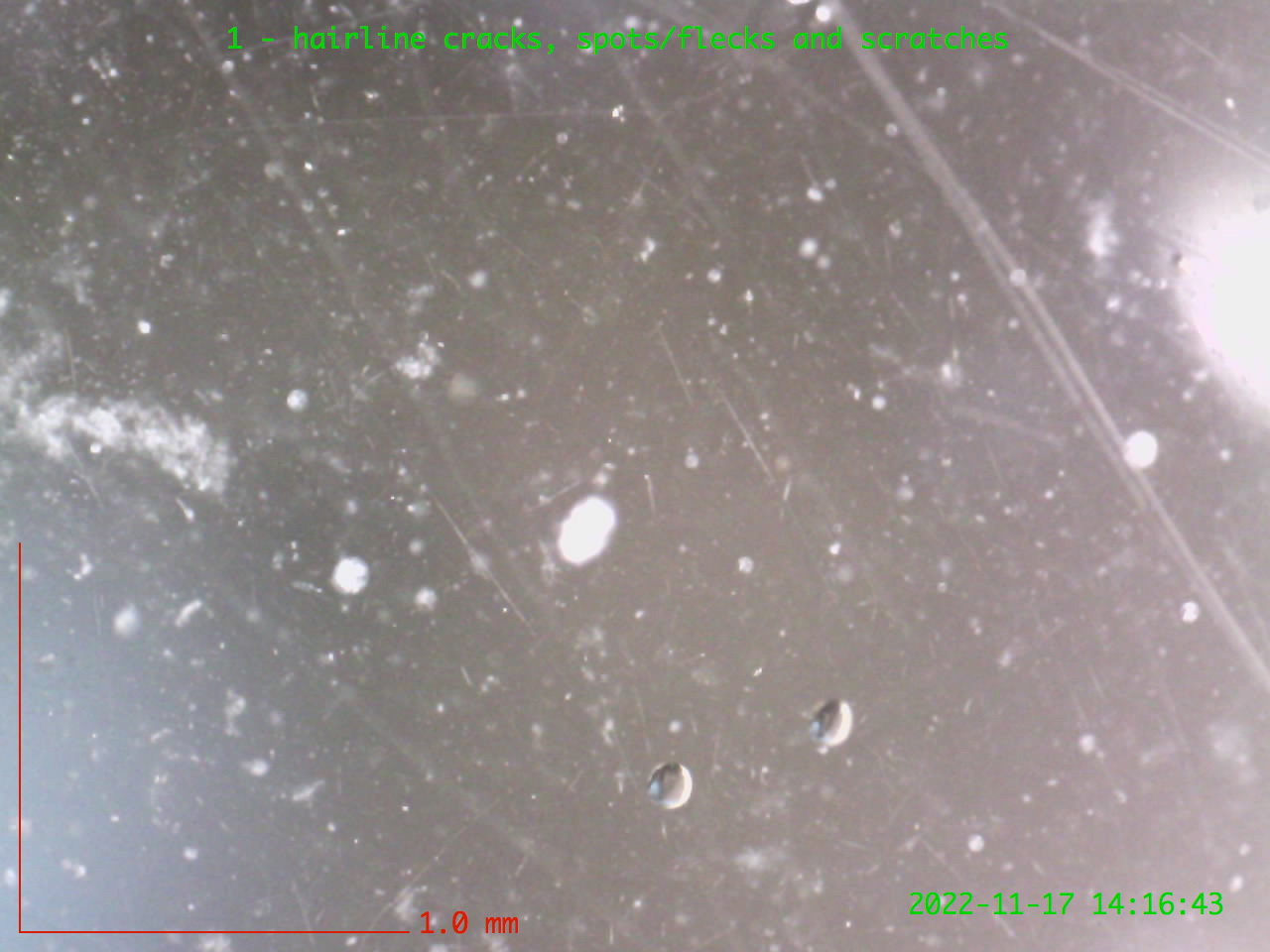
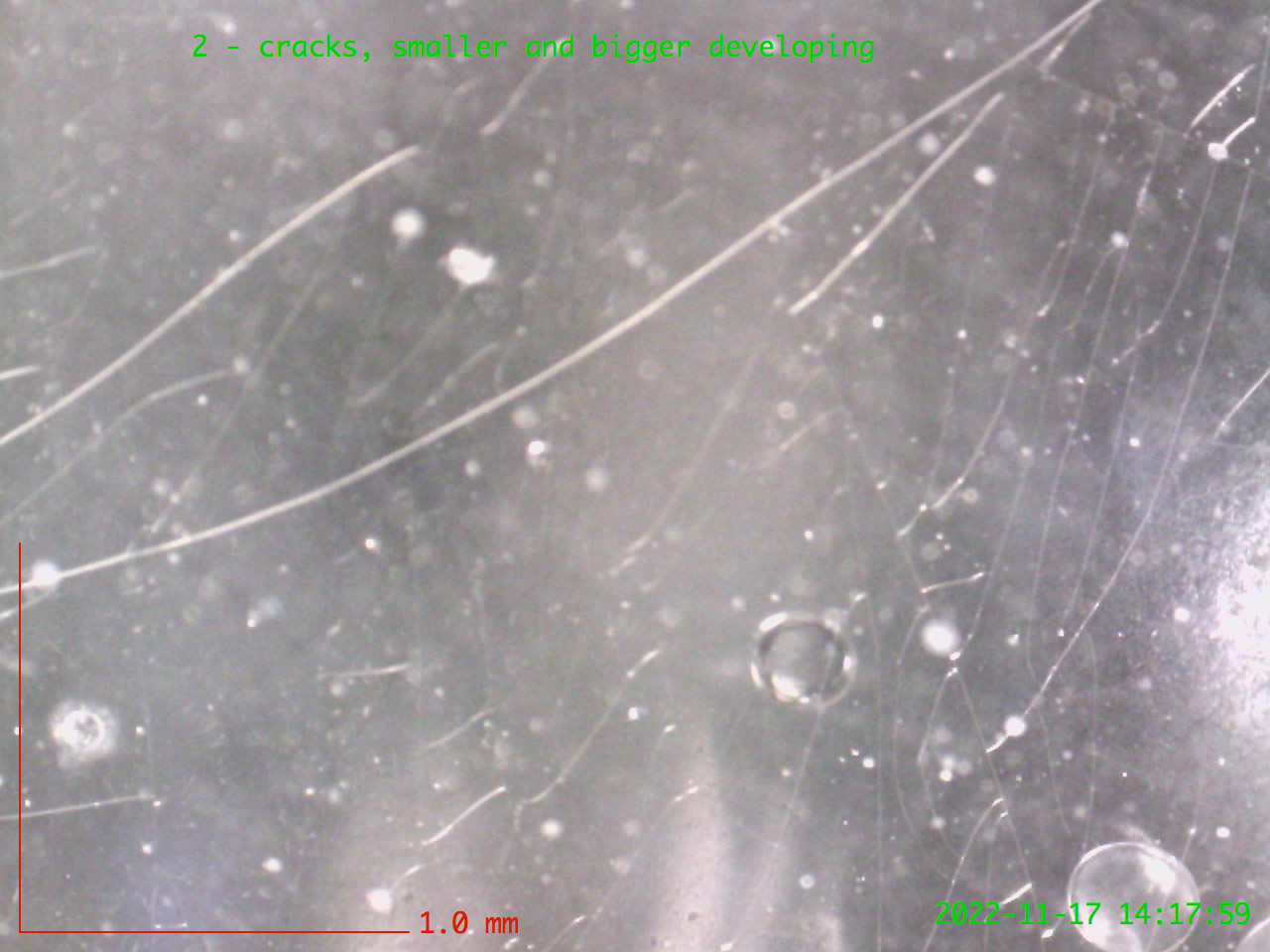
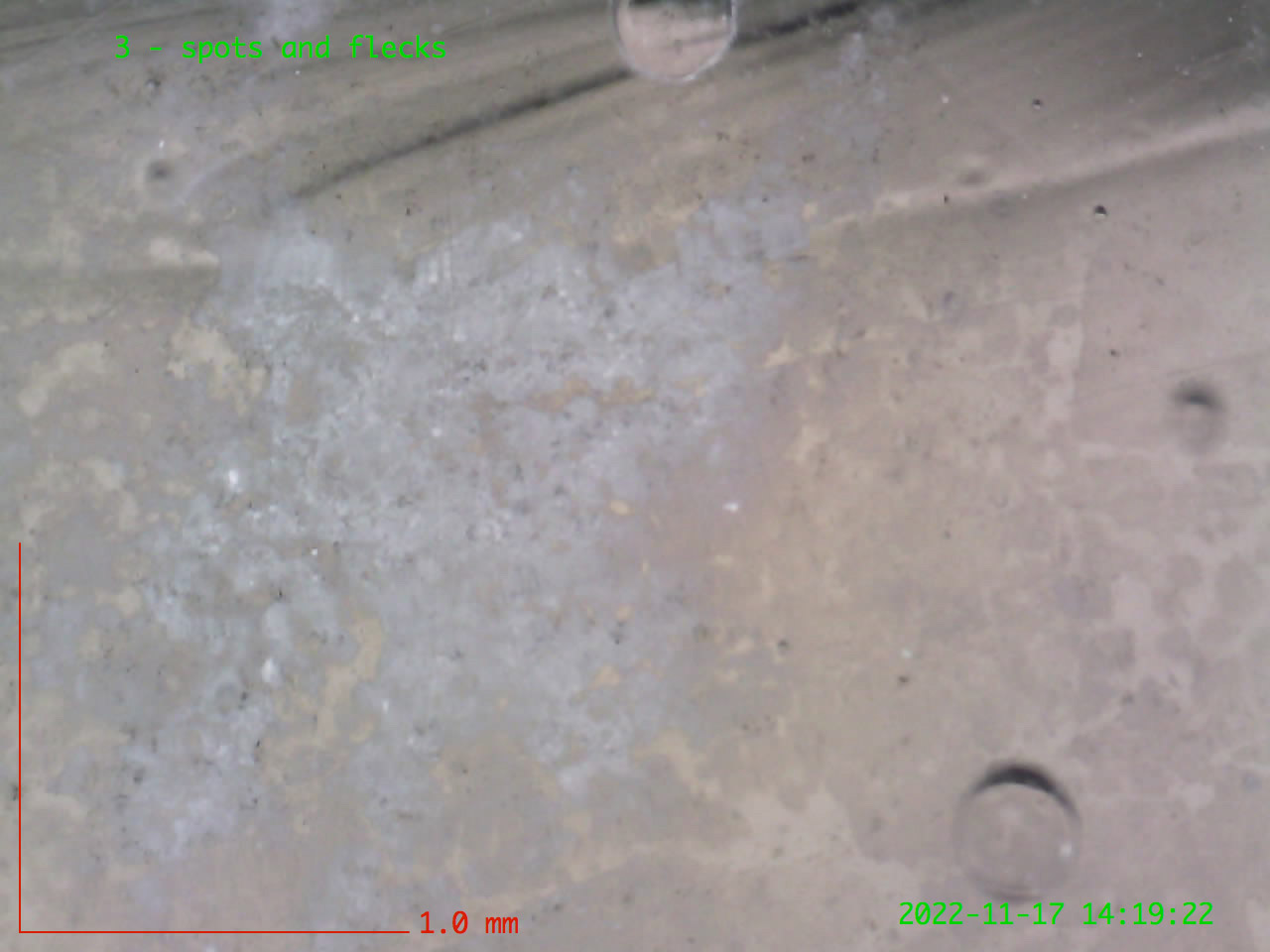
b.1 scratch(es) or abrasion, c.1 cloudy appearance, c.2 slippery surface, c.3.2 dust, c.4 possible colour alteration, c.5 other (deposit of unknown matter in hollow knob), d.2.2 crizzling, incipient
pXRF analysis of the composition
The glass is a potash-lime glass or a mixed-alkali lime silicate glass and also contains a small amount of lead. It is unclear whether a lead compound was added to the glass or whether recycled lead glass was included in the batch. The glass also contains antimony, which is often added to glass in combination with lead and probably acted as a decolourising agent in this case. The glass contains high levels of manganese and iron.
Condition diagnosis
Condition (visual) poor
Although several unstable objects were made using the incalmo technique, there is currently no reason to assume a relationship between glass instability and the incalmo technique. We will continue to monitor this. Glass composition and object shape may also play a role. The fracture pattern caused by crizzling differs markedly between the blue and colourless glass. This may be due to the glass composition or the object shape. We will continue to investigate this.
(Click on photos to enlarge)
advice & treatment
Suggestions for packaging, handling, storage and transport
Advice: record the vulnerabilities of this object in the (museum) documentation system and/or at the relevant location in the (museum) storage facility. Note that the glass is crizzled and must be handled with the utmost care. The object’s extremely fragile condition means that handling should be kept to an absolute minimum. It should therefore be placed in such a way that it can be moved and handled without direct contact with the object.
In such situations, care must be taken to ensure that there is as little contact as possible between any packaging materials and the glass (packaging materials may absorb droplets and create a microclimate that is not conducive to the conservation of the unstable glass object). If touching the object is needed, bear in mind that the object is badly fractured and has losses around the handles. Never handle the object by the handles! Always wear nitrile gloves, hold the object with both hands and support it properly. Place the object in a portable container and only handle it when absolutely necessary.
Keep the object in a separate cabinet with other unstable glass. Ensure the object is positioned so that its condition can be easily monitored and that it is readily accessible for inspection.
Suggestions for monitoring the environment and climate
It is highly advisable to regularly monitor both the condition of the object and the climatic conditions to detect changes at an early stage and analyse any links with the conditions.
Suggestions for treatment
The object may require cleaning again. Only a glass conservator can determine whether cleaning is desirable and feasible, which cleaning method to use and how to closely monitor the condition. If undertaken, only a glass conservator should clean the glass.
Suggestions for further research
Further research into glass instability, particularly in relation to cleaning, and into the storage of unstable glass is urgently needed.
×
Hairline cracks, spots/flecks and scratches
Cracks, smaller and bigger developing
Spots and flecks
Glass threads